How Long Is a CV? Ideal Length by Career Stage, Industry & Country
Learn how long a CV should be based on experience, industry, and country, plus tips to keep your CV concise and impactful.
Overview
Discover the ideal CV length for students, professionals, executives, and academics. This guide explains how long a CV should be based on career stage, industry expectations, and country standards while helping you create a concise and impactful job application document.
If you’re updating your job application documents, you’ve probably asked yourself: how long is a CV supposed to be?
Some people say one page. Others say two. Academics submit 10-page documents. Recruiters claim they only scan for seconds. So what’s the real answer?
The truth is: there is no single universal length. The ideal CV length depends on:
- Your career stage
- Your industry
- The country you’re applying in
- Whether it’s academic or corporate
- The relevance of your experience
In this comprehensive guide, we’ll answer how long is a CV in different contexts, explain when longer is acceptable, and show you how to adjust your CV strategically without weakening your application.
Quick Answer: How Long Is a CV?
Here’s the short, recruiter-approved version:
- Students & Graduates: 1 page
- Early to Mid-Career (1–10 years): 1–2 pages
- Senior Professionals (10+ years): 2 pages
- Academic & Research Roles: No strict limit (3–10+ pages common)
For most corporate professionals, 1–2 pages is ideal.
But remember: relevance matters more than page count.
Recruiters typically spend 6–10 seconds scanning a CV during the first pass. If your key achievements aren’t visible quickly, length won’t save you.
Also Read : How to Make a Student Resume (Complete 2026 Guide)
CV vs Resume: Does Length Differ?
Before diving deeper into how long a CV is, we need to clarify something important: CV and resume are not always the same document.
In the United States:
- A resume is concise (1–2 pages).
- A CV (Curriculum Vitae) is primarily academic and can be multiple pages.
In the UK, Europe, Canada, and Australia:
- The term CV is commonly used instead of resume.
- It typically refers to a 1–2 page job application document.
Key Differences
So when asking “how long is a CV,” the answer depends heavily on geography and purpose.
Also Read : HR Executive Resume Guide With Format, Skills, and Examples
How Long Is a CV by Career Stage?
Your experience level is the biggest factor in determining CV length.
1. Entry-Level & Students
Ideal length: 1 page
If you’re a student or recent graduate:
- Employers expect limited work experience.
- You should focus on education, internships, projects, and skills.
- Keep it concise and relevant.
Your CV should include:
- Education details
- Relevant coursework (if applicable)
- Internships
- Projects
- Certifications
- Skills
- Volunteer work (if relevant)
Going beyond one page at this stage usually indicates unnecessary detail.
Also Read : How to List Publications on a Resume (Examples & Format Guide)
2. Early to Mid-Career Professionals (1–10 Years)
Ideal length: 1–2 pages
If you have several years of experience, you likely need more space to demonstrate:
- Achievements
- Promotions
- Measurable impact
- Leadership growth
A one-page CV may be too limiting if you have:
- Multiple roles
- Significant accomplishments
- Quantifiable results
However, exceeding two pages at this stage can signal poor editing.
The goal is not to include everything—it’s to include what matters most.
Also Read : Management Consultant Resume Guide (Format, Examples & ATS Tips)
3. Senior Professionals (10+ Years)
Ideal length: 2 pages
When answering how long a CV is for senior roles, two pages is the professional standard.
At this level, hiring managers expect to see:
- Strategic leadership experience
- Revenue impact
- Team management
- Organizational growth contributions
- Long-term career progression
Trying to compress 15–20 years of experience into one page often weakens your narrative.
However, going beyond two pages in corporate roles can feel excessive unless highly justified.
Also Read : How to Write a Data Scientist Resume That Impresses Recruiters
4. Academic & Research Professionals
Ideal length: No strict limit
For academic roles, a CV is fundamentally different.
An academic CV may include:
- Publications
- Research projects
- Teaching experience
- Grants
- Conferences
- Certifications
- Professional memberships
- Awards
It’s common for academic CVs to range from 3 to 10+ pages.
In academia, completeness matters more than brevity.
Also Read : How Freshers Can Build a Strong Data Analyst Resume | ATS Guide for Beginners
How Long Is a CV by Country?
Geography plays a major role in determining expectations.
United States
- Corporate roles: 1–2 pages (often called a resume)
- Academic roles: No strict limit
In US corporate hiring, anything longer than two pages is rarely preferred unless executive-level.
United Kingdom
Standard CV length: 2 pages
UK recruiters expect more detail than US resumes but still value conciseness.
One page is acceptable for graduates.
Three pages may be seen as excessive unless senior-level.
Europe (EU)
- 1–2 pages typical
- Europass format often used
European hiring managers appreciate structured, clear layouts. Length beyond two pages is uncommon in non-academic roles.
Canada
Standard: 2 pages
Similar expectations to the UK.
Australia
Standard: 2 pages
Three pages may be acceptable for senior professionals.
Also Read : Customer Service Resume Keywords for ATS Success in 2026
When Is a 3-Page CV Acceptable?
Although most professionals should aim for 1–2 pages, a 3-page CV may be justified if:
- You are an executive with extensive board experience
- You work in medicine or healthcare with certifications
- You are applying for government roles
- You have significant consulting projects
- You have 20+ years of highly relevant experience
The key question is not “how long is a CV allowed to be?”
It’s “does every page add value?”
If the third page contains outdated or irrelevant roles, it should be cut.
Signs Your CV Is Too Long
If you’re unsure whether your CV is excessive, look for these warning signs:
- Repeating job responsibilities instead of achievements
- Listing roles older than 15–20 years
- Including irrelevant certifications
- Writing long paragraphs instead of concise bullet points
- Over-explaining minor tasks
- Including high school information (for experienced professionals)
Recruiters value clarity. Overlength often signals lack of focus.
Signs Your CV Is Too Short
On the other hand, some CVs are too short.
Your CV may be too brief if:
- It’s half a page long (and you’re not a student)
- It lacks measurable achievements
- It only lists responsibilities
- It doesn’t show career progression
- It omits a skills section
- It fails to demonstrate impact
Under-selling yourself can be as damaging as overloading information.
Also Read : Reverse Chronological Resume Format Guide (2026)
How to Cut Down an Overly Long CV
If you’re struggling with how long a CV is supposed to be, and yours is too long, here’s how to fix it.
1. Remove Outdated Experience
Roles from 15–20 years ago can often be summarized or removed.
Instead of:
“Sales Associate – 2004–2008
Managed daily sales operations…”
Simply write:
“Earlier career experience available upon request.”
2. Focus on Achievements, Not Responsibilities
Weak bullet:
- Responsible for managing team operations.
Strong bullet:
- Led 12-person team and increased revenue by 28%.
Shorter. Stronger. More impactful.
3. Combine Similar Roles
If you hold multiple similar positions at the same company, stack them under one employer instead of repeating company names.
4. Limit Bullet Points
Use 3–5 bullets per role.
More than that becomes repetitive.
5. Remove Generic Statements
Phrases like:
- “Hardworking professional”
- “Team player”
- “Detail-oriented”
Add no measurable value and consume space.
Also Read : SEO Executive Resume Templates & Tips for Every Experience Level (ATS Guide)
Formatting Tips That Affect CV Length
Many people try to manipulate formatting to fit their preferred length. This is risky.
Here are best practices:
Font Size
10–12pt is standard.
Never shrink below readability just to stay on one page.
Margins
0.5–1 inch margins are appropriate.
Avoid extreme compression.
Line Spacing
Use clean spacing to maintain readability.
White Space
Balanced white space improves readability and professionalism.
Avoid Dense Paragraphs
Bullet points are easier to scan.
Your CV should be readable first, optimized second.
Also Read : Supply Chain Manager Resume Guide: Format, Skills & ATS Tips
Quality Over Quantity: The Real Rule
When asking how long a CV is, many job seekers focus on page count.
Recruiters focus on:
- Relevance
- Results
- Readability
- Structure
- Keyword alignment
A strong 2-page CV beats a weak 1-page CV.
A focused 1-page CV beats a cluttered 3-page CV.
Length alone does not determine quality.
The 10-Second Test
To evaluate your CV:
- Look at it for 10 seconds.
- Can you clearly see:
- Your role
- Your impact
- Your specialization
- Your career level?
If not, length adjustments won’t solve the core issue clarity will.
Also Read : Digital Marketing Resume Tips & Examples to Get Interviews
Strategic Perspective: Think Like a Recruiter
Recruiters don’t reward length.
They reward clarity and impact.
Ask yourself:
- Does every bullet demonstrate measurable value?
- Does every section strengthen my candidacy?
- Would I hire myself based on this document?
If the answer is unclear, editing—not shrinking—is needed.
Final Takeaways
So, how long is a CV?
For most professionals:
1–2 pages.
For academics:
As long as necessary.
For executives:
2 pages, occasionally 3 if justified.
The golden rule:
Relevance determines length.
Your CV should communicate:
- Who you are
- What you’ve achieved
- Why you’re qualified
- What value you bring
All without unnecessary filler.
Also Read : Quality Analyst Resume Guide (2026) | ATS-Friendly QA Resume Tips
Conclusion
Understanding how long a CV is is not about hitting an arbitrary page number—it’s about optimizing impact.
Too short, and you undersell yourself.
Too long, and you dilute your strengths.
The ideal CV length balances clarity, conciseness, and measurable achievements while remaining easy to scan.
Before submitting your application, it’s worth reviewing whether your CV length aligns with industry expectations and highlights your strongest qualifications. Tools like Sound CV can help evaluate structure, conciseness, keyword alignment, and overall effectiveness ensuring your CV is not just the right length, but strategically optimized for success.
Because ultimately, the right CV length isn’t about pages it’s about positioning.
FAQs
Frequently asked questions about this topic
Related Blogs
Explore more insights and guides you might like.
CV vs Resume vs Biodata – The Complete Difference Guide
Learn the key differences between a CV, resume, and biodata and discover which one to use for your next job application.

Resume for Internship: How to Make a CV That Gets You Hired
Learn how to make a CV for an internship with this easy step-by-step guide. Perfect for freshers looking to create a strong first impression.
CV Font Style: CV Guide with Templates (2026) | Best Font Style for Resume
Choose the best CV font style for 2026. Improve readability, ATS compatibility, and create a professional resume that stands out instantly.
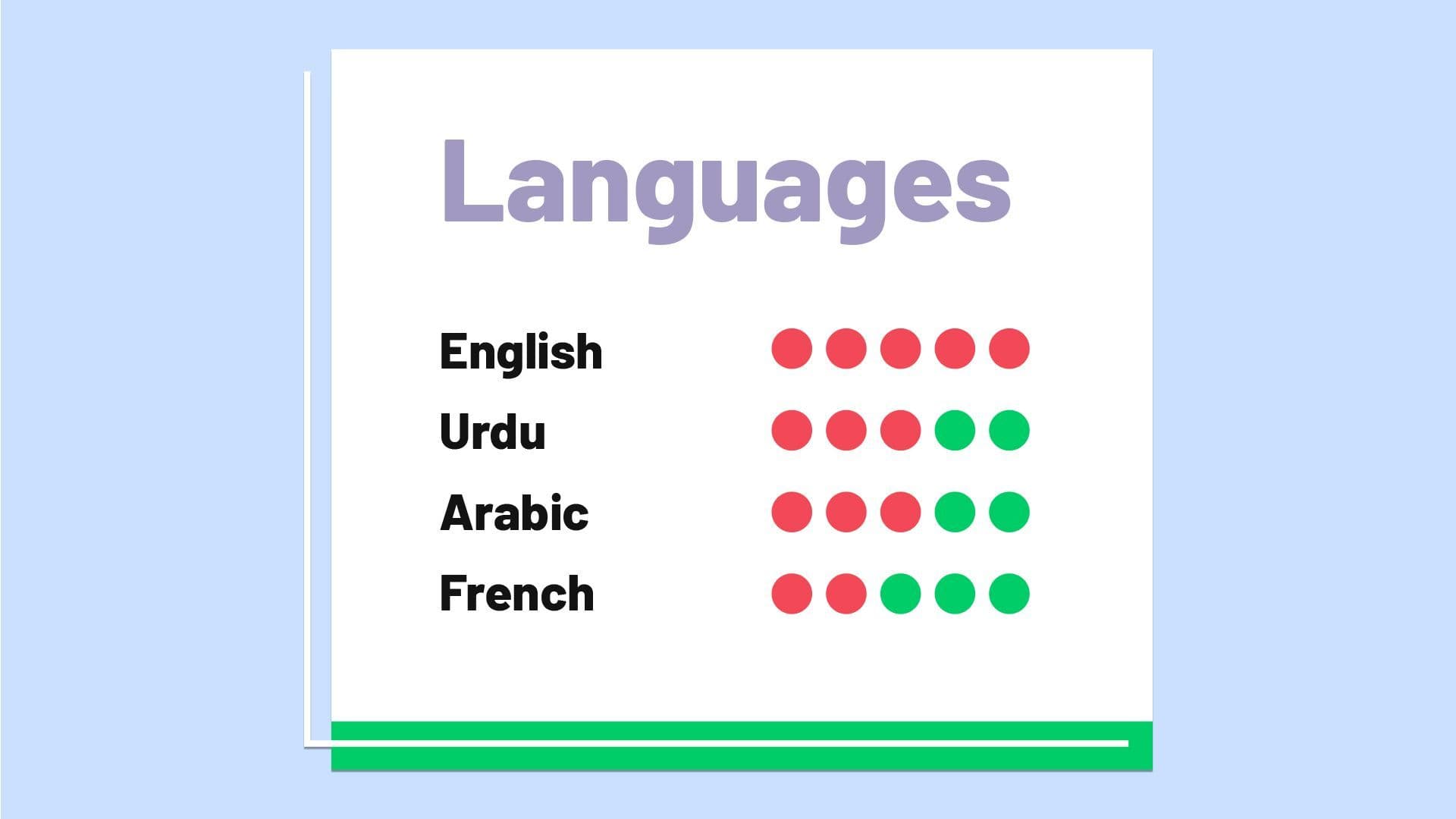
Languages Known in CV: CV Guide with Templates & Examples (2026)
Learn how to list Languages Known in your CV the right way in 2026. This guide covers proficiency levels, examples, and ready-to-use templates to help you present your language skills professionally and make your CV stand out.
Free CV Creator Online – Build a Professional CV in Minutes
Create a professional CV online in minutes using free tools with ATS-friendly templates, easy editing, and instant download options.
How to Write an ATS Friendly Resume That Gets Interviews
Write an ATS friendly resume using the right format, keywords, and structure to pass applicant tracking systems and land more interviews.