SEO Executive Resume Templates & Tips for Every Experience Level (ATS Guide)
Build an ATS-friendly SEO executive resume with templates, key skills, summary examples, and proven tips for every experience level.
Overview
Discover expert tips and ready-to-use templates to build a powerful SEO Executive resume. Learn ATS optimization, essential skills, tools, and achievement-based writing techniques for freshers, mid-level professionals, and senior SEO specialists to improve job opportunities.
A strong SEO executive resume is the difference between getting filtered out and getting the interview. Recruiters now receive hundreds of applications for every search engine optimization role, and most of those applications never reach a human because an applicant tracking system screens them first. Your resume needs to prove measurable impact, name the right tools, and match the exact keywords hiring teams filter for. This guide shows you how to write an SEO resume that passes the ATS, reads well to a hiring manager, and works at every experience level, from your first junior role to a senior leadership position.
Whether you are a fresher applying for your first role, a mid-level specialist chasing a promotion, or a senior strategist, the structure below keeps your strongest results visible in the first third of the page. Use it as a template, then tailor every line to the job description in front of you.
What Recruiters Look for in an SEO Executive Resume
Recruiters skim an SEO resume in about seven seconds before deciding to read on. In that window they look for three things: proof you can grow organic traffic, evidence you know the standard tools, and numbers that show the scale you have worked at. A list of duties tells them nothing. A line like "Grew organic sessions 142% in 11 months across 4,000 product pages" tells them everything.
Hiring managers also scan for role fit. An SEO executive job description usually blends technical, on-page, and content responsibilities, so your resume should show coverage across all three. If the posting emphasizes technical SEO, your crawl and site-speed work belongs near the top. If it leans toward content, lead with your keyword research and editorial results.
Finally, recruiters check for keyword alignment, often without realizing it. The ATS does it for them. If the posting says "technical SEO" and your resume only says "website optimization," the parser may score you lower. Mirror the language of the job description, then back it with results.
How to Write an SEO Resume That Passes the ATS
An ATS-friendly resume uses a clean, single-column layout that a parser can read top to bottom. Skip tables for your work history, avoid text boxes, and never place key details inside headers, footers, or images. The software reads plain text in a predictable order, so give it standard section titles it recognizes: Summary, Skills, Experience, Education, Certifications.
When you write an SEO resume, place your job title and core skills close together so the parser links them. Use the exact phrasing from the posting where it is honest to do so. If the company wants an "SEO Analyst" and that matches your work, name it. Save the file as a PDF unless the application form asks for a Word document, and name it clearly, for example "Jordan-Lee-SEO-Executive-Resume.pdf".
Want to know if your current draft clears the bots before you apply? Check your resume score with SoundCV and see exactly which ATS rules you are failing, plus a fix list in under a minute. If you would rather build from scratch, SoundCV's AI resume builder drafts keyword-matched bullet points from your job history in a single-column ATS layout by default.
ATS formatting checklist
- Use one column, no tables, no text boxes, no graphics for critical content
- Stick to standard fonts at 10 to 12 pt and 1-inch margins
- Use standard section headings the parser recognizes
- Spell out and pair acronyms once, for example "search engine optimization (SEO)"
- Save as PDF with a clear, named file
Best Resume Format for SEO Executives
The reverse-chronological format works best for most SEO professionals because it puts your most recent and most senior results first. List your current or latest role at the top, then work backward. This format suits anyone with a steady track record because it shows progression, which hiring managers value in a fast-moving field.
If you are changing careers or have gaps, a hybrid format helps. It leads with a skills and projects section, then follows with a shorter work history. Freshers and career switchers benefit here because a strong projects section can carry the resume when paid experience is thin. Pure functional resumes are risky because many recruiters distrust them, so use the hybrid instead.
Keep the document to one page if you have under eight years of experience, and two pages at most for senior roles. Every line should earn its place. For more on choosing a layout for early-career candidates, see our guide to the digital marketing resume, which covers format choices for related roles in depth.
Essential Sections of an SEO Executive Resume
A complete SEO resume includes six core sections in this order: contact details, professional summary, skills, work experience, certifications, and education. Add a projects or portfolio section if you freelance or run side sites. Keep the layout consistent so the page scans cleanly.
- Contact details: name, role title, phone, professional email, city, LinkedIn URL, and a portfolio or case-study link
- Professional summary: three to four lines that lead with your strongest metric
- Skills: a tight grid of technical, on-page, and tool skills
- Work experience: outcome-focused bullets with numbers
- Certifications: Google Analytics, SEMrush, HubSpot, and similar
- Education: degree, institution, and graduation year
List your portfolio link in the contact block, not buried at the bottom. A recruiter who can click straight through to a case study showing a ranking jump is far more likely to shortlist you.
Writing a Strong SEO Resume Summary
Your SEO resume summary is the first thing a hiring manager reads, so lead with a result, not a label. Skip the tired opener and start with what you delivered. A good summary names your years of experience, your specialty within SEO, one headline metric, and the type of company you have helped.
Here is a mid-level example: "SEO specialist with 5 years of experience driving organic growth for B2B SaaS. Increased organic traffic 87% in 18 months through technical fixes, content clusters, and link building. Skilled in Google Analytics 4, Ahrefs, and Screaming Frog." Notice the specifics. It names the niche, the metric, the timeframe, and the tools.
For a senior role, raise the altitude: "Senior SEO strategist with 9 years leading organic programs across e-commerce and media. Built and managed teams of 6, scaled organic revenue from $1.2M to $4.8M annually, and owned technical SEO for sites with 100,000+ URLs." For more summary patterns across marketing roles, our piece on writing a digital marketing resume has additional examples you can adapt.
Key Skills to Include in an SEO Resume
The skills section is where the ATS does much of its matching, so list the right terms clearly and group them. Split them into technical SEO, on-page and content, analytics, and tools. Avoid soft-skill filler like "team player" in this grid; prove soft skills through your experience bullets instead. The strongest SEO skills for resume sections pair a capability with the tool behind it, for example "keyword research with Ahrefs" rather than "keyword research" alone.
Technical and on-page skills
- Technical SEO audits, crawl management, and indexation fixes
- Site speed, Core Web Vitals, and mobile optimization
- Structured data and JSON-LD schema markup
- On-page optimization, internal linking, and information architecture
- Keyword research, search intent mapping, and content briefs
- Link building and digital PR outreach
Tools and analytics
- Google Analytics 4, Google Search Console, and Looker Studio
- Ahrefs, SEMrush, and Moz
- Screaming Frog and Sitebulb for crawls
- WordPress, Webflow, and other content management systems
- Basic HTML, CSS, and Google Tag Manager
These skills for an SEO specialist signal depth to both the parser and the hiring manager. If you are unsure which technical terms a posting expects, our guide to technical skills employers want breaks down the most-requested competencies by role.
How to Write Strong Experience Bullets for SEO Roles
Your experience section carries the most weight, so every bullet should follow one rule: action verb, what you did, and the measurable result. Start with a verb like "Increased," "Reduced," "Built," or "Led," then quantify the outcome. Numbers make your impact concrete and give recruiters something to remember.
Compare these two bullets. Weak: "Responsible for improving website rankings." Strong: "Improved rankings for 32 priority keywords from page 3 to page 1, lifting organic clicks 64% in six months." The second version shows scale, direction, and a timeframe. Aim for three to five bullets per role, and front-load the ones with the biggest numbers.
If you lack hard numbers from an old role, estimate conservatively and label it honestly, or focus on the deliverable, for example "Produced 40 optimized articles that now drive 18,000 monthly organic visits." When you describe scope, reference the SEO executive roles and responsibilities you owned so the reader understands what you actually controlled versus supported.
Action verbs that strengthen SEO bullets
- Increased, grew, scaled, accelerated
- Reduced, cut, eliminated, recovered
- Built, launched, implemented, automated
- Led, managed, mentored, coordinated
- Audited, diagnosed, optimized, restructured
SEO Resume Keywords That Beat the ATS
The fastest way to raise your match score is to mirror the resume SEO keywords from the job posting. Read the description, list the repeated terms, and make sure each honest match appears in your summary, skills, or experience. Common high-value terms include "technical SEO," "keyword research," "on-page optimization," "link building," "Google Analytics," and "content strategy."
Do not stuff keywords. The ATS rewards relevance, not repetition, and a human will spot a wall of terms instantly. Place each keyword once or twice where it reads naturally. For a deeper list of phrases that hiring software filters for, see our breakdown of ATS-friendly marketing resume keywords, which maps terms to specific marketing roles.
If you are still unclear on how applicant tracking systems parse and rank your file, our explainer on the ATS full form and how it works covers the mechanics in plain language.
Resume Tips for Different Experience Levels
Your SEO resume should change shape as your career grows. The sections stay the same, but what you emphasize shifts. Below are targeted tips for each stage.
Entry-level and junior SEO resume
An entry level SEO resume leans on projects, internships, and certifications because paid experience is limited. Build a small portfolio: optimize a personal blog, run keyword research for a local business, or document a ranking improvement you achieved. Lead with a projects section, then list any internships. A junior SEO resume that shows real, even unpaid, results will beat a generic one every time.
Mid-level SEO specialist resume
At this stage your work history carries the resume. An SEO specialist resume should show ownership of campaigns and consistent metric growth. Highlight the channels you ran, the tools you mastered, and the cross-team work you led with content or developers. This is also where an SEO analyst resume should foreground data work: dashboards built, tests run, and insights that changed strategy.
Senior and SEO manager resume
A senior SEO manager resume shifts from tasks to outcomes and leadership. Show revenue impact, team size, budget owned, and strategic wins. Hiring managers for senior roles want to see that you can set direction and develop people, not just execute. An SEO expert resume at this level reads like a short case study in organic growth.
Sample SEO Executive Resume Template
Use this ATS-friendly structure as a starting point. Copy it into a single-column document, replace the placeholders with your details, and tailor every line to the posting. This is one of the best ATS-friendly resume templates because it uses plain headings, no graphics, and an outcome-first experience section.
Jordan Lee
SEO Executive | Organic Growth Specialist
Austin, TX | jordan.lee@email.com | (555) 123-4567 | linkedin.com/in/jordanlee | jordanlee-seo.com
Professional Summary
SEO executive with 5 years of experience growing organic traffic for SaaS and e-commerce brands. Increased organic sessions 112% across two companies through technical audits, content clusters, and link building. Proficient in GA4, Ahrefs, SEMrush, and Screaming Frog.
Core Skills
Technical SEO | Keyword Research | On-Page Optimization | Link Building | Content Strategy | GA4 | Google Search Console | Ahrefs | SEMrush | Screaming Frog | Schema Markup | Core Web Vitals
Experience
SEO Specialist, BrightWave Media, 2022 to Present
- Grew organic sessions 87% in 18 months across a 4,000-page catalog
- Recovered 40% of traffic lost to a core update through a technical and content overhaul
- Built 60 high-authority backlinks, lifting domain rating from 38 to 54
SEO Analyst, Pixel Labs, 2020 to 2022
- Ran keyword research and briefs for 120 articles now driving 45,000 monthly visits
- Cut average page load time from 4.1s to 1.8s, improving Core Web Vitals pass rate to 92%
Certifications
Google Analytics Certification, SEMrush SEO Toolkit, HubSpot Content Marketing
Education
B.A. Marketing, University of Texas, 2020
This SEO resume sample works as a base for an SEO CV in most markets; adjust the spelling and date formats to local norms. You can build the same structure automatically with SoundCV's resume builder and export it as a clean PDF.
Certifications That Strengthen an SEO Resume
Certifications give an SEO resume credibility, especially for early-career candidates who need to prove knowledge without a long work history. They also add keyword matches the ATS recognizes. List the certification name, the issuer, and the year if recent.
- Google Analytics Certification: proves you can read and act on traffic data
- SEMrush and Ahrefs Academy certificates: show tool fluency
- HubSpot Content Marketing: useful for content-focused SEO roles
- Google Search Console fundamentals: signals technical awareness
Do not pad this section with low-value badges. Two or three respected certifications carry more weight than a long list of minor ones.
Common Mistakes to Avoid on an SEO Resume
Most rejected SEO resumes share the same fixable errors. The biggest is listing duties instead of results. "Managed SEO campaigns" tells a recruiter nothing about whether those campaigns worked. The second is ignoring the job description, which leaves your keywords misaligned with the ATS filter.
- Writing responsibilities instead of measurable outcomes
- Using a two-column or graphic-heavy layout the ATS cannot parse
- Listing every tool you have ever opened instead of the ones you use well
- Forgetting to include a portfolio or case-study link
- Leaving in typos, which signal weak attention to detail in a detail-heavy role
- Submitting the same generic resume to every posting
Before you apply, run a final check. Check your resume score for free to catch formatting issues, missing keywords, and ATS errors you cannot see by eye.
How to Tailor Your SEO Resume for Each Application
A tailored resume beats a generic one because it matches the exact language and priorities of the posting. You do not need to rewrite the whole document each time. Adjust the summary, reorder your skills to match the role's emphasis, and swap two or three experience bullets to highlight the most relevant work.
Read the SEO executive job description carefully and note whether it leans technical, content, or strategic. Mirror that emphasis. For a technical role, lead your skills with audits, crawl management, and Core Web Vitals. For a content role, lead with keyword research, briefs, and editorial results. This small effort consistently raises both your ATS score and your shortlist rate.
SEO Executive Roles and Responsibilities to Reflect
Your resume should mirror the SEO executive roles and responsibilities that the target company actually cares about. Most postings group duties into three buckets: technical health, on-page and content, and reporting. Showing work across all three signals you can own a program rather than just one slice of it.
On the technical side, employers expect you to run audits, fix crawl and indexation issues, and protect site speed. On the content side, they want keyword research, search-intent mapping, briefs, and on-page optimization at scale. On the reporting side, they want you to track rankings, traffic, and conversions, then turn that data into a clear next step. When you write your bullets, tag each one to the bucket it belongs in so a skim reveals balanced coverage.
Match the weighting to the role. A startup hiring its first SEO usually wants a generalist who can do a little of everything. A large team hiring an SEO analyst wants depth in data and reporting. Read the SEO executive job description twice and let its priorities decide which responsibilities you lead with.
Metrics That Make an SEO Resume Convincing
Numbers are the strongest proof on an SEO resume because they remove doubt. The trick is choosing metrics a hiring manager recognizes as meaningful. Vanity numbers like "improved SEO" or "boosted visibility" carry no weight. Concrete, scoped metrics do.
- Organic traffic growth: percentage lift over a stated timeframe, for example "+87% organic sessions in 18 months"
- Ranking movement: number of keywords moved and the positions gained
- Revenue or leads: organic-driven revenue, sign-ups, or qualified leads
- Technical wins: page-speed gains, Core Web Vitals pass rate, indexation recovered
- Scale: number of pages, articles, or backlinks you worked across
If you cannot share exact figures because of confidentiality, use ranges or relative terms, for example "grew organic traffic by roughly a third." A scoped estimate beats no number at all. Pair every claim with the action that produced it so the result reads as earned, not lucky.
Should You Pair Your SEO Resume With a Cover Letter?
For most SEO roles, a short, tailored cover letter helps, especially when you are changing industries or explaining a career gap. It gives you room to connect your results to the company's specific goals, which a resume cannot always do. Keep it to three short paragraphs: why this company, your most relevant result, and a clear close.
Do not repeat your resume line by line. Use the letter to tell one story, such as how you recovered a site after a core update or grew a content program from zero. If writing one from scratch feels slow, SoundCV's cover letter builder generates a tailored draft from your resume and the job description, which you can then edit to sound like you.
SEO Resume Examples by Industry
The core structure stays the same across industries, but the metrics and keywords you emphasize should shift to match the sector. Reviewing seo resume examples from your target industry helps you mirror the language hiring managers expect.
Because SEO sits inside the wider marketing function, many candidates adapt a broader resume for digital marketing roles when a posting blends channels. If the job mixes SEO with paid, email, or social, study a few digital marketing resume examples and borrow their structure, then lead with your organic results. A clean digital marketing resume template works well here: keep the same single-column, ATS-safe layout and simply reweight the skills toward the channels the role names. A digital marketing specialist resume should still foreground measurable SEO wins, since organic growth is usually the hardest result to fake and the easiest for a hiring manager to trust.
- E-commerce: lead with revenue, product-page rankings, and category-page traffic; mention faceted navigation and structured data
- SaaS: emphasize content clusters, demo or trial sign-ups from organic, and bottom-of-funnel keyword wins
- Media and publishing: highlight pageview growth, news and evergreen balance, and site-speed at scale
- Local and agency: show Google Business Profile results, multi-client management, and local pack rankings
Whichever industry you target, keep the format ATS-safe and the bullets metric-led. A tailored seo resume sample for the right sector consistently outperforms a generic one because the numbers and terms land with the reader immediately.
Frequently Asked Questions
The questions below cover the issues SEO candidates ask most often when building a resume.
Build Your SEO Executive Resume Today
A clear, ATS-friendly, results-focused SEO executive resume gets you past the filter and in front of a hiring manager. Use the structure above, lead every bullet with a number, and tailor each application to the posting. When your draft is ready, check your resume score free with SoundCV to confirm it clears the ATS before you hit submit.
FAQs
Frequently asked questions about this topic
Related Blogs
Explore more insights and guides you might like.
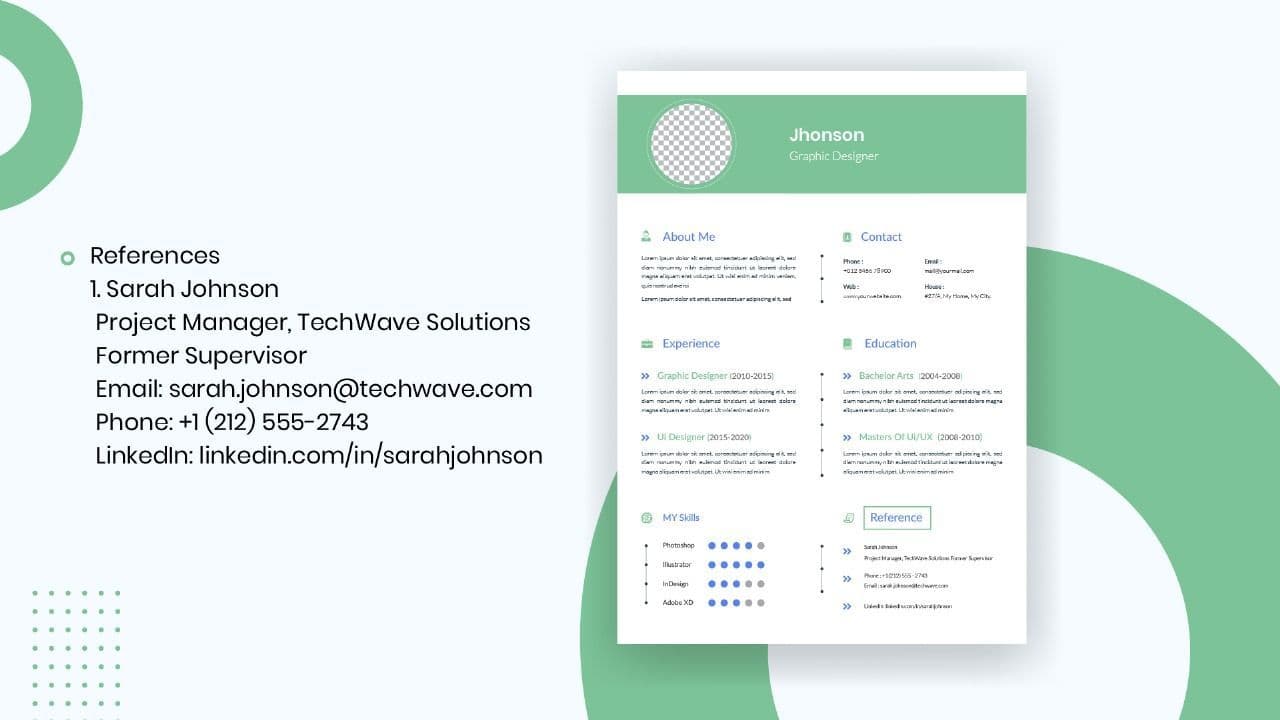
How to List References on a Resume in 2026
Learn the modern 2026 approach to listing references on your resume for maximum professionalism and recruiter impact.

Is Sound CV good for students and fresh graduates with no experience?
Sound CV is perfect for students and fresh graduates, helping them create professional resumes that highlight skills, projects, and potential even with little or no work experience.
Why Sound CV Is Different from Other AI Resume Builders
Sound CV stands out by creating job-focused, ATS-friendly resumes that highlight real achievements, not just generic content.
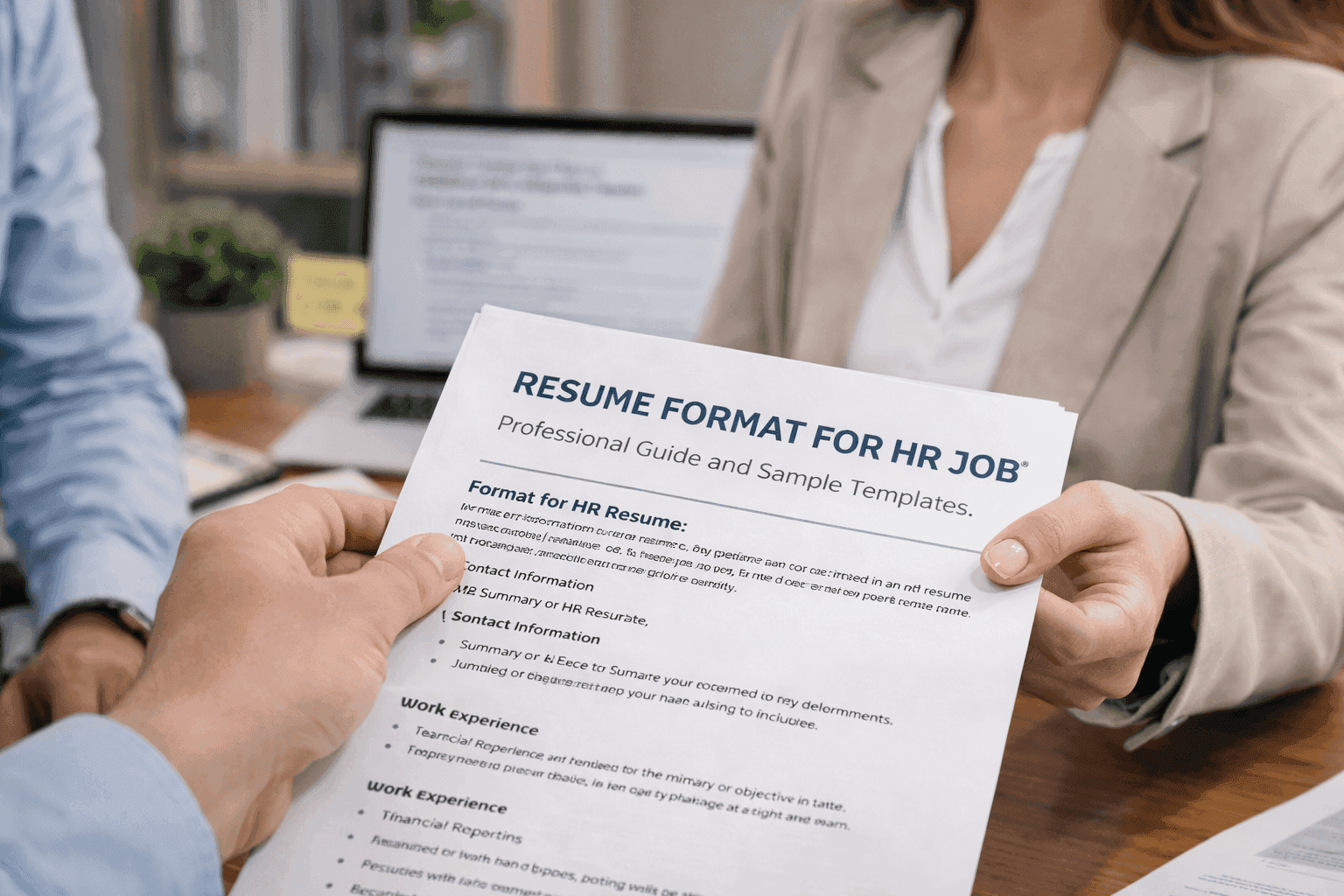
Resume Format for HR Job: Professional Guide and Sample Templates
A complete guide to the best resume format for HR jobs, with expert tips and sample templates to help you create a professional and job-ready resume.
How Does the Sound CV Resume Score Checker Work?
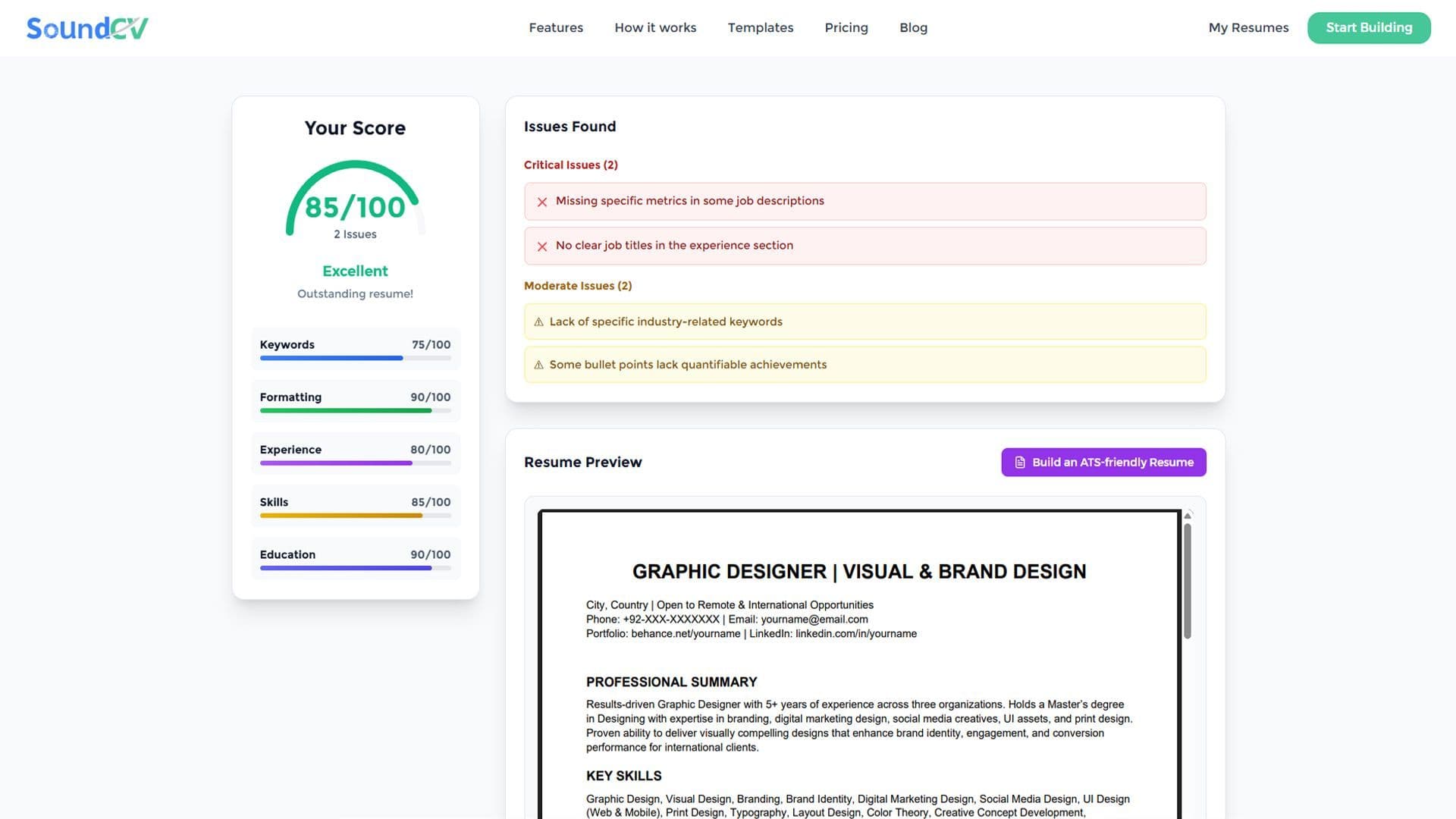
The Sound CV Resume Score Checker analyzes your resume against ATS requirements, job-specific keywords, and structure to provide an instant, actionable score.

What Is a Sound CV? Features, Benefits, and How It Works
A Sound CV is an AI-powered resume that is tailored, ATS-optimized, and designed to showcase your skills and achievements to help you stand out to recruiters.