Quality Analyst Resume Guide (2026) | ATS-Friendly QA Resume Tips
Create an ATS-friendly Quality Analyst resume with proven tips, key skills, and formatting strategies to land your dream QA job faster.
Overview
Learn how to build a powerful, ATS-optimized Quality Analyst resume with the right format, skills, keywords, and impact-driven experience to stand out from recruiters and secure more interviews in today’s competitive QA job market.
Why Your Quality Analyst Resume Needs an ATS-First Strategy
A strong quality analyst resume does two jobs at once: it passes the applicant tracking system that screens it before any human reads it, and it convinces a hiring manager that you can find defects before customers do. Most candidates write only for the second reader and never reach them, because the resume is filtered out by software first. This guide rebuilds your QA resume from the ground up so it survives the scan and wins the interview, whether you are a manual tester, an automation tester, a QA engineer, or a quality assurance analyst moving up to a senior role.
Recruiters spend an average of 6 to 7 seconds on a first pass, and roughly three out of four resumes are filtered by an applicant tracking system before that pass even happens. For technical roles like quality assurance, the stakes are higher: your resume is judged on exact tool names, testing methodologies, and measurable outcomes. A vague qa resume that lists "tested software" gets ignored. A precise one that says "reduced defect leakage by 32% across three release cycles" gets a callback. The difference is structure, keywords, and proof.
What a Quality Analyst Actually Does (and Why It Shapes Your Resume)
A quality analyst validates that software meets its requirements, designs and runs tests, logs defects, and works with developers to ship reliable releases. Before you write a single bullet, read three or four live job postings and copy the exact language they use. The quality assurance analyst job description on most postings repeats the same phrases: test planning, defect tracking, regression testing, test case design, and cross-functional collaboration. Mirroring that language is the single fastest way to lift your match rate inside an applicant tracking system.
The qa analyst job description varies by company, but the core stays constant. A typical quality analyst job description asks for experience with test management tools (Jira, TestRail), automation frameworks (Selenium, Cypress), API testing (Postman), and SQL for backend validation. Note which appear most often, because those become your priority keywords. If you are targeting a more senior or specialized posting, the same exercise applies to an sdet resume or an automation tester resume: pull the keywords from the role you actually want, not the role you currently hold.
Essential Sections of a Quality Analyst Resume
Every effective qa resume follows the same skeleton. Keep the section order predictable so both the parser and the recruiter find what they expect.
Resume Header
Put your name, target job title, city and state, phone, professional email, and LinkedIn or portfolio URL. Use the job title from the posting ("Quality Assurance Analyst," not "Software Tester") so it matches on the first scan. Skip photos, icons, and graphics; they confuse parsers and add nothing.
Professional Summary
Three to four lines that state your years of experience, your strongest specialization, and one quantified win. This is the highest-value real estate on the page. We cover how to write it well in the dedicated summary section below.
Technical Skills
A clean, scannable block grouped by category: testing types, tools, languages, and methodologies. This is where most of your ATS keywords live, so it deserves care. We provide a complete quality analyst skills table further down.
Work Experience
Reverse-chronological, with each role described in three to six achievement bullets. Lead with action verbs and end with numbers. This section carries the most weight with the human reader.
Education and Certifications
Degree, institution, and graduation year, followed by any QA-relevant certifications. For career changers and recent graduates, this section can move higher up the page.
How to Make Your QA Resume ATS-Friendly
An ats friendly resume is not a design choice; it is a parsing decision. The applicant tracking system reads your file as plain text, maps it to fields, and scores it against the job description. Anything that breaks that mapping costs you. Follow these rules to build an ats friendly resume format that parses cleanly every time.
- Use a single-column layout. Multi-column and sidebar designs scramble reading order. A simple top-to-bottom flow is the safest ats friendly resume format.
- Avoid tables, text boxes, and graphics for core content. Many parsers drop everything inside a table cell. Keep your skills and experience as plain text.
- Use standard section headings. "Work Experience," "Skills," "Education." Creative labels like "Where I've Made Impact" do not map to known fields.
- Stick to standard fonts. Arial, Calibri, or Times New Roman at 10 to 12 points. Decorative fonts can render as unreadable characters.
- Save as .docx or a text-based PDF. Never submit a scanned image or a flattened design export; the text is not selectable and the parser sees nothing.
- Mirror the job posting's exact keywords. If the posting says "regression testing," do not write only "regression tests." Use the phrase as written.
If you want to confirm your file parses correctly before you apply, run it through a free resume score checker that simulates an ATS scan and flags missing keywords, formatting problems, and unreadable sections. It is the fastest way to turn a guess into a verified ats optimized resume. Building an ats compliant resume is far easier when you can see exactly what the software sees. For a step-by-step walkthrough, see our full guide on how to write an ATS-friendly resume.
Choosing the Right QA Resume Format
The best qa resume format for almost every candidate is reverse-chronological: it leads with your most recent role and works backward. ATS parsers handle it best, and recruiters expect it. A functional (skills-first) layout raises red flags because it looks like it is hiding a timeline gap, and most applicant tracking systems parse it poorly.
A hybrid qa resume format works for career changers: a strong skills summary up top, followed by a chronological history. If you need a clean, parser-safe starting point, a tested ATS resume template removes the guesswork. Pick a qa resume template with a single column, standard headings, and no graphics, then fill it with your content. A good ats resume template is the difference between a file that parses in two seconds and one that loses half its data. If you work in tech, our guide to an ATS-friendly resume format for IT engineers covers role-specific formatting in more depth.
How to Write a QA Resume Summary That Gets Read
Your summary is the first thing a recruiter reads after your name, so it must front-load value. A weak summary says "Detail-oriented QA professional seeking a challenging role." A strong one says what you do, how well, and for whom.
Formula: years of experience, plus specialization, plus scope, plus one quantified result, plus target role. For example:
"Quality Assurance Analyst with 5+ years testing fintech web and mobile applications. Built an automated regression suite in Selenium and Python that cut release testing time by 40% and reduced post-release defects by 28%. Seeking a senior QA role driving test strategy across product teams."
That single paragraph carries your primary keywords, a real metric, and a clear target. For entry-level candidates, swap years of experience for a focused objective: "Recent computer science graduate with ISTQB certification and hands-on manual and automation testing through internship projects, seeking a junior quality analyst role." Whichever you choose, the summary should read like a headline, not a wish.
Quality Analyst Skills to Include (with an ATS Keyword Table)
Your skills section is where the applicant tracking system collects most of its keyword matches, so it should be comprehensive but honest. List only what you can defend in an interview. The quality analyst skills below are grouped the way recruiters and parsers expect to see them.
Manual Testing Skills
Test case design, exploratory testing, functional testing, regression testing, smoke and sanity testing, user acceptance testing (UAT), defect logging and triage, and requirement analysis. These are the foundation of any quality analyst resume and belong near the top of your skills block.
Automation Testing Skills
Selenium WebDriver, Cypress, Playwright, TestNG, JUnit, Appium for mobile, and BDD frameworks like Cucumber. Add the scripting languages you use: Java, Python, or JavaScript. An automation tester resume or sdet resume should lead with these and show framework ownership, not just usage.
Tools and Technologies
Jira, TestRail, Zephyr, Postman or REST Assured for API testing, SQL for database validation, Git for version control, Jenkins or GitHub Actions for CI/CD, and Selenium Grid or BrowserStack for cross-browser testing. Name exact versions only if the posting does.
Soft Skills
Analytical thinking, attention to detail, clear written communication, cross-functional collaboration, and ownership of quality. Place these last; they support your technical claims rather than replace them.
Use this table as a keyword checklist. Pull every term that matches the job posting into your resume, because each one is a potential ATS match.
| Category | ATS Keywords to Include |
|---|---|
| Testing types | Manual testing, automation testing, regression testing, functional testing, API testing, performance testing, UAT |
| Tools | Jira, Selenium, TestRail, Postman, Cypress, Jenkins, Git, BrowserStack |
| Languages | Java, Python, JavaScript, SQL |
| Methodologies | Agile, Scrum, SDLC, STLC, BDD, CI/CD, test planning, defect management |
| Certifications | ISTQB, CSTE, CAST, Certified Selenium Professional |
Showcasing QA Work Experience with Measurable Impact
This is where most candidates lose the job. They list duties ("performed manual testing," "wrote test cases") instead of outcomes. Recruiters already know what a quality analyst does; they want to know how well you did it. Every bullet should follow the pattern: action verb plus task plus quantified result.
Weak: "Responsible for testing the web application and reporting bugs."
Strong: "Designed and executed 200+ test cases across web and API layers, identifying 150+ defects pre-release and lowering production incidents by 25%."
Quantify QA impact with the metrics that matter to engineering leaders: defect leakage rate, test coverage percentage, automation coverage, regression cycle time, escaped defects, and mean time to detect. Even rough, honest numbers beat no numbers. Here are sample bullets you can adapt for your own quality analyst resume:
- "Automated 70% of the regression suite in Selenium and Java, reducing manual testing effort by 30 hours per release cycle."
- "Cut defect leakage from 12% to 4% over two quarters by introducing risk-based test prioritization."
- "Owned API test coverage in Postman and REST Assured, raising automated coverage from 45% to 85%."
- "Triaged and logged 300+ defects in Jira with clear reproduction steps, improving developer fix turnaround by 20%."
If you are assembling a quality assurance resume, mine your past projects for these numbers before you start writing. Pull them from sprint reports, release notes, and test management dashboards.
Quality Analyst Resume Sample (Bullet-Level Walkthrough)
Below is a condensed quality analyst resume sample showing how the pieces fit together. Treat it as a model for structure and density, not a script to copy word for word.
Summary: Quality Assurance Analyst with 4 years testing SaaS platforms across web, mobile, and API layers. Built automation in Selenium and Python that reduced regression time by 40%. ISTQB certified.
Experience, Senior QA Analyst, Acme Software (2023 to present):
- Led test strategy for three product teams shipping biweekly, maintaining 90%+ automated test coverage.
- Reduced escaped defects by 35% by introducing exploratory testing charters alongside scripted regression.
- Mentored two junior testers and standardized defect reporting in Jira across the QA group.
Skills: Selenium, Python, Java, Postman, SQL, Jira, TestRail, Agile, CI/CD, regression testing, API testing.
This format scales. A qa tester resume, a software tester resume, or a quality assurance resume all use the same DNA: a metric-rich summary, outcome-driven bullets, and a keyword-complete skills block. When you need more variety, study a few qa resume examples and quality assurance resume examples to see how senior candidates frame scope and leadership. You can also start from a ready-made quality assurance resume template and replace the placeholder content with your own quantified bullets. A polished qa tester resume sample follows the same rules whether you have one year of experience or ten.
ATS Resume Examples: What Strong QA Bullets Look Like
Studying ats resume examples is the fastest way to see the gap between a duty-based resume and a results-based one. The strongest examples share three traits: they use the exact keyword from the posting, they attach a number to every claim, and they keep formatting flat enough for any parser. Compare these two versions of the same line.
Before (fails the scan and the read): "Worked on testing and helped the team find issues in the application."
After (an ats optimized resume bullet): "Executed functional and regression testing across 4 microservices in Jira and Selenium, surfacing 120+ defects and cutting escaped production bugs by 30%."
The after version names tools the parser is scanning for, states scope, and proves impact. Build your whole experience section from bullets like that. When you collect ats resume examples to model, look at how senior testers phrase ownership ("owned," "led," "designed") rather than participation ("helped," "assisted," "involved in"). That verb shift alone raises how a recruiter reads your seniority. The same principle turns a generic qa resume into one that recruiters shortlist.
How an Applicant Tracking System Scores a QA Resume
Understanding the scoring helps you write for it without keyword-stuffing. When you submit, the applicant tracking system parses your file into structured fields, extracts the keywords, and compares them against the job description. It then produces a match score that recruiters use to filter and rank candidates. Three factors drive that score.
- Keyword match rate. The percentage of required skills and tools from the posting that appear in your resume. This is why mirroring the quality analyst job description matters so much; missing terms directly lower your score.
- Section recognition. Whether the parser correctly identified your experience, skills, and education. Non-standard headings or table-based layouts break this and can zero out entire sections.
- Title and recency match. Whether your job titles and recent roles align with the target role. A "Software Tester" applying for "Quality Assurance Analyst" should include both phrasings.
You cannot see the recruiter's dashboard, but you can simulate the score. Running your file through a resume score checker before you apply shows your keyword match rate, flags sections the parser cannot read, and tells you which job-description terms you still need to add. That feedback loop is how an ats compliant resume goes from "probably fine" to verified.
Pulling the Right Keywords from a QA Job Description
Every quality assurance analyst job description is a keyword cheat sheet. Read the posting and highlight every noun that names a skill, tool, methodology, or deliverable. Group them into must-haves (mentioned in the requirements) and nice-to-haves (mentioned in the responsibilities). Your resume should cover every must-have you legitimately possess, using the posting's exact wording.
For example, if a quality analyst job description lists "experience with Selenium, API testing, and Agile environments," your skills block and at least one experience bullet should each contain those phrases verbatim. Do the same for a qa analyst job description that emphasizes defect management or test automation. This is not gaming the system; it is speaking the recruiter's language so both the software and the human recognize the fit. Tailoring keywords per application is the highest-leverage 15 minutes you can spend on any quality analyst resume.
Writing an Entry-Level QA Resume with No Experience
If you are new to testing, you are not writing from nothing; you are writing from coursework, projects, internships, and self-taught skills. An entry-level quality analyst resume should lead with a skills summary and a projects section instead of a thin work-history section.
- Highlight test projects. A personal project where you wrote test cases and automated a login flow in Selenium counts as real, demonstrable experience.
- Lead with certifications. ISTQB Foundation Level signals you know testing fundamentals even without a job title to prove it.
- Show tools, not just theory. List Jira, Postman, and Git, and describe exactly how you used each one.
- Quantify what you can. "Wrote 50 test cases and logged 20 defects for a capstone e-commerce project" is concrete and credible.
The same discipline that makes a senior resume strong makes a junior one credible: specificity beats adjectives every time. A clean manual testing resume built on real coursework projects can outperform a vague resume from a more experienced applicant. For a complete starter example, see our entry-level software tester resume sample and tips.
QA Analyst vs QA Engineer vs SDET: Tailoring Your Resume
These titles overlap but reward different emphasis. A qa engineer resume leans more on automation frameworks, CI/CD integration, and code quality than a manual-focused quality analyst resume does. An sdet resume (Software Development Engineer in Test) goes further, expecting strong programming, tooling development, and the ability to build test infrastructure from scratch.
When you apply across these roles, do not send one generic file. Reweight your bullets: surface automation and coding for an engineer or SDET role, and surface test strategy, defect analysis, and process for a quality analyst or quality assurance analyst role. A manual testing resume should still mention automation exposure, because most modern QA roles expect a blend. Tailoring is not rewriting from scratch; it is reordering your strongest, most relevant proof to the top.
Certifications That Strengthen a QA Resume
Certifications give recruiters a fast credibility signal and add keyword density. The most valued in quality assurance are ISTQB (Foundation and Advanced levels), CSTE (Certified Software Tester), CAST (Certified Associate in Software Testing), and tool-specific credentials like Certified Selenium Professional. List the certification name, the issuing body, and the year. For an entry-level candidate, a single ISTQB Foundation certificate can meaningfully lift a quality analyst resume above uncertified competition. List certifications in a dedicated section rather than burying them in your summary, so the parser captures them as distinct credentials. If you are pursuing a certification but have not finished, write "ISTQB Foundation Level (in progress, expected 2026)" rather than omitting it; recruiters value visible momentum, and the keyword still registers with the applicant tracking system during the scan.
Common Quality Analyst Resume Mistakes to Avoid
- Listing duties instead of results. Every bullet needs an outcome and, ideally, a number.
- Generic skills with no proof. "Strong testing skills" means nothing without tools and metrics behind it.
- Ignoring the job posting's keywords. If the role wants "API testing" and you wrote "tested services," the parser may miss it.
- Design over parseability. A beautiful two-column resume that an ATS cannot read is a resume that never gets seen.
- One resume for every role. Tailor for QA analyst, QA engineer, or SDET; do not send the same file to all three.
- Skipping the summary. Without it, the recruiter has to dig for your value in 6 seconds. Most will not.
How to Make Your QA Resume Stand Out
Once your resume is ATS-clean and keyword-complete, separate yourself with proof of impact. Add a short "Key Achievements" line under your summary with two or three of your biggest wins. Quantify everything you reasonably can. Show progression, such as moving from manual to automation or from analyst to lead. And keep it tight: one page for fewer than ten years of experience, two pages only if every line earns its place. A focused, metric-rich quality analyst resume beats a long, vague one every time.
Before you hit submit, draft your resume with an AI resume builder to get an ATS-clean structure, then run the finished file through a resume score checker to confirm it parses and matches the posting. Two passes, one verified ats optimized resume, far more interviews.
Final Pre-Submit Checklist for Your QA Resume
Before you apply, run your file against this checklist. It catches the issues that quietly cost candidates interviews and confirms your resume is ready for both the parser and the recruiter.
- Title match: Your headline uses the exact role title from the posting (for example, "Quality Assurance Analyst").
- Summary present: Three to four lines with years of experience, specialization, and one quantified result.
- Keyword coverage: Every must-have skill from the quality analyst job description appears in your skills block or bullets, word for word.
- Quantified bullets: Each experience line ends in a number, percentage, or measurable outcome.
- Clean format: Single column, standard headings, no tables or graphics holding core content, standard font.
- Correct file type: Saved as a text-based .docx or PDF, never a scanned image.
- Tools named: Selenium, Jira, Postman, SQL, and any framework the posting requires are all present.
- One page where possible: Two only if you have a decade-plus of relevant experience.
- Verified score: You ran the finished file through a resume score checker and fixed every flagged gap.
Tick all nine and you have an ats compliant resume that earns its read. A quality analyst resume that passes this checklist consistently beats a flashier one that skips it, because relevance and proof win callbacks, not decoration. Keep a master version with every bullet and skill you own, then tailor a trimmed copy to each quality assurance analyst job description you apply to. That habit turns one strong resume into a callback machine across every QA role you target.
Conclusion
A great quality analyst resume is engineered, not decorated. Build it on a parser-safe ats friendly resume format, fill it with the exact keywords from the job posting, and back every claim with a number. Whether you are writing a qa resume, a quality assurance resume, an automation tester resume, or an sdet resume, the formula holds: clean structure, honest metrics, tailored keywords. Do that, and your resume clears the applicant tracking system and earns the human read it deserves.
FAQs
Frequently asked questions about this topic
Related Blogs
Explore more insights and guides you might like.
How to List References on a Resume in 2026
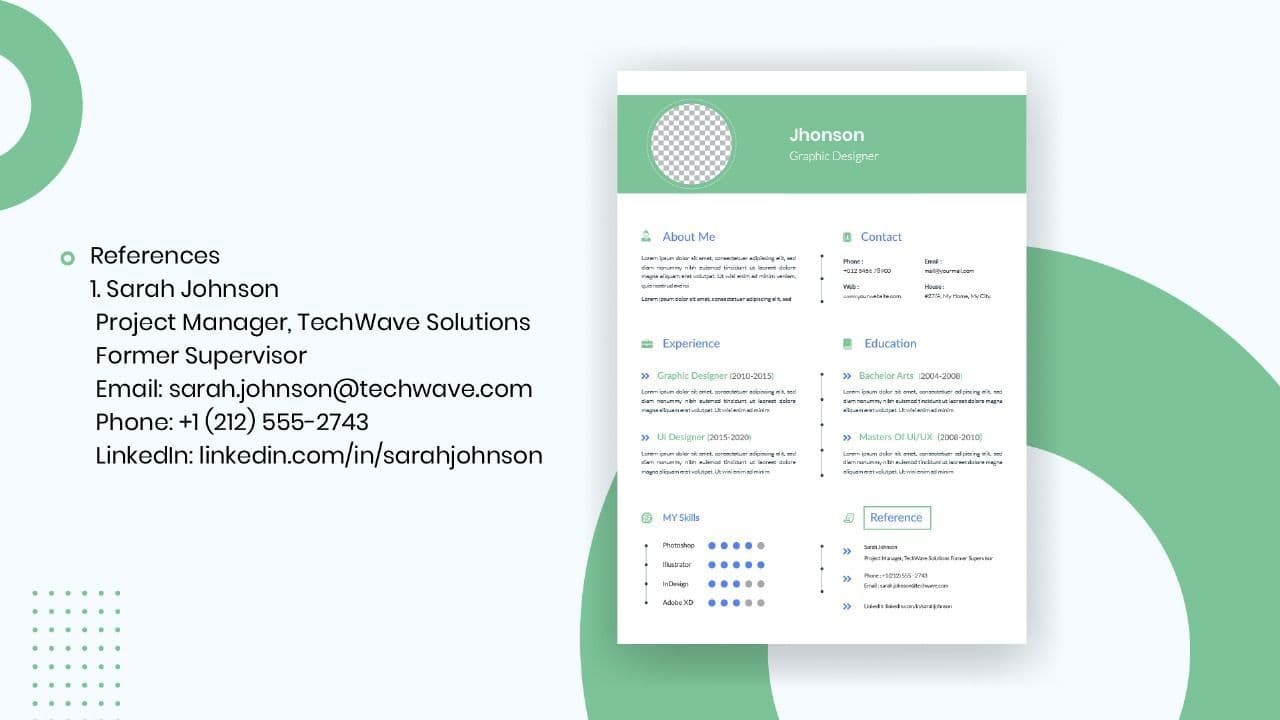
Learn the modern 2026 approach to listing references on your resume for maximum professionalism and recruiter impact.

Is Sound CV good for students and fresh graduates with no experience?
Sound CV is perfect for students and fresh graduates, helping them create professional resumes that highlight skills, projects, and potential even with little or no work experience.
Why Sound CV Is Different from Other AI Resume Builders
Sound CV stands out by creating job-focused, ATS-friendly resumes that highlight real achievements, not just generic content.

Resume Format for HR Job: Professional Guide and Sample Templates
A complete guide to the best resume format for HR jobs, with expert tips and sample templates to help you create a professional and job-ready resume.
How Does the Sound CV Resume Score Checker Work?
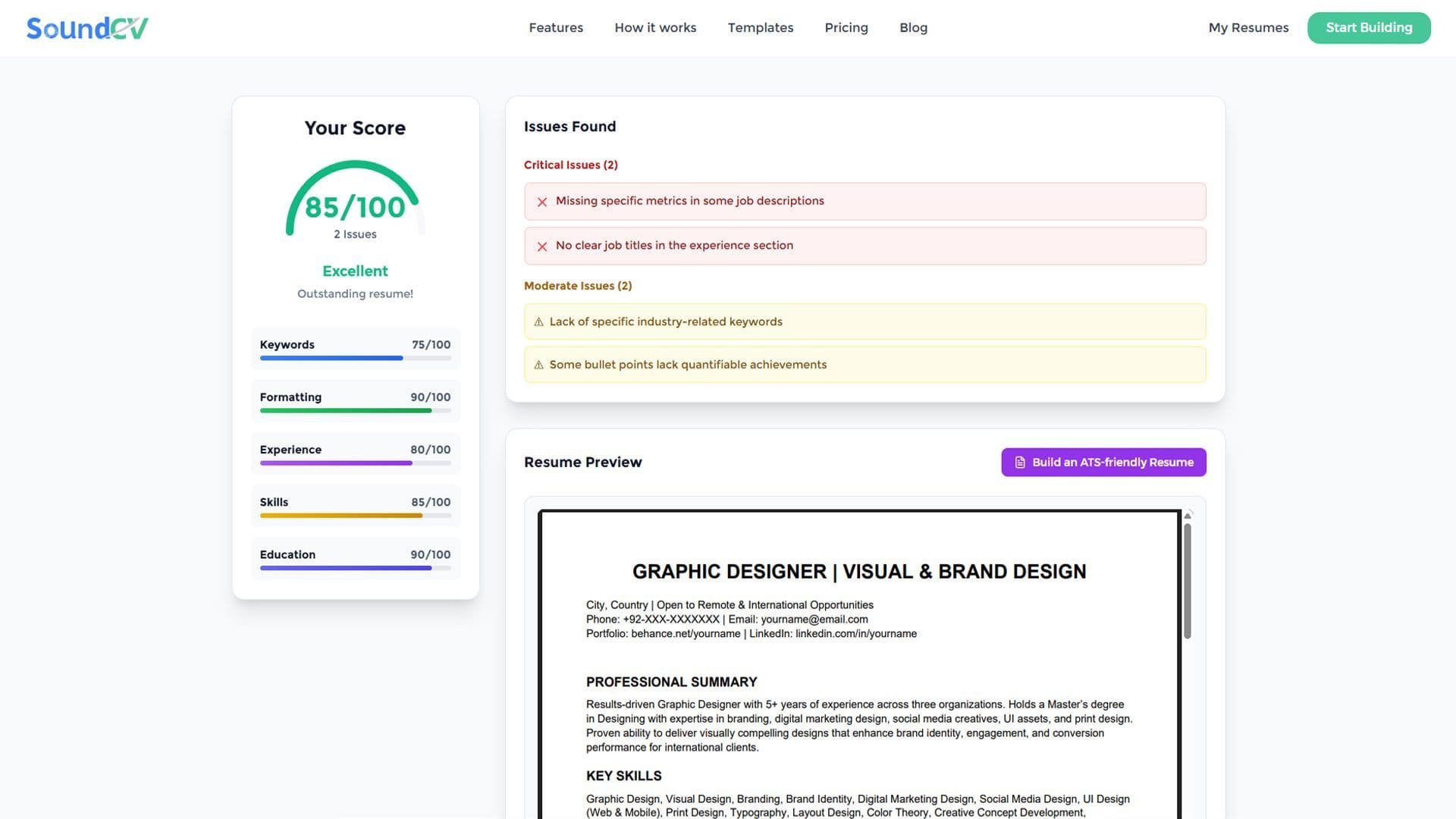
The Sound CV Resume Score Checker analyzes your resume against ATS requirements, job-specific keywords, and structure to provide an instant, actionable score.

What Is a Sound CV? Features, Benefits, and How It Works
A Sound CV is an AI-powered resume that is tailored, ATS-optimized, and designed to showcase your skills and achievements to help you stand out to recruiters.