Resume for Internship: How to Make a CV That Gets You Hired
Learn how to make a CV for an internship with this easy step-by-step guide. Perfect for freshers looking to create a strong first impression.
Overview
Creating a CV for an internship can be challenging for freshers, but this guide makes it simple. Learn how to structure your resume, highlight key skills, and use Sound Cv to build a professional, ATS-friendly CV. Plus, get a Free Resume Score Check after creating your CV to see how it performs.
Resume for Internship: How to Make a CV That Gets You Hired
The right resume for internship positions can be the difference between landing an interview at your dream company and watching the opportunity pass. If you are a student or fresher writing your first internship CV, the process feels overwhelming. What do you put in the experience section when you have no work history? How do you format it? Which sections actually matter to recruiters?
Before sending your internship application, it helps to understand the difference between a CV, resume, and biodata so you send the right document to the right employer.
This guide answers all of those questions. You will learn exactly how to write an internship resume from scratch, what to include at every stage, and how to use the free tools at SoundCV to build something that passes ATS screening and catches the attention of a hiring manager. Whether you are applying for an engineering role, a marketing position, a law firm summer program, or a technology company, the framework below applies to every field.
By the end of this guide you will have a clear structure for your internship cv template, a step-by-step writing process, internship resume examples for different fields, and answers to the most common questions students ask about resume writing.
What Is a CV for Internship and How Is It Different?
When companies ask for a cv for internship positions, they almost always mean a one-to-two page document that shows your education, skills, and any experience you have, even if that experience is coursework, projects, or part-time work. In the UK, Australia, and most international markets, the word CV (curriculum vitae) is standard. In the US and Canada, the same document is typically called a resume. For internships, both terms refer to the same thing.
The key difference between an internship CV and a professional resume is emphasis. A professional CV leans on years of experience and a track record of measurable results. An internship CV leans on potential: your academic results, the projects you have completed, the skills you have built, and the impact you can show even without a full-time job history.
Recruiters who review internship applications know they are reading applications from students with limited work history. They are not looking for five years of experience. They are looking for evidence that you can learn quickly, apply your skills to real problems, and contribute to a team from day one. Your job is to give them that evidence through every section of your CV.
CV Format for Internship: Which Layout Works Best
There are three standard CV formats: chronological, functional, and combination. For students and freshers, the reverse-chronological format works best in most cases. It lists your education and any experience in reverse order, newest first. Recruiters are familiar with this layout, and applicant tracking systems (ATS) scan it reliably.
Use a single-column layout with clear section headings. Avoid text boxes, tables used for layout purposes, and graphics. These elements confuse ATS software and get your application filtered out before a human ever sees it. Many students spend hours designing a visually impressive CV only to have it rejected by automated screening because the system cannot parse the formatting.
Page length: One page for undergraduates with limited experience. Two pages only if you have significant project, research, or work experience that justifies the length.
Font: Arial, Calibri, or Georgia at 10.5 to 12 point. Margins between 0.75 and 1 inch on all sides.
File format: Save as PDF before submitting unless the job posting specifically asks for a Word file. PDF preserves your formatting across devices and operating systems.
Section order for students: Contact Information, Personal Statement, Education, Skills, Projects, Experience (if any), Extracurricular Activities, Certifications.
For a comparison of the most effective layouts for student applications, see Top 5 Resume Formats for Freshers in 2026.
What to Include in Your Internship Resume Template
A complete internship resume template has these sections in this order:
1. Contact Information
Full name, phone number, professional email address, LinkedIn profile URL, and city plus country. Do not include a photo unless applying in a country where it is standard practice (Germany, Japan, and some parts of the Middle East). Do not include your full street address. A professional email address means firstname.lastname@provider.com, not nicknames or numbers.
2. Career Objective or Personal Statement
Two to three sentences. State your degree, your target field, and one specific value you bring to the role. A strong personal statement is concrete, not generic. Compare these two versions:
Weak: "Motivated student seeking a challenging internship opportunity to grow my skills."
Strong: "Final-year Computer Science student at the University of Manchester with hands-on experience building REST APIs in Python. Seeking a software engineering internship to contribute to backend development at scale."
The second version tells the recruiter exactly who you are, what you can do, and what you are looking for. Write one version for each application and tailor it to the company and role.
3. Education
List your degree, university name, graduation year, and GPA (include it only if it is above 3.0 or the equivalent in your grading system). Add relevant coursework, academic achievements, or thesis topics that connect directly to the role you are applying for. A recruiter reviewing a finance internship application wants to see Corporate Finance, Statistics, and Accounting in your coursework. A recruiter reviewing a software internship application wants to see Data Structures, Algorithms, and Systems Programming.
4. Skills
Split into technical skills and soft skills. Keep the list focused on skills you can actually demonstrate in an interview or test. For technical roles: programming languages, tools, and frameworks. For business roles: software, data tools, and languages. For soft skills, list no more than three to four and choose ones you can back up with a specific story or example.
5. Projects and Academic Work
This section replaces the experience section for freshers with no work history. List three to five projects with a one-line impact statement for each. Use numbers wherever possible. "Built a web application that reduced data entry time by 40% for a 10-person team project" is far stronger than "Developed a web application for a university project." Every project entry should have a name, the tools or tech stack used, the date or semester, and a result.
6. Experience
Part-time jobs, freelance work, volunteering, and campus roles all count as experience. Focus on transferable skills and results, not just a list of tasks. Even a summer job in retail can show customer communication, time management under pressure, or cash handling accuracy.
7. Extracurricular Activities
Clubs, competitions, hackathons, case competitions, and leadership roles show initiative that grades alone cannot. Recruiters at competitive internship programs specifically look for this section. A student who founded a debate club or led a team in an entrepreneurship competition has demonstrated leadership skills in a way that is hard to fake.
8. Certifications and Courses
Google, Coursera, LinkedIn Learning, and industry-specific certificates strengthen applications, especially in technology, marketing, data science, and finance. List the certificate name, the issuing organization, and the year. Do not list certifications older than five years unless they are highly relevant and still current.
How to Write a Resume for an Internship Step by Step
Following a structured process removes the paralysis that hits most students when they sit down to write their first internship resume. Here is the exact process to follow:
Step 1: Read the job description carefully. Before writing a single word, highlight every skill, tool, qualification, and responsibility the employer lists. These are your keyword targets. Your resume needs to mirror this language to pass ATS screening and signal alignment to the recruiter reading it.
Step 2: Choose the right resume format for internship applications in your field. Most fields and most companies prefer reverse-chronological. Academic and research roles may ask for a full academic CV format. Creative fields like design or advertising may accept a portfolio link as part of the application. When in doubt, reverse-chronological with a one-page limit is the safest choice.
Step 3: Write a targeted personal statement. Tailor it to each role you apply for. Mention the company by name when you can. "I am applying to [Company]'s summer data science internship because of your work on predictive modelling for healthcare outcomes" shows genuine interest and research. Generic statements say nothing and waste valuable space at the top of your CV.
Step 4: List education with the right details. Your degree and GPA are not enough on their own. Add relevant modules, coursework, a dissertation topic, or any academic recognition. These details help a recruiter understand the depth of your knowledge, not just the credential you earned.
Step 5: Build a strong skills section. List only skills you can demonstrate. If you put SQL on your resume, expect a test or technical question about it in the interview. If you put machine learning frameworks, be ready to discuss your projects. Recruiters for competitive internship programs will probe every claim you make in your skills section.
Step 6: Quantify every experience and project entry. Replace vague descriptions with numbers. Instead of "helped manage social media accounts" write "managed three Instagram accounts that collectively grew from 1,200 to 4,800 followers over a six-month university project." Numbers make your contributions concrete and memorable.
Step 7: Add projects, activities, and certifications. These sections differentiate student resumes far more than an extra paragraph of vague experience. A hackathon win, a Coursera specialization, or a leadership role in a student society all tell the recruiter something specific about you that a standard education section cannot.
Step 8: Proofread twice and run an ATS compatibility check. Paste your CV text into a plain text editor. If it reads cleanly with no formatting errors or symbol garbling, it will likely pass ATS parsing. Use SoundCV's free resume score checker to get an instant ATS compatibility score and a list of specific fixes to apply before you submit.
Sample Resume for Internship with No Experience
Students with no paid work history often stall at the experience section. The solution is to treat the experience section as a broader evidence section and fill it with everything relevant you have done, paid or unpaid.
What to put in the experience section with no job history:
- University project (name it, describe the outcome, add a metric)
- Freelance or volunteer work (even one client, one event, or one semester counts)
- Student society or club (a role title counts as experience)
- Part-time or casual work (retail, tutoring, delivery: show the transferable skills you built)
- Open source contributions (link to the repository and describe your contribution)
- Research assistant work under a professor or department
Here is an example project entry formatted for a technology internship application:
Inventory Management System | Python, Flask, PostgreSQL | 2024
Built a full-stack inventory tracking tool for a university capstone project. Reduced manual data entry time by 60% for simulated warehouse operations. Deployed on AWS EC2 with 99% uptime over the six-week testing period. Code available at github.com/sara-ahmed/inventory-system.
This type of entry gives a hiring manager something concrete to ask about. It proves technical skill, shows you can complete a project end to end, and provides a link to verify your work.
A resume for internship no experience situations does not need to apologize for being entry-level. A strong sample resume for internship with no experience needs to show learning ability, initiative, and relevant academic or project output. Recruiters at top companies hire interns for potential, not prior experience. Your job is to make that potential visible and measurable.
Complete Sample CV for Internship (Copy This Format)
Here is a complete, annotated sample cv for internship applications. Use this as your starting template. Every section is filled with realistic, specific content you can adapt to your own background.
| SARA AHMED sara.ahmed@gmail.com | +44 7911 123456 | linkedin.com/in/sara-ahmed | Manchester, UK |
PERSONAL STATEMENT
Final-year BSc Computer Science student at the University of Manchester (GPA: 3.6/4.0) with practical experience in Python backend development and REST API design. Seeking a software engineering internship where I can contribute to production-grade systems and expand my expertise in distributed architecture. Available from June 2025 for a 12-week placement.
EDUCATION
BSc Computer Science | University of Manchester | 2022 to 2025 | GPA: 3.6/4.0
Relevant coursework: Data Structures and Algorithms, Database Systems, Software Engineering, Operating Systems, Machine Learning Fundamentals
Academic recognition: Dean's List 2023, 2024
TECHNICAL SKILLS
- Languages: Python, JavaScript, SQL, Java
- Frameworks: Flask, React, Node.js
- Tools: Git, Docker, AWS (EC2, S3), PostgreSQL, Postman
- Soft skills: Problem-solving, cross-functional teamwork, written communication
PROJECTS
Inventory Management System | Python, Flask, PostgreSQL | 2024
Built a full-stack inventory tracking application for a university capstone project. Automated manual stock reconciliation and reduced data entry time by 60% for a simulated 50-product warehouse. Deployed on AWS EC2 with 99% uptime across the six-week testing period.
Student Budget Tracker | React, Node.js, MongoDB | 2023
Developed a personal finance app used by 120 fellow students during a three-month beta. Integrated real-time currency conversion via an external API. Received a distinction grade from course supervisors for UI design and data accuracy.
EXPERIENCE
Retail Sales Assistant | H&M Manchester | June 2023 to September 2023
- Handled customer transactions averaging 80 per shift with zero cash discrepancy across the placement
- Trained two new team members during peak season, reducing onboarding time by one week per person
EXTRACURRICULAR ACTIVITIES
- Hackathon (HackMCR 2024): Placed 2nd out of 34 teams for a real-time traffic routing prototype built in 24 hours
- Vice President, Computer Science Society: Organised six industry speaker events attended by 200 students per term
CERTIFICATIONS
- AWS Certified Cloud Practitioner | Amazon Web Services | 2024
- Python for Everybody Specialization | Coursera (University of Michigan) | 2023
References available on request.
Notice what this sample CV does well. Every section has a specific number attached to it. The projects section shows real outcomes, not just a list of tools used. The experience section shows transferable skills from a retail job, not just a description of tasks. The extracurricular section proves initiative and leadership with concrete evidence. This is the standard your own CV should meet.
To build your own version using this structure, use SoundCV's AI resume builder. Select a clean one-column template, fill in your details, and export as an ATS-compatible PDF in under 10 minutes.
Resume for Engineering Internship
Engineering internship applications at large companies go through heavy automated screening before any human review. Companies like Google, Microsoft, Siemens, Boeing, and Tesla each receive tens of thousands of internship applications per cycle. Getting your resume past ATS is the first requirement, not the final goal.
What engineering recruiters look for:
- GPA: Cut-off thresholds vary by company and role. Above 3.0 is generally safe for most applications. Some top-tier firms set the bar higher. Include your GPA if it is 3.0 or above.
- Relevant tools and languages: Match your skills section to the tech stack or engineering tools listed in the job description.
- Project work with hands-on application: Not just theoretical knowledge, but evidence that you have built, tested, or deployed something real.
- Coursework alignment: Data Structures and Algorithms for software roles. Thermodynamics and Materials Science for mechanical roles. Circuit Design and Embedded Systems for electrical roles.
For a software engineer intern resume: Lead the skills section with programming languages and frameworks. Include a GitHub link. List three to five projects with tech stacks, outcomes, and links where available. A strong computer science internship resume template puts education and projects at the top, above any experience section.
For a mechanical engineering internship resume: Lead with CAD tools (SolidWorks, AutoCAD, CATIA), simulation software (ANSYS, MATLAB), and any lab or manufacturing equipment experience. Include your most relevant academic projects, especially any that involved design, testing, or production.
For an electrical engineering internship resume: Lead with circuit design tools, embedded systems platforms (Arduino, Raspberry Pi, STM32), and lab instruments. If you have PCB design experience or have worked with Altium or Eagle, include it prominently.
For a resume for it internship, include networking fundamentals, operating systems, scripting languages, and any system administration or cloud platform experience. CompTIA or cloud certifications (AWS, Azure, Google Cloud) strengthen entry-level IT applications significantly.
CV Format for Internship in Different Industries
The cv format for internship applications is not identical across every field. Recruiters in different industries have specific expectations, and adjusting your format to match those expectations gives you a measurable edge.
Finance and Accounting: One page, reverse-chronological, GPA shown prominently near the top, focus on Excel proficiency, financial modeling experience, and relevant coursework (Corporate Finance, Accounting Principles, Statistics, Econometrics). Quantify any analysis or research work with a result.
Marketing: Highlight campaigns, content, social media metrics, and tools (Google Analytics, HubSpot, Mailchimp, Canva, Meta Ads Manager). A portfolio link or case study adds significant credibility. Extracurricular marketing projects, student newspaper work, or managing a personal brand with measurable follower growth all count.
Law: Two pages are acceptable for law students, especially those with research publications, moot court participation, law review membership, or legal aid experience. Grades matter more in law applications than in most other fields. List relevant modules prominently and include any writing samples or publications.
Technology: A GitHub link is expected by most recruiters reviewing software internship applications. The projects section is more important than the experience section for most undergraduate applicants. Match the tech stack in your skills section to the job description as closely as your actual experience allows. A marketing intern resume for a technology company should still include data tools like Google Analytics and CRM software.
Healthcare and Research: Include lab techniques, research methodology, any publications or conference posters, and relevant certifications (First Aid, CPR, HIPAA training, or specific laboratory software). References matter more in research and healthcare than in most other fields. Note "References available on request" at the bottom.
Consulting and Business: Case competition experience, financial modeling, Excel and PowerPoint proficiency, and any quantitative analysis work are all strong signals. Consulting recruiters value structured thinking. Use your bullet points to show logic and outcome, not just activity.
Common Mistakes That Get Internship CVs Rejected
Using a generic personal statement. "I am a motivated student seeking a challenging opportunity to develop my skills" adds nothing. It says the same thing as every other applicant. Write a specific, targeted statement that names the field, your top skill, and why this company.
Listing skills you cannot demonstrate. Recruiters test what you claim. If you put SQL, Python, or financial modeling on your resume, expect a specific question or test in the interview. List skills you can discuss confidently and prove with a project example.
Leaving out a strong GPA. A GPA of 3.0 or above is a differentiator in competitive applications. Many students omit it out of false modesty. If yours is above 3.0, include it. If it is below 3.0, leave it out and strengthen the projects and activities sections instead.
Submitting without an ATS check. Without an ATS scan, you have no way of knowing if your resume is being filtered out before any human reads it. Run every version through SoundCV's resume score checker before submitting. It takes two minutes and can prevent weeks of silence after applications.
Making it longer than one page when you have limited experience. Padding a student resume to two pages with filler text, extended bullet points, and white space signals poor judgment to the recruiter reviewing it. Editing down to one tight, focused page is a skill in itself.
Using a resume builder for internship that produces graphics-heavy or multi-column PDFs. Many free tools output files that ATS cannot parse correctly. The text gets scrambled, columns merge incorrectly, and your application is rejected before anyone reads it. Use a builder like SoundCV's AI resume builder that exports clean, ATS-compatible PDFs by design.
Sending the same CV to every application without tailoring. A resume for summer internship applications at ten different companies should be ten slightly different documents. The personal statement, the skills section emphasis, and the order of projects should all reflect the specific role and company. Even small changes increase your match rate significantly.
How SoundCV Helps You Build the Perfect Internship CV
SoundCV's AI resume builder removes the formatting work so you can focus entirely on your content. You choose a template, fill in your details, and the tool handles layout, spacing, fonts, and ATS compatibility automatically. Every template in the library is designed to pass ATS screening at major companies.
The resume score checker gives you instant feedback on your internship CV before you submit it anywhere. It scans for ATS compatibility, keyword presence, and content completeness, then gives you a score out of 100 with a specific list of fixes to apply. Students who run their resume through the checker and apply the suggested fixes typically see their score jump by 15 to 25 points on the first pass.
For students who want a complete first draft quickly: open the AI builder, enter your education, projects, and skills, select a clean template, and export as a PDF in under 10 minutes. For students who already have a CV: upload it to the score checker, review your results, apply the suggestions, and re-check until your score is above 80. An internship CV that scores above 80 in SoundCV's checker is well-positioned to pass most ATS filters and reach a human reviewer.
If you need guidance on writing your first job application from scratch, the student first job resume format guide walks through each section with free templates.
The cover letter builder is also available if the role requires one. A cover letter gives you space to explain your motivation and highlight the one or two experiences that make you a strong fit for this specific company. Most internship applications benefit from a tailored cover letter, especially at smaller companies where hiring decisions are more personal. For a ready-to-use example, see this sample cover letter for IT internship applications.
Frequently Asked Questions
How to create a resume for an internship?
Start with your contact information at the top, then add a personal statement tailored to the specific role and company. Follow with your education section (degree, university, GPA, relevant coursework), then skills (technical and soft), then projects and experience. Use reverse-chronological order, keep it to one page, save as PDF, and run it through a free ATS checker like SoundCV's resume score tool before submitting. Tailor the personal statement and skills section for each individual application to improve your match rate.
How to make a resume for internship?
Choose a clean, single-column reverse-chronological format. Lead with a personal statement that names the role and your top relevant skill. Add your education with GPA and relevant coursework. Build a skills section that mirrors the language in the job description. Replace an empty experience section with academic projects, each with a specific outcome and a metric. Add extracurricular activities and certifications. Proofread twice, check ATS compatibility, and save as PDF. Every application should have a version of the CV tailored to that specific role.
What should a sample resume for internship with no experience look like?
A strong sample resume for internship with no experience has five core sections: a targeted personal statement, an education section with GPA and relevant coursework, a projects section with three to five entries (each including the tools used, the outcome, and a metric), a skills section, and extracurricular activities. You can title the experience section "Projects and Activities" if you have no paid work history. The goal is to fill every section with specific, evidence-backed claims rather than vague filler language.
How should a student resume for internship be formatted?
Use a one-page single-column layout with clear bold section headings. Choose a standard font like Arial or Calibri at 11 point. Set margins to 0.75 to 1 inch on all sides. Save as PDF. Avoid tables used for layout purposes, text boxes, columns, icons, and graphics, as these elements break ATS parsing and cause your application to be filtered incorrectly. The simpler and cleaner the formatting, the more reliably it will pass automated screening.
How to write internship experience in resume and how do I format it?
List each experience entry with the company or organization name, your role title, and the dates. Under each entry, write two to three bullet points. Each bullet should start with a strong action verb (analysed, built, managed, presented, led) and include a result or output. Example: "Analysed three months of sales data in Excel to identify a pricing inconsistency, leading to a 12% improvement in Q3 margin for the product line." If you are describing a project rather than paid work, use the same format: project name, tools used, and an outcome with a number.
How to write a resume for internship with no experience?
Focus on three areas: academic projects, certifications, and extracurricular activities. For each project, include the tools you used and a result (even a simulated result from a university assignment counts). For certifications, list the issuing organization and year. For activities, include any role title and one result or achievement (event attendance numbers, competition placement, funds raised). Every entry should have something specific and verifiable attached to it. Vague entries with no results or outputs add nothing to an internship application.
How to write CV for internship?
Use the standard CV structure: contact details, personal statement, education, skills, experience or projects, extracurricular activities, and references (available on request). Write a new personal statement for each application, targeting the specific role and company. Align your skills section with the language used in the job description to improve ATS match rates. Keep the document to one page for undergraduate applications. Save as PDF and run an ATS check before submitting.
How to make a good resume for internship?
A good internship resume is specific, not generic. It opens with a personal statement that names the target role and your top relevant skill. It uses the exact keywords from the job description in the skills and experience sections. Every project or experience entry includes a result with a number. It fits on one page, passes ATS screening, and is tailored to the specific company and role. Use SoundCV's AI resume builder to produce a clean, ATS-ready first draft in minutes, then run it through the resume score checker to identify and fix any gaps before submitting.
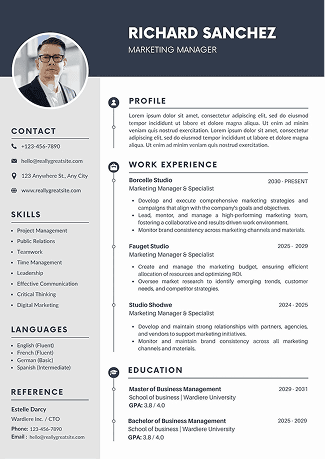
Related Blogs
Explore more insights and guides you might like.
CV vs Resume vs Biodata – The Complete Difference Guide
Learn the key differences between a CV, resume, and biodata and discover which one to use for your next job application.
CV Font Style: CV Guide with Templates (2026) | Best Font Style for Resume
Choose the best CV font style for 2026. Improve readability, ATS compatibility, and create a professional resume that stands out instantly.
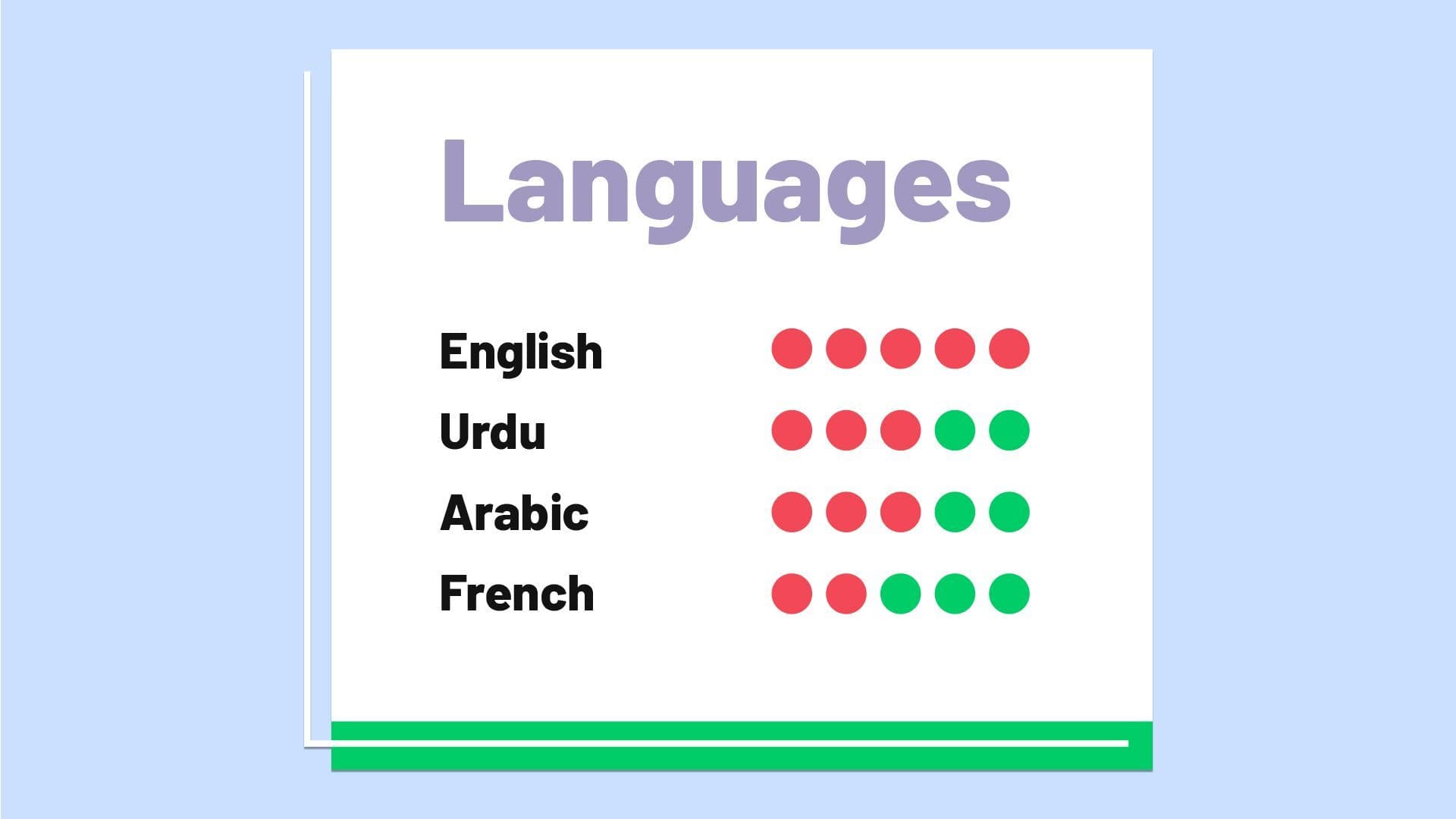
Languages Known in CV: CV Guide with Templates & Examples (2026)
Learn how to list Languages Known in your CV the right way in 2026. This guide covers proficiency levels, examples, and ready-to-use templates to help you present your language skills professionally and make your CV stand out.
Free CV Creator Online – Build a Professional CV in Minutes
Create a professional CV online in minutes using free tools with ATS-friendly templates, easy editing, and instant download options.
How to Write an ATS Friendly Resume That Gets Interviews
Write an ATS friendly resume using the right format, keywords, and structure to pass applicant tracking systems and land more interviews.
What Is a Hybrid CV? Format, Benefits & Writing Tips (Complete Guide)
A hybrid CV combines skills and work history, helping professionals showcase strengths clearly while remaining ATS-friendly and appealing to recruiters.