How to Write a Data Scientist Resume That Impresses Recruiters
Build an ATS-friendly Data Scientist resume with the right skills, projects, and impact-driven achievements to impress recruiters and get interviews.
Overview
Learn how to write a powerful Data Scientist resume that highlights technical expertise, real business impact, and relevant projects. Discover ATS optimization tips, formatting best practices, and proven strategies to stand out to recruiters in today’s competitive data science job market.
The demand for data scientists continues to grow, but so does the competition. Recruiters receive hundreds of applications for a single role, and most resumes are rejected within seconds. This makes your data scientist resume one of the most critical tools in your job search. A strong resume doesn’t just list technical skills, it tells a clear story about how you use data to solve real business problems.
Many candidates fail because their resumes are either too technical, too generic, or not optimized for Applicant Tracking Systems (ATS). Recruiters are not only looking for programming knowledge or machine learning expertise; they want evidence of impact, clarity, and relevance. This guide explains how to write a data scientist resume that stands out, passes ATS screening, and impresses hiring managers.
Key Points
- A Data Scientist resume should focus on business impact, not just tools and technologies.
- Use a reverse-chronological or hybrid format for better readability and ATS compatibility.
- Include key skills such as Python, SQL, Machine Learning, Statistics, and Data Visualization.
- Highlight projects with measurable results like accuracy improvement, revenue growth, or cost reduction.
- Add links to GitHub, Kaggle, or portfolio to showcase practical work.
- Use job-specific keywords to pass Applicant Tracking Systems (ATS).
- Keep your resume 1–2 pages with clear headings and bullet points.
- Avoid graphics, icons, tables, or multi-column layouts that confuse ATS.
- Certifications like Google Data Analytics, IBM Data Science, or AWS ML can strengthen your profile.
- Tools like SoundCV help create AI-optimized, recruiter-ready resumes quickly
How to Write a Data Scientist Resume That Impresses Recruiters
The demand for data scientists continues to grow, but so does the competition. Recruiters receive hundreds of applications for a single role, and most resumes are rejected within seconds. This makes your data scientist resume one of the most critical tools in your job search. A strong resume doesn’t just list technical skills, it tells a clear story about how you use data to solve real business problems.
Many candidates fail because their resumes are either too technical, too generic, or not optimized for Applicant Tracking Systems (ATS). Recruiters are not only looking for programming knowledge or machine learning expertise; they want evidence of impact, clarity, and relevance. This guide explains how to write a data scientist resume that stands out, passes ATS screening, and impresses hiring managers.
Also Read : English Teacher Resume Guide With Format and Examples
Understanding the Role of a Data Scientist
Before writing or updating your resume, it is essential to understand what the role of a data scientist truly involves. Data scientists operate at the intersection of data, technology, and business. Their primary responsibility is to turn raw data into meaningful insights that help organizations make informed decisions, improve performance, and solve complex problems.
At a core level, data scientists analyze both structured and unstructured data to uncover patterns, trends, and opportunities. They work with large datasets, clean and prepare data, and apply statistical techniques to ensure accuracy and reliability. Beyond analysis, data scientists build predictive and statistical models that help forecast outcomes, optimize processes, and support strategic planning.
Communication is another critical part of the role. Recruiters expect data scientists to clearly explain findings to non-technical stakeholders such as product managers, executives, and marketing teams. The ability to translate complex data into actionable insights is often just as important as technical expertise. Data scientists must bridge the gap between technical analysis and business understanding.
In many organizations, data scientists also contribute directly to business strategy. Their insights influence decision-making, product development, customer targeting, and operational efficiency. This business impact is a key factor recruiters look for when reviewing resumes.
It is also important to distinguish the data scientist role from closely related positions. A data analyst typically focuses on reporting, dashboards, and visualization, while a machine learning engineer specializes in deploying and maintaining models in production environments. A data scientist combines elements of both roles, with a stronger emphasis on experimentation, modeling, and deriving business value from data.
Understanding this broader scope allows you to position your data scientist resume effectively. Instead of listing tools alone, you can highlight outcomes, problem-solving abilities, and real-world impact qualities that truly resonate with recruiters.
Also Read : Digital Marketing Resume Tips & Examples to Get Interviews
Essential Sections of a Data Scientist Resume
A well-structured data scientist resume should be clear, logical, and easy to scan for both recruiters and ATS systems.
Resume Header
Include your full name, job title (Data Scientist), phone number, professional email, LinkedIn profile, and GitHub or portfolio link if applicable.
Professional Summary
A short overview highlighting your experience, specialization, and value.
Technical Skills
A categorized list of tools, languages, and technologies relevant to data science.
Work Experience
Your most important section—focused on achievements and impact.
Projects and Research
Especially important for freshers or early-career data scientists.
Education and Certifications
Degrees, certifications, bootcamps, and relevant coursework.
Also Read : HR Executive Resume Guide With Format, Skills, and Examples
Writing a Powerful Data Scientist Resume Summary
Your resume summary is one of the most important sections of your data scientist resume because it is the first thing recruiters and hiring managers read. In just a few seconds, this short paragraph determines whether they continue reviewing your application. A strong resume summary should clearly communicate your expertise, specialization, and value without using vague or generic language.
Instead of writing broad statements such as “Data scientist with experience in Python and machine learning,” focus on what makes you effective as a professional. Highlight your years of experience, areas of specialization, and the impact of your work. For example, describing yourself as a “results-driven data scientist with 4+ years of experience building predictive models and data-driven solutions that improved business performance across multiple domains” immediately demonstrates credibility and relevance.
Your summary should reflect the role you are applying for. Data scientist positions vary across industries, and recruiters expect resumes to be aligned with their specific requirements. Tailoring your summary for each job application by including keywords from the job description helps your resume perform better in Applicant Tracking Systems (ATS). These systems scan resumes for role-specific terms, and a keyword-optimized summary increases the chances of passing the initial screening.
At the same time, your summary must remain clear and readable for human reviewers. Avoid listing too many tools or technical details in this section. Instead, focus on your core strengths, problem-solving abilities, and the value you bring to an organization.
A well-written data scientist resume summary sets the tone for the entire document. It guides the reader’s expectations, highlights your most important qualifications, and encourages recruiters to explore your experience in more detail. When crafted thoughtfully, this section becomes a powerful introduction that strengthens your overall resume.
Also Read : Entry-Level Software Tester Resume: Sample, Format & ATS Tips for Freshers
Key Skills to Include in a Data Scientist Resume
Your skills section should be relevant, structured, and role-specific.
Programming Languages
- Python
- R
- SQL
Data Analysis and Visualization
- Pandas, NumPy
- Matplotlib, Seaborn
- Tableau, Power BI
Machine Learning and Statistics
- Regression, classification, clustering
- Scikit-learn, TensorFlow, PyTorch
- Statistical modeling and hypothesis testing
Big Data and Cloud Technologies
- Spark, Hadoop
- AWS, Google Cloud, Azure
Soft Skills
- Analytical thinking
- Communication
- Business problem-solving
Avoid listing every tool you’ve ever used. Focus on skills that match the job you’re applying for.
Also Read : Project Manager Resume: Examples, Skills & ATS Writing Tips
Showcasing Data Scientist Work Experience
This is where most data scientist resumes fail. Recruiters don’t want to see job duties—they want results.
Instead of:
“I worked on machine learning models.”
Write:
“Developed and deployed machine learning models that increased prediction accuracy by 25% and reduced operational costs.”
Use metrics wherever possible:
- Revenue impact
- Accuracy improvements
- Time saved
- Business outcomes
Each bullet point should answer: What problem did you solve, and what was the result?
Also Read : The Ultimate Guide to Crafting an Effective Cover Letter Header
Highlighting Projects and Research
Projects are especially important for students, freshers, and career switchers. A strong project section can compensate for limited work experience.
Include:
- Project title and objective
- Tools and techniques used
- Your role and contribution
- Measurable outcomes or insights
Link to GitHub repositories, Kaggle profiles, or published research when possible. This adds credibility and allows recruiters to verify your work.
Also Read : What Is the Purpose of a Cover Letter? Why It Still Matters in 2026
Data Scientist Resume Format and Layout Best Practices
The best formats for a data scientist resume are:
- Reverse-chronological (most common)
- Hybrid format (skills + experience)
Formatting tips:
- Use simple fonts (Calibri, Arial)
- Keep the resume 1–2 pages
- Use bullet points, not paragraphs
- Avoid graphics, icons, and charts
ATS systems prefer clean, text-based resumes with standard headings.
Also Read : Resume Format for HR Job: Professional Guide and Sample Templates
Optimizing Your Data Scientist Resume for ATS
Most companies use ATS to filter resumes before human review. To pass ATS screening:
- Use keywords from the job description
- Match role-specific terminology
- Avoid images, tables, and columns
- Use standard section headings
A well-optimized data scientist resume increases your chances of reaching recruiters significantly.
Certifications and Education That Strengthen a Data Scientist Resume
Recruiters value both formal education and continuous learning.
Relevant degrees:
- Computer Science
- Data Science
- Statistics
- Mathematics
Popular certifications:
- Google Data Analytics
- IBM Data Science
- AWS Machine Learning
- Coursera and edX programs
Certifications demonstrate commitment and skill development, especially when paired with practical experience.
Also Read : Resume Format for College Students: Easy Guide with Samples
Common Data Scientist Resume Mistakes to Avoid
Avoid these frequent errors:
- Focusing only on tools, not impact
- Writing overly technical descriptions
- Using generic summaries
- Not tailoring resumes for each role
A data scientist resume should balance technical depth with business relevance.
Also Read : Resume Format for Business Development Executive (BDE) – Professional Guide
Tips to Make Your Data Scientist Resume Stand Out
To stand out in a competitive market:
- Customize your resume for every job
- Add portfolio, GitHub, or Kaggle links
- Use metrics and impact-driven language
- Keep content clear and concise
Recruiters remember resumes that tell a clear story of value.
Also Read : Python Developer Resume for Freshers: Format, Skills & Sample
Conclusion
A strong data scientist resume is more than a list of skills; it's a strategic document that communicates your ability to turn data into decisions. By focusing on impact, optimizing for ATS, and aligning your experience with recruiter expectations, you significantly improve your chances of landing interviews at top companies.
From structuring your resume correctly to showcasing projects and quantifying results, every detail matters. A well-crafted data scientist resume opens doors to high-growth roles and long-term career opportunities.
With Sound CV, data scientists can build ATS-optimized, recruiter-ready resumes faster and smarter. Sound CV’s AI-powered tools help analyze job descriptions, select the right keywords, and present your experience in a clear, professional format—giving you a competitive edge in landing your next data science role.
Understanding the Role of a Data Scientist
Before writing or updating your resume, it is essential to understand what the role of a data scientist truly involves. Data scientists operate at the intersection of data, technology, and business. Their primary responsibility is to turn raw data into meaningful insights that help organizations make informed decisions, improve performance, and solve complex problems.
At a core level, data scientists analyze both structured and unstructured data to uncover patterns, trends, and opportunities. They work with large datasets, clean and prepare data, and apply statistical techniques to ensure accuracy and reliability. Beyond analysis, data scientists build predictive and statistical models that help forecast outcomes, optimize processes, and support strategic planning.
Communication is another critical part of the role. Recruiters expect data scientists to clearly explain findings to non-technical stakeholders such as product managers, executives, and marketing teams. The ability to translate complex data into actionable insights is often just as important as technical expertise. Data scientists must bridge the gap between technical analysis and business understanding.
In many organizations, data scientists also contribute directly to business strategy. Their insights influence decision-making, product development, customer targeting, and operational efficiency. This business impact is a key factor recruiters look for when reviewing resumes.
It is also important to distinguish the data scientist role from closely related positions. A data analyst typically focuses on reporting, dashboards, and visualization, while a machine learning engineer specializes in deploying and maintaining models in production environments. A data scientist combines elements of both roles, with a stronger emphasis on experimentation, modeling, and deriving business value from data.
Understanding this broader scope allows you to position your data scientist resume effectively. Instead of listing tools alone, you can highlight outcomes, problem-solving abilities, and real-world impact qualities that truly resonate with recruiters.
Essential Sections of a Data Scientist Resume
A well-structured data scientist resume should be clear, logical, and easy to scan for both recruiters and ATS systems.
Resume Header
Include your full name, job title (Data Scientist), phone number, professional email, LinkedIn profile, and GitHub or portfolio link if applicable.
Professional Summary
A short overview highlighting your experience, specialization, and value.
Technical Skills
A categorized list of tools, languages, and technologies relevant to data science.
Work Experience
Your most important section—focused on achievements and impact.
Projects and Research
Especially important for freshers or early-career data scientists.
Education and Certifications
Degrees, certifications, bootcamps, and relevant coursework.
Writing a Powerful Data Scientist Resume Summary
Your resume summary is one of the most important sections of your data scientist resume because it is the first thing recruiters and hiring managers read. In just a few seconds, this short paragraph determines whether they continue reviewing your application. A strong resume summary should clearly communicate your expertise, specialization, and value without using vague or generic language.
Instead of writing broad statements such as “Data scientist with experience in Python and machine learning,” focus on what makes you effective as a professional. Highlight your years of experience, areas of specialization, and the impact of your work. For example, describing yourself as a “results-driven data scientist with 4+ years of experience building predictive models and data-driven solutions that improved business performance across multiple domains” immediately demonstrates credibility and relevance.
Your summary should reflect the role you are applying for. Data scientist positions vary across industries, and recruiters expect resumes to be aligned with their specific requirements. Tailoring your summary for each job application by including keywords from the job description helps your resume perform better in Applicant Tracking Systems (ATS). These systems scan resumes for role-specific terms, and a keyword-optimized summary increases the chances of passing the initial screening.
At the same time, your summary must remain clear and readable for human reviewers. Avoid listing too many tools or technical details in this section. Instead, focus on your core strengths, problem-solving abilities, and the value you bring to an organization.
A well-written data scientist resume summary sets the tone for the entire document. It guides the reader’s expectations, highlights your most important qualifications, and encourages recruiters to explore your experience in more detail. When crafted thoughtfully, this section becomes a powerful introduction that strengthens your overall resume.
Key Skills to Include in a Data Scientist Resume
Your skills section should be relevant, structured, and role-specific.
Programming Languages
- Python
- R
- SQL
Data Analysis and Visualization
- Pandas, NumPy
- Matplotlib, Seaborn
- Tableau, Power BI
Machine Learning and Statistics
- Regression, classification, clustering
- Scikit-learn, TensorFlow, PyTorch
- Statistical modeling and hypothesis testing
Big Data and Cloud Technologies
- Spark, Hadoop
- AWS, Google Cloud, Azure
Soft Skills
- Analytical thinking
- Communication
- Business problem-solving
Avoid listing every tool you’ve ever used. Focus on skills that match the job you’re applying for.
Showcasing Data Scientist Work Experience
This is where most data scientist resumes fail. Recruiters don’t want to see job duties—they want results.
Instead of:
“I worked on machine learning models.”
Write:
“Developed and deployed machine learning models that increased prediction accuracy by 25% and reduced operational costs.”
Use metrics wherever possible:
- Revenue impact
- Accuracy improvements
- Time saved
- Business outcomes
Each bullet point should answer: What problem did you solve, and what was the result?
Highlighting Projects and Research
Projects are especially important for students, freshers, and career switchers. A strong project section can compensate for limited work experience.
Include:
- Project title and objective
- Tools and techniques used
- Your role and contribution
- Measurable outcomes or insights
Link to GitHub repositories, Kaggle profiles, or published research when possible. This adds credibility and allows recruiters to verify your work.
Data Scientist Resume Format and Layout Best Practices
The best formats for a data scientist resume are:
- Reverse-chronological (most common)
- Hybrid format (skills + experience)
Formatting tips:
- Use simple fonts (Calibri, Arial)
- Keep the resume 1–2 pages
- Use bullet points, not paragraphs
- Avoid graphics, icons, and charts
ATS systems prefer clean, text-based resumes with standard headings.
Optimizing Your Data Scientist Resume for ATS
Most companies use ATS to filter resumes before human review. To pass ATS screening:
- Use keywords from the job description
- Match role-specific terminology
- Avoid images, tables, and columns
- Use standard section headings
A well-optimized data scientist resume increases your chances of reaching recruiters significantly.
Certifications and Education That Strengthen a Data Scientist Resume
Recruiters value both formal education and continuous learning.
Relevant degrees:
- Computer Science
- Data Science
- Statistics
- Mathematics
Popular certifications:
- Google Data Analytics
- IBM Data Science
- AWS Machine Learning
- Coursera and edX programs
Certifications demonstrate commitment and skill development, especially when paired with practical experience.
Common Data Scientist Resume Mistakes to Avoid
Avoid these frequent errors:
- Focusing only on tools, not impact
- Writing overly technical descriptions
- Using generic summaries
- Not tailoring resumes for each role
A data scientist resume should balance technical depth with business relevance.
Tips to Make Your Data Scientist Resume Stand Out
To stand out in a competitive market:
- Customize your resume for every job
- Add portfolio, GitHub, or Kaggle links
- Use metrics and impact-driven language
- Keep content clear and concise
Recruiters remember resumes that tell a clear story of value.
Conclusion
A strong data scientist resume is more than a list of skills; it's a strategic document that communicates your ability to turn data into decisions. By focusing on impact, optimizing for ATS, and aligning your experience with recruiter expectations, you significantly improve your chances of landing interviews at top companies.
From structuring your resume correctly to showcasing projects and quantifying results, every detail matters. A well-crafted data scientist resume opens doors to high-growth roles and long-term career opportunities.
With Sound CV, data scientists can build ATS-optimized, recruiter-ready resumes faster and smarter. Sound CV’s AI-powered tools help analyze job descriptions, select the right keywords, and present your experience in a clear, professional format—giving you a competitive edge in landing your next data science role.
FAQs
Frequently asked questions about this topic
Related Blogs
Explore more insights and guides you might like.
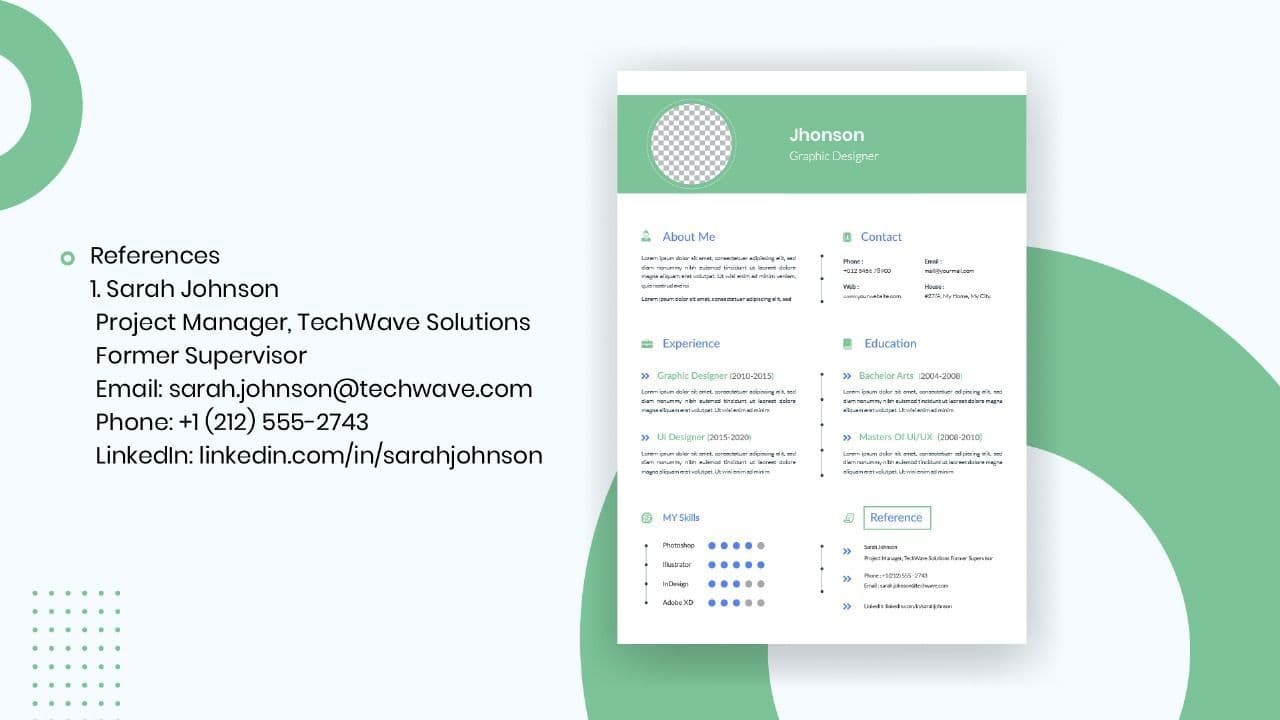
How to List References on a Resume in 2026
Learn the modern 2026 approach to listing references on your resume for maximum professionalism and recruiter impact.

Is Sound CV good for students and fresh graduates with no experience?
Sound CV is perfect for students and fresh graduates, helping them create professional resumes that highlight skills, projects, and potential even with little or no work experience.
Why Sound CV Is Different from Other AI Resume Builders
Sound CV stands out by creating job-focused, ATS-friendly resumes that highlight real achievements, not just generic content.

Resume Format for HR Job: Professional Guide and Sample Templates
A complete guide to the best resume format for HR jobs, with expert tips and sample templates to help you create a professional and job-ready resume.
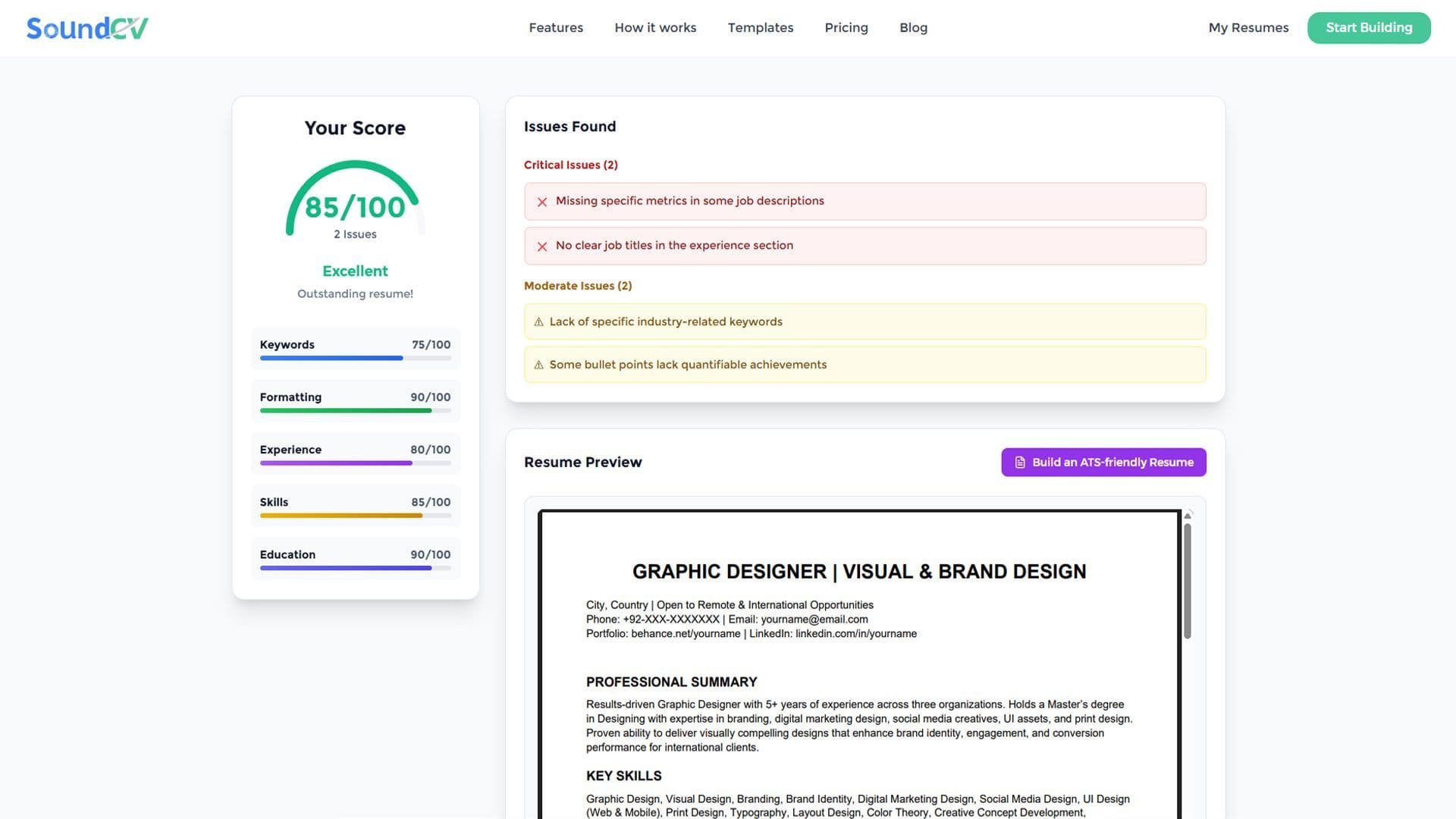
How Does the Sound CV Resume Score Checker Work?
The Sound CV Resume Score Checker analyzes your resume against ATS requirements, job-specific keywords, and structure to provide an instant, actionable score.

What Is a Sound CV? Features, Benefits, and How It Works
A Sound CV is an AI-powered resume that is tailored, ATS-optimized, and designed to showcase your skills and achievements to help you stand out to recruiters.