Resume Format for Civil Engineer Fresher: Tips, Structure & Sample
Complete guide to creating a professional civil engineer fresher resume with structure, tips, skills, and ATS-friendly formatting.
Overview
Discover the best resume format for civil engineer fresher roles with a full sample, structure, technical skills, software, role-specific tips, and ATS optimization to improve shortlisting chances.
Starting a career in civil engineering can feel difficult, especially for fresh graduates entering a crowded job market. Many freshers have strong academic knowledge but struggle to present it on paper. The right resume format for civil engineer fresher candidates solves that problem by organizing your education, internships, projects, and technical skills in a way recruiters can scan in seconds.
A clear civil engineer resume bridges the gap between classroom learning and what hiring managers expect on a real construction site. This guide walks you through the exact structure, a full civil engineer resume sample, role-specific tips, software to list, and the mistakes that get fresher resumes rejected. Follow it from top to bottom and you will have a job-ready resume by the end.
Key Points
- The best resume format for civil engineer fresher roles is clean, one page, and reverse-chronological or hybrid.
- Recruiters scan each resume in seconds, so structure and readability decide whether you get shortlisted.
- Lead with education, internships, academic projects, and technical skills, since you have limited work history.
- List real civil engineering software such as AutoCAD, STAAD Pro, ETABS, Civil 3D, Revit, and Primavera.
- Include site training and industrial exposure to show practical readiness.
- Keep the resume ATS-friendly with standard section headings and no images or text boxes.
- Tailor the resume for the role you want: site engineer, structural engineer, planning engineer, or quantity surveyor.
- A tool like SoundCV builds an ATS-ready civil engineer resume in minutes and checks it against the job description.
Why a Strong Resume Matters for Civil Engineer Freshers
For civil engineering freshers, the resume is the first and often only chance to make an impression. Recruiters in construction and infrastructure look for candidates who show reliability, solid technical fundamentals, and readiness to work on real projects. Since you do not have years of experience yet, the resume carries the full weight of that judgment.
Experienced engineers can lean on project history. As a fresher, you have to present your academic background, internships, training, and software skills in a clear, structured way. A well-organized resume format for civil engineer fresher roles makes sure your degree, site exposure, and tool knowledge are easy to find within the first few seconds of a scan.
A strong civil engineer resume does three things at once. It proves professionalism through clean formatting and error-free content. It highlights practical exposure such as internships and academic projects. And it signals that you are serious about starting your career in civil engineering. That combination is what moves your application from the reject pile to the interview list.
Also Read: Best Resume Format for Engineering Students (ATS-Friendly Guide)
What Recruiters Look for in a Civil Engineer Fresher Resume
When recruiters hire fresh civil engineers, they focus on fundamentals rather than years of experience. They want proof that you understand core concepts and can apply theory in practical situations. A well-built resume conveys that readiness without making them dig for it.
The first thing they check is your academic background. Your degree, university, key subjects, and CGPA help them judge your technical foundation. Next comes internship or site training exposure, which shows you have stood on a real construction site and understand how engineering works beyond the textbook. Even a short six-week internship adds real value.
Recruiters also scan for technical skills, especially civil engineering software such as AutoCAD, STAAD Pro, or ETABS. Familiarity with these tools signals that you can handle drafting, design, or analysis tasks from day one. Knowledge of construction processes such as surveying, material testing, estimation, and quality control shows practical awareness that many freshers lack.
Finally, recruiters value clarity and attention to detail. A resume that is easy to scan, logically ordered, and free of typos reflects the discipline the profession demands. Sloppy formatting suggests sloppy site work, so a clean layout is part of the message you send.
Also Read: ATS-Friendly Resume Format for IT Engineers in 2026
Best Resume Format for Civil Engineer Freshers
The most reliable resume format for civil engineer fresher candidates is the reverse-chronological or hybrid layout. This format puts education and training first, then skills and projects, which matches how recruiters read a fresher profile. It keeps the strongest parts of your background at the top where attention is highest.
The reverse-chronological format works well because it emphasizes your most recent learning and clearly presents internships and training. The hybrid format adds a skills-forward block near the top, which helps when your software and technical skills are stronger than your work history. Both beat the purely functional format, which recruiters distrust because it hides timelines.
Keep the resume to one page. Two pages are acceptable only if you have multiple internships, certifications, or significant projects to show. The same logic applies to a broader engineering resume format: density and relevance matter more than length, and a tight one-page document almost always reads better than a padded two-page one.
Also Read: Best Resume Format for Mechanical Engineers
Ideal Resume Structure for Civil Engineer Freshers
Use the section order below. It is the structure recruiters expect, and it keeps your civil engineer resume readable for both humans and applicant tracking systems.
Resume Header and Contact Details
Start with clear, professional contact information. Include your full name, phone number, a professional email address, your city and country, and a LinkedIn profile if you have one. Skip date of birth, marital status, and full home address unless an employer specifically asks. Use a simple email like firstname.lastname@gmail.com rather than a nickname.
Career Objective for a Civil Engineer Fresher
A career objective is important for freshers because it frames your goals and shows alignment with the role in two or three lines. Keep it short, name your specialization, and show eagerness to contribute. A vague objective wastes the most valuable space on the page.
Sample objective: "Civil engineering graduate with site-training experience in RCC and quantity estimation, seeking an entry-level site engineer role where I can apply AutoCAD and STAAD Pro skills to deliver quality construction work."
Educational Qualifications
Place education near the top of any resume format for engineering students and freshers. List your degree such as B.E. or B.Tech in Civil Engineering, your university or college, your graduation year, and your CGPA or percentage if it is strong. You can add relevant subjects such as Structural Analysis, RCC Design, Geotechnical Engineering, or Transportation Engineering to show depth.
Technical Skills Section
This is one of the most important blocks for a fresher. When recruiters search for civil engineer skills for resume content, they expect a mix of core engineering skills and software. Core skills include surveying, quantity estimation and billing, structural design basics, construction materials knowledge, and quality control. Software skills include AutoCAD, STAAD Pro, ETABS, Civil 3D, Revit, MS Excel, and Primavera where it applies. List only the tools you can actually use in an interview test.
Internship and Training Experience
Internships and site training show practical exposure, which recruiters value highly. For each entry, give the company or site name, the duration, your key responsibilities, and what you learned. Use action-led bullets such as "Assisted in site supervision and quality checks," "Prepared basic quantity estimates," and "Observed RCC work and foundation processes." Even short internships add credibility.
Academic Projects
Projects are essential when you have little work history. For each project, list the title, the objective, the tools or methods used, and your specific role. Explain your final-year project clearly but briefly, focusing on technical learning such as analysis, design, or testing rather than long theory. A well-described project can carry as much weight as an internship.
Certifications and Workshops
Certifications show initiative and a willingness to upskill. Include relevant ones such as an AutoCAD certification, a quantity surveying course, construction safety training, or an online structural design program. List only certifications that relate to civil engineering work, and skip generic, unrelated courses.
Soft Skills and Professional Traits
Civil engineers work with teams, contractors, and clients, so soft skills matter. Useful ones include communication, teamwork, problem-solving, time management, and adaptability to changing site conditions. Keep this section short and realistic, and avoid generic claims you cannot back up in an interview.
Also Read: Resume for Government Job: How to Write an ATS-Friendly CV
Full Sample Resume for Civil Engineer Fresher
Use this civil engineer resume sample as a model. It follows the reverse-chronological structure and fits on one page. Replace the placeholder details with your own, and keep the section order intact.
Contact
Rahul Sharma | Pune, India | +91 90000 00000 | rahul.sharma@gmail.com | linkedin.com/in/rahulsharma
Career Objective
Motivated civil engineering graduate with internship experience in residential RCC construction. Skilled in AutoCAD, STAAD Pro, and quantity estimation. Seeking an entry-level site engineer position to support quality execution on infrastructure projects while continuing to learn on site.
Education
B.E. Civil Engineering, Savitribai Phule Pune University, 2025, CGPA 8.4 out of 10. Key subjects: Structural Analysis, RCC Design, Geotechnical Engineering, Transportation Engineering.
Technical Skills
- Software: AutoCAD, STAAD Pro, ETABS, Civil 3D, MS Excel
- Core: Surveying, quantity estimation, RCC design basics, material testing, quality control
Internship
Site Engineer Intern, ABC Constructions, Pune (June 2024 to August 2024)
- Assisted the site engineer with daily supervision of an RCC residential project.
- Prepared quantity estimates for steel and concrete using MS Excel.
- Conducted slump tests and recorded concrete cube test results for quality control.
Academic Projects
- Final-year project: Analysis and design of a G+3 residential building using STAAD Pro, including load calculation and footing design.
- Mini project: Traffic volume study of a city junction with recommendations to reduce peak-hour congestion.
Certifications
- AutoCAD for Civil Engineering, online certification, 2024.
- Construction Safety Awareness workshop, 2024.
Soft Skills
Communication, teamwork, problem-solving, time management, adaptability to site conditions.
You can recreate this civil engineer cv layout from scratch, or use a ready civil engineer resume template so the spacing and headings stay consistent.
Civil Engineer Resume Format by Role
Civil engineering covers several entry-level roles, and a tailored resume always beats a generic one. Adjust your objective, skills order, and project highlights to match the specific job you apply for. The base structure stays the same, but the emphasis shifts.
Site Engineer
For a site engineer role, lead with practical exposure. Highlight internships on active sites, supervision experience, knowledge of RCC and shuttering work, and quality control checks. Mention surveying and basic estimation, since site engineers handle measurement and daily progress.
Structural Engineer
For a structural role, put design software and analysis subjects first. Emphasize STAAD Pro, ETABS, and your structural analysis and RCC design coursework. Describe your final-year design project in detail, including load calculation and member design, because that is the core skill recruiters test.
Planning and Billing Engineer
For planning or billing positions, highlight Primavera or MS Project, MS Excel, quantity estimation, and rate analysis. Show that you understand schedules, bar charts, and bill of quantities preparation, even at a basic academic level.
Quantity Surveyor
For a quantity surveyor track, focus on estimation, measurement, billing, and cost control. List any certification in quantity surveying and any internship where you prepared abstracts or measurement sheets. Accuracy with numbers is the trait that gets you shortlisted here.
Action Verbs and Bullet Point Examples for Civil Freshers
Strong bullets start with an action verb and end with a specific outcome. Weak bullets describe duties; strong bullets describe results. Even as a fresher, you can frame your internship and project work this way.
Useful action verbs include assisted, prepared, measured, inspected, analyzed, designed, calculated, surveyed, supervised, and documented. Pair each with a concrete detail.
- Weak: "Worked on site." Strong: "Assisted in daily supervision of an RCC slab pour covering 1,200 square feet."
- Weak: "Did estimation." Strong: "Prepared steel and concrete quantity estimates for a two-floor structure using MS Excel."
- Weak: "Used AutoCAD." Strong: "Drafted floor plans and column layouts for an academic project in AutoCAD."
- Weak: "Helped with testing." Strong: "Conducted slump and cube tests to verify M25 concrete strength on site."
Numbers, software names, and specific structures make your bullets believable. That detail is what separates a forgettable resume from one that earns a call.
Civil Engineering Software to List on Your Resume
Software knowledge is one of the strongest signals a fresher can send. List the tools you genuinely know, grouped by purpose so recruiters can match them to the role.
- Drafting and design: AutoCAD, Civil 3D, Revit.
- Structural analysis: STAAD Pro, ETABS, SAP2000.
- Planning and scheduling: Primavera P6, MS Project.
- Estimation and documentation: MS Excel, MS Word.
Skip generic office tools unless the job asks for them, and never list software you cannot demonstrate. A recruiter may ask you to open AutoCAD and draw a simple plan during the interview, so list only what you can back up.
Also Read: Resume Format for Web Developer: Modern Templates and ATS Tips for 2026
Common Resume Mistakes Civil Engineer Freshers Make
Most fresher resumes get rejected for avoidable reasons. Fix these before you apply.
- Using a design-heavy template with photos, columns, or graphics that applicant tracking systems cannot read.
- Writing a long, generic objective that says nothing specific about civil engineering.
- Listing every software ever touched instead of the few you can actually use.
- Describing internships as duties ("responsible for site work") instead of results.
- Leaving out academic projects, which are often a fresher's strongest evidence.
- Spelling and grammar errors that signal poor attention to detail.
- Stretching one page of content across two pages with large fonts and wide spacing.
Review your civil engineering resume examples against this list before sending. A ten-minute proofread often makes the difference between a callback and silence.
How to Make Your Civil Engineer Resume ATS-Friendly
Most companies filter resumes through applicant tracking software before a human reads them. If the parser cannot read your resume, it never reaches the recruiter. A good ATS resume for civil engineer roles, and any ATS-friendly resume format for civil engineer fresher applications, follows a few simple rules.
The same rules apply to every civil engineering fresher resume format, whether you build it from scratch or start from a template. Structure and readability come first, design comes last.
Use standard section headings such as Education, Skills, Internship, and Projects, because the parser looks for those exact labels. Save the file as a PDF unless the employer asks for a Word document. Avoid tables, text boxes, headers, footers, and images, since many parsers drop their content. Match keywords from the job description, so if the posting asks for "quantity estimation" or "STAAD Pro," use those exact phrases where they are true for you.
Keep fonts simple, like Calibri or Arial at 10 to 12 point, and use a single-column layout. These choices make your resume readable by both the software and the recruiter who reads it next.
How SoundCV Builds an ATS-Ready Civil Engineer Resume
Building a clean, ATS-friendly resume from a blank page is slow, especially when you are also job hunting. SoundCV speeds this up. You enter your education, internships, projects, and skills, and it formats them into a single-column, parser-friendly layout with the standard section headings recruiters expect.
The SoundCV resume score checker then compares your resume against a target job description and flags the civil engineering keywords you are missing, so you can add the exact terms an ATS scans for. You can start from a structured civil engineer resume template, fill in your details, and export a job-ready PDF in minutes instead of hours.
Build your civil engineer fresher resume free with SoundCV and check it against any job description before you apply.
Resume Tips to Get Shortlisted Faster
Small adjustments often decide whether your resume gets a second look. After you build the core document, use these tips to sharpen it before every application.
Tailor the top third of the page to each job. Recruiters decide in seconds, so your objective and skills should mirror the language of the posting. If the company wants a site engineer with STAAD Pro and quantity estimation, those exact terms belong near the top where they are scanned first.
Quantify wherever you can. Numbers turn vague claims into evidence. "Prepared estimates for a two-floor structure" beats "did estimation work," and "supervised an RCC slab pour of 1,200 square feet" beats "worked on site." Even academic numbers, like the span of a designed beam or the grade of concrete tested, make your experience concrete.
Keep one master resume and trim it for each role. Maintain a longer version with every project, skill, and certification, then cut it down to the most relevant one page for each application. This keeps the document focused without losing track of your full background.
Proofread twice and ask a senior or mentor to review it. A second pair of eyes catches the small errors that cost interviews, and a working civil engineer can tell you which projects and skills carry the most weight in your region. A reviewed resume signals the same care you would bring to a real site.
Final Thoughts
A strong resume format for civil engineer fresher roles is not about fancy design. It is about clear structure, real software skills, well-described projects, and ATS-friendly formatting. Lead with your education and internships, prove your technical skills with specific bullets, and tailor the resume to the exact role you want.
Follow the structure and civil engineer resume sample above, run it through a quick ATS check, and you will have a document that gets you past the filter and in front of a hiring manager. Check your resume score free before you send your next application.
FAQs
Frequently asked questions about this topic
Related Blogs
Explore more insights and guides you might like.
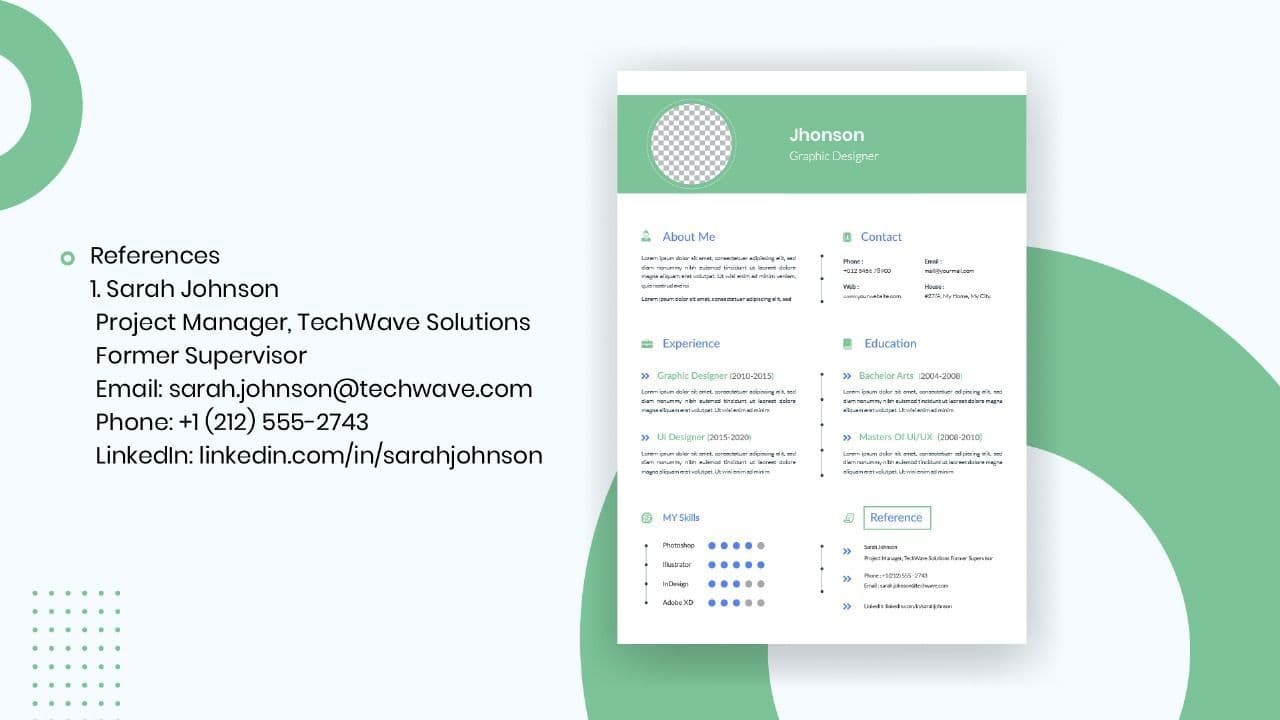
How to List References on a Resume in 2026
Learn the modern 2026 approach to listing references on your resume for maximum professionalism and recruiter impact.
Is Sound CV good for students and fresh graduates with no experience?
Sound CV is perfect for students and fresh graduates, helping them create professional resumes that highlight skills, projects, and potential even with little or no work experience.
Why Sound CV Is Different from Other AI Resume Builders
Sound CV stands out by creating job-focused, ATS-friendly resumes that highlight real achievements, not just generic content.
Resume Format for HR Job: Professional Guide and Sample Templates
A complete guide to the best resume format for HR jobs, with expert tips and sample templates to help you create a professional and job-ready resume.
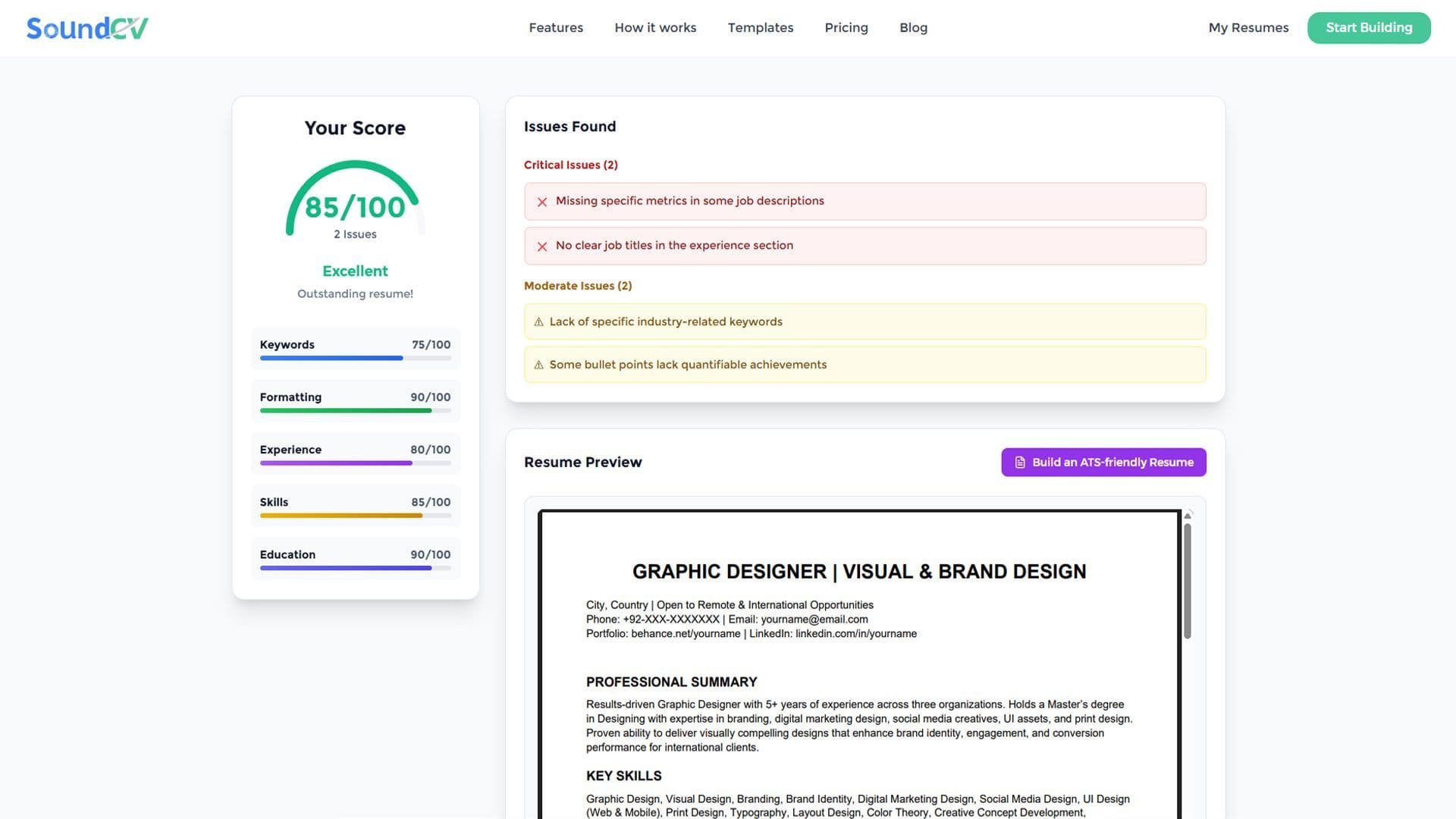
How Does the Sound CV Resume Score Checker Work?
The Sound CV Resume Score Checker analyzes your resume against ATS requirements, job-specific keywords, and structure to provide an instant, actionable score.

What Is a Sound CV? Features, Benefits, and How It Works
A Sound CV is an AI-powered resume that is tailored, ATS-optimized, and designed to showcase your skills and achievements to help you stand out to recruiters.