Resume for Government Job: Federal Resume Format Guide
A complete guide to writing an accurate, ATS-friendly resume for government jobs that meets official recruitment standards.
Overview
This guide explains how to write a professional and ATS-friendly resume for government job applications, covering formats, eligibility rules, common mistakes, and best practices to improve selection chances in highly competitive government recruitment processes.
Writing a resume for government job applications is different from writing one for the private sector, and the gap trips up thousands of qualified candidates every year. A federal resume has to spell out far more detail, follow strict formatting rules, and match the exact language of the job announcement. Get those rules right and you move to the next stage. Get them wrong and an automated screen or a staffing specialist removes you before a hiring manager ever reads your name. This guide walks you through the federal resume format step by step, with real examples, the right structure, and the mistakes that quietly sink applications on USAJOBS.
You will learn what a federal resume is, how it differs from a private resume, which sections are mandatory, and how to write work experience that survives both the applicant tracking system and a human review. By the end you will have a clear template to follow whether you are a first-time applicant or a federal employee moving to a higher grade.
What is a federal resume?
A federal resume is the detailed application document used to apply for jobs in the United States federal government through USAJOBS. It is longer and more specific than a standard private-sector resume because hiring is governed by Office of Personnel Management (OPM) rules and merit-based law. Where a corporate resume sells a quick impression in six seconds, a federal resume proves, line by line, that you meet every qualification listed in the vacancy announcement.
The document records each job with the employer name, your job title, the start and end dates, the hours worked per week, and a full description of your duties and results. Many applicants also include salary and a supervisor contact, though OPM made those optional in recent guidance. Because the federal government screens for specific knowledge, skills, and abilities, your resume has to show those competencies in plain, measurable terms rather than hint at them.
Federal resume vs private job resume: the key differences
The biggest difference is length and depth. A private resume fits on one or two pages and trims everything to the essentials. A federal resume runs longer, often two to five pages, because it has to document hours per week, detailed duties, and quantified accomplishments for each role. Leaving out a required field can disqualify you, even when you are clearly qualified.
The second difference is language. Private recruiters skim for impact and personality. Federal staffing specialists compare your wording against the job announcement and the assessment questionnaire, often using the same keywords. A government resume that mirrors the announcement's terminology scores higher because it proves a direct match. The third difference is design: a federal resume uses a clean, single-column, reverse-chronological layout with no graphics, columns, or photos, because the USAJOBS parser and the agency software read plain text reliably and reject heavy formatting.
Best resume format for government jobs
The best resume format for government jobs is reverse-chronological. List your most recent role first and work backward, so the reviewer sees your current level before your history. Avoid functional or hybrid formats, which hide dates and gaps that federal reviewers must verify. A clean reverse-chronological government resume format makes it easy for both the software and the staffing specialist to confirm your experience.
Keep the structure simple: standard fonts like Arial or Calibri at 11 or 12 point, one-inch margins, clear section headings, and consistent date formatting. Do not use tables, text boxes, headers, or footers for important information, because the USAJOBS resume builder and many agency systems strip or scramble them. If you build your resume in the federal resume template format the system expects, your content lands intact and stays readable.
When a longer document is the right call
For senior roles, scientific positions, or jobs with long lists of specialized requirements, a longer federal resume is appropriate. Three to five pages is common and acceptable when every line is relevant to the announcement. Length is never the goal; complete, relevant evidence is. Cut anything that does not map to a stated qualification.
How to write a federal resume step by step
Here is how to write a federal resume that meets OPM expectations without padding. Follow these steps in order and you will produce a government job resume format that reviewers can score quickly.
Step 1: Read the job announcement twice. Highlight every required qualification, specialized experience phrase, and keyword. These become the backbone of your resume. Step 2: Build your contact block with your full name, phone, email, and citizenship status. Step 3: Add a short professional summary that names the role and your top qualifications. Step 4: Document each job with title, employer, dates, hours per week, and detailed bullets. Step 5: Add education, certifications, and eligibility details. Step 6: Tailor and proofread against the announcement until your language matches.
If you want a faster start, a structured tool removes the guesswork. SoundCV's AI resume builder fills in your resume sections based on your job history, so you can produce a complete first draft and then expand each role to federal depth.
Essential sections in a government resume
Every government resume needs a predictable set of sections so reviewers can find information fast. Include these in order:
- Contact information: full name, phone, professional email, location, and citizenship status.
- Professional summary: three to four lines naming the target role and your strongest qualifications.
- Work experience: each role with employer, title, dates, hours per week, and quantified duties.
- Education: degrees, institutions, dates, and relevant coursework or GPA when strong.
- Certifications and training: licenses, security clearances, and completed federal training.
- Skills: technical and job-specific competencies drawn from the announcement.
- Eligibility summary: veterans' preference, current federal status, or special hiring authority.
An eligibility summary matters because it tells the agency which hiring path applies to you. If you qualify for veterans' preference or are a current federal employee, state it clearly near the top so the staffing specialist routes your application correctly.
How to write work experience for federal jobs
Work experience is where most federal applications are won or lost. For each role, lead with context, then prove results. Federal reviewers look for knowledge, skills, and abilities (KSAs), so write bullets that show a competency in action with a measurable outcome. The CCAR method (Challenge, Context, Action, Result) keeps each bullet focused and evidence-based.
Here is a weak bullet rewritten the federal way. Weak: "Responsible for managing budgets." Strong: "Managed a $2.4M division budget across three program offices, reduced overspending by 18% in one fiscal year, and reported monthly to senior leadership." The strong version names the scope, the action, and the result, which is exactly what a scoring panel needs to award points. Repeat this pattern for every duty that maps to a stated qualification.
Include the employer, your official title, the dates of employment, and the hours worked per week for each position. These fields are not optional formatting; they are how the agency verifies that your experience meets the time-in-grade and specialized-experience thresholds for the position.
How to navigate USAJOBS and apply
USAJOBS is the central portal for federal hiring, and the platform shapes how your resume is read. You can upload a document or build one with the usajobs gov resume builder, which guides you through each required field. Many first-time applicants prefer an uploaded file built from a strong usa jobs resume template, then paste the content so nothing formats incorrectly.
Before you submit, study a usajobs resume example for the grade you are targeting so you can match the depth reviewers expect. Save searches for your target series, set up alerts, and read the "How to Apply" and "Qualifications" sections of each announcement carefully. Each agency may require extra documents such as transcripts, an SF-50, or DD-214, and a missing document is an instant rejection regardless of how strong your resume is.
Keywords and ATS in federal recruitment
Federal recruitment uses applicant tracking systems and assessment questionnaires to filter applications before a human reads them. The system scans your resume for the exact keywords and phrases used in the job announcement. If the announcement asks for "acquisition management" and your resume says "procurement," the parser may not connect them, so mirror the announcement's wording where it is truthful.
To build an ATS-friendly government resume, place keywords naturally in your summary, skills, and experience sections, and avoid graphics or columns that confuse the parser. You can confirm how your document scores by running it through SoundCV's free ATS resume checker, which flags missing keywords and formatting issues before you submit. For a deeper walkthrough of parser rules, see our guide on how to write an ATS-friendly resume and the explainer on what ATS means in a resume.
Federal resume templates and examples
A good template removes guesswork and keeps your formatting parser-safe. Use a federal resume template that includes labeled sections for contact, summary, experience with hours per week, education, certifications, and eligibility. A clean federal resume template format prevents the layout problems that break in agency software.
Different agencies sometimes expect slightly different emphases. Applicants to investigative roles often search for the federal resume template format FBI reviewers will recognize, and the FBI federal resume template focuses heavily on integrity, clearances, and detailed task descriptions. If you save a federal resume template FBI applicants rely on, keep it parser-safe like any other version. You can find a federal resume template Word version to edit offline, or a federal resume template free download to start quickly. Whatever you choose, study at least one full federal resume example and, when possible, a federal resume example pdf so you can see the depth in context before you write your own.
If you would rather not start from a blank page, browse SoundCV's ATS-friendly resume templates and adapt one to federal depth. Pair the template with a strong reverse-chronological resume format so your most recent experience leads.
Federal resume writing services and builders
Some applicants hire a federal resume service or federal resume writers to handle the detail, and a professional federal resume writing service can help with senior or highly technical roles. These services are useful but not required. A reliable federal resume builder or resume builder for federal jobs gives you most of the structure for free, and SoundCV's resume builder for government jobs handles the formatting so you can focus on content. The right tool plus careful tailoring usually beats a generic paid document.
Understanding GS grades and federal pay levels
Federal jobs are graded on the General Schedule (GS), and your resume has to prove you meet the specialized experience for the grade you target. Each grade builds on the one below it, so a GS-9 announcement expects roughly one year of experience equivalent to GS-7. Read the qualifications section closely and show, in your duties and dates, that you meet that threshold. A federal employee resume aimed at a promotion should make time-in-grade obvious through clear dates and hours per week.
When you describe past roles, connect each one to the grade-level competencies the announcement names. A reviewer scoring a government resume needs to see that your scope, complexity, and independence rise to the advertised level. If you are moving between series, explain transferable experience plainly so the staffing specialist can map it to the new role.
Veterans' preference and special hiring authorities
Veterans' preference can change how your application is ranked, so state it early and back it up with a DD-214. Special hiring authorities, such as Schedule A for applicants with disabilities or the Pathways Program for students and recent graduates, can route you to positions outside the standard competitive process. Name the authority that applies to you in your eligibility summary so the agency considers you under the correct path.
These authorities do not lower the bar for qualifications; they change the hiring route. Your federal government resume still has to prove specialized experience and match the announcement. Treat the eligibility summary as a signpost that tells the agency which lane to read your application in, then let your documented experience do the rest.
Tailoring examples for different federal roles
Different series reward different emphases, so adapt your template to the role. An administrative applicant highlights process, budgets, and coordination; a technical applicant leads with tools, systems, and measurable outputs. For engineering and infrastructure roles, study civil engineering resume examples to see how candidates quantify projects, then mirror that depth. Keep the same federal style resume structure across every version and change only the evidence you emphasize.
Whatever the series, build from a consistent base. Learning how to build a federal resume once means you can spin up a tailored version for each announcement in minutes. Start from a saved government job resume format, swap in the keywords from the new announcement, and confirm every required qualification is answered before you submit.
Common mistakes to avoid in a government job resume
Most rejections come from a handful of repeat errors. Avoid these:
- Missing required fields: leaving out hours per week, dates, or citizenship status.
- Generic wording: using private-sector phrasing instead of the announcement's exact language.
- Too short: a one-page federal resume rarely proves specialized experience.
- Heavy formatting: tables, columns, photos, and text boxes that break the parser.
- No metrics: duties listed without numbers, scope, or results.
- Ignoring documents: skipping transcripts, SF-50, or DD-214 when required.
Fixing these alone moves many applicants from "not referred" to "referred to the hiring manager." Treat the announcement as a checklist and confirm your resume answers every item.
How freshers can write a federal resume with no experience
You do not need years of work to apply. If you are a recent graduate or fresher, lead with education, relevant coursework, internships, volunteer work, and projects that show the required skills. Translate academic and volunteer achievements into measurable results, the same way an experienced applicant quantifies job duties. A federal internship, a Pathways Program role, or a strong project can carry an entry-level federal resume.
Name the skills the announcement lists and show where you used them, even in a classroom or campus leadership role. Many entry-level positions exist precisely to bring in new talent, so a careful, complete government resume for freshers competes well when it mirrors the announcement and quantifies impact. For a step-by-step starting point, see our guide to building an ATS-friendly resume for freshers.
Federal resume length and formatting tips
Length should match the role. Entry and mid-level positions usually need two to three pages; senior and specialized roles may run four to five. Never pad, and never cut a required qualification to save space. Use consistent date formats, a single readable font, and clear headings. Spell out acronyms the first time, since reviewers outside your field may not know them.
Proofread for accuracy above all. In federal hiring, an inflated claim or a wrong date can cost you the job and, in some cases, future eligibility. Accuracy matters more than design, so prioritize correct, complete, verifiable information over visual polish. When you write your resume in the federal resume template format and keep the facts exact, you give yourself the best chance at referral.
Documents and templates to prepare before you apply
Before you submit, gather every supporting document the announcement lists. Common attachments include transcripts, an SF-50 for current federal employees, a DD-214 for veterans, and any certifications named in the qualifications. A missing file is treated the same as a missing qualification, so build a checklist from the announcement and confirm each item is attached.
It also helps to keep a master copy you tailor each time. Save a sample federal resume you can copy, then adjust it per announcement rather than starting over. If you are still learning how to make a federal resume, work from a labeled federal job resume template and a matching federal government resume template so the structure stays consistent. Review government resume examples and a resume for federal jobs sample at your target grade, confirm the resume format for federal jobs matches what the agency expects, and paste your content into the usajobs federal resume builder or a clean government job resume template before final submission.
Build your government job resume with SoundCV
A federal application rewards detail, accuracy, and a precise match to the announcement. Start with a parser-safe structure, document every role in full, mirror the announcement's keywords, and proofread until the facts are exact. When you are ready to check your draft, run it through SoundCV's free resume score checker to see which keywords and formatting rules you are missing, then fix the list before you submit. Build a clean, ATS-ready government resume with SoundCV and apply with confidence.
FAQs
Frequently asked questions about this topic
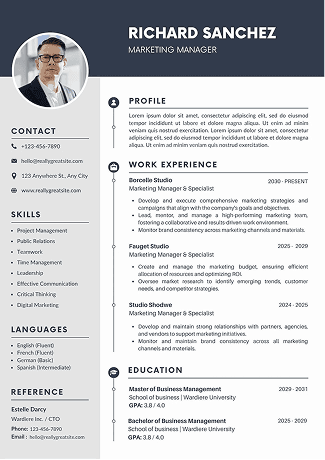
Related Blogs
Explore more insights and guides you might like.
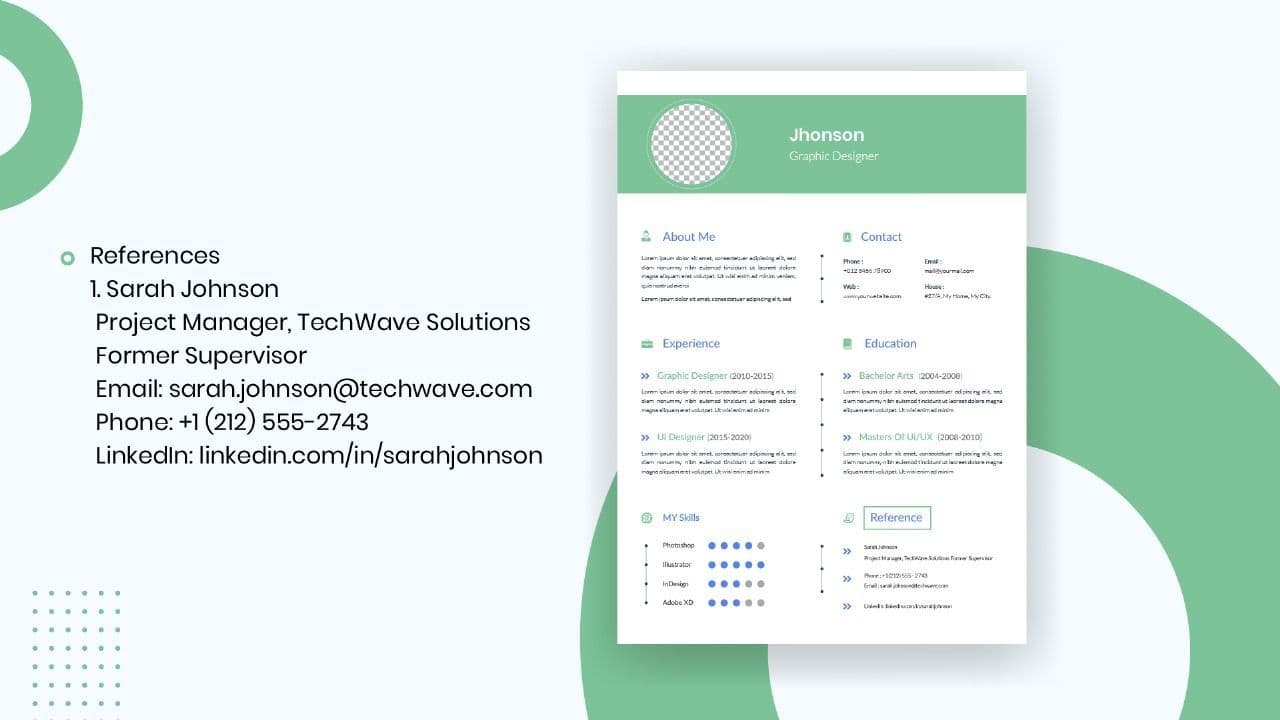
How to List References on a Resume in 2026
Learn the modern 2026 approach to listing references on your resume for maximum professionalism and recruiter impact.

Is Sound CV good for students and fresh graduates with no experience?
Sound CV is perfect for students and fresh graduates, helping them create professional resumes that highlight skills, projects, and potential even with little or no work experience.
Why Sound CV Is Different from Other AI Resume Builders
Sound CV stands out by creating job-focused, ATS-friendly resumes that highlight real achievements, not just generic content.
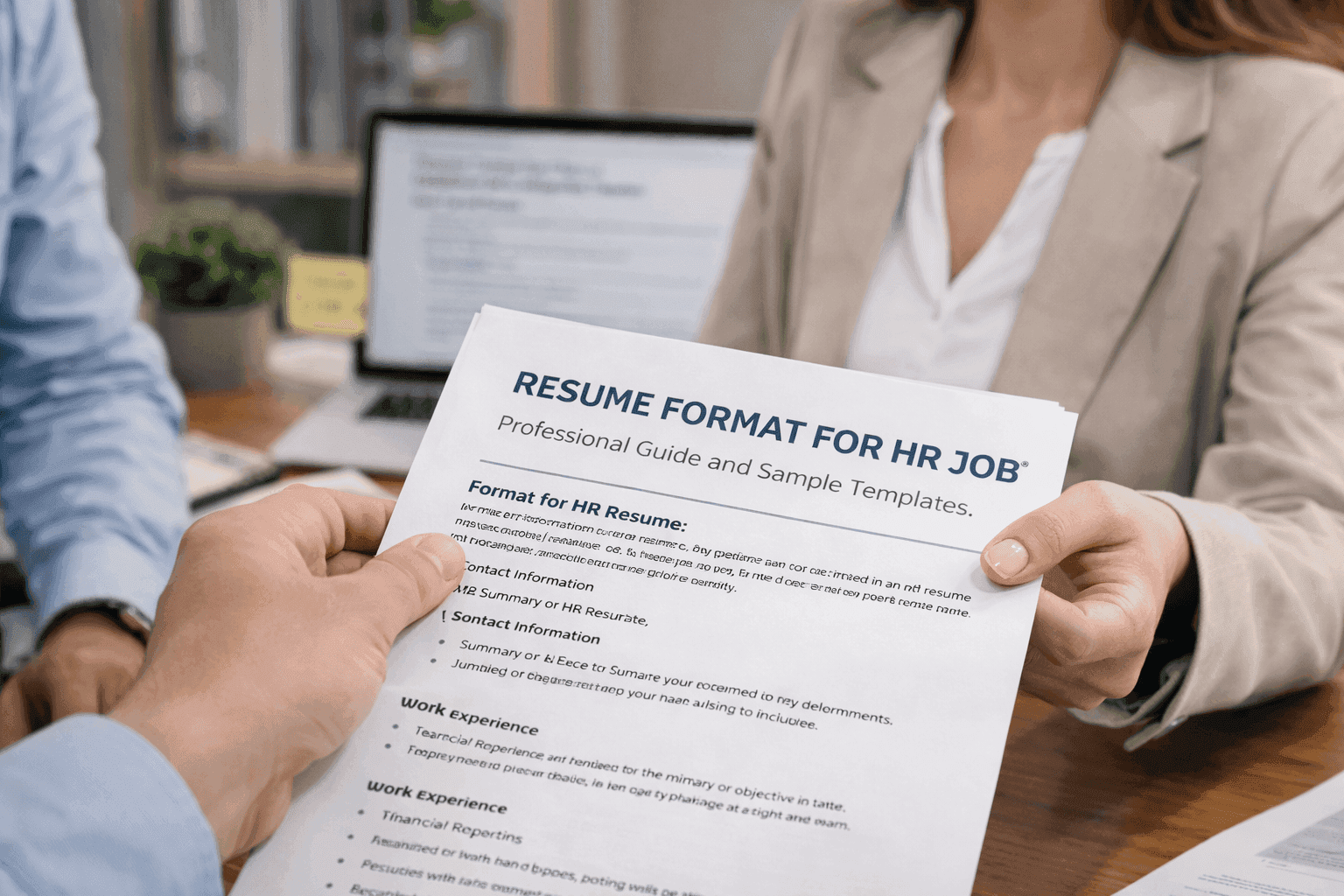
Resume Format for HR Job: Professional Guide and Sample Templates
A complete guide to the best resume format for HR jobs, with expert tips and sample templates to help you create a professional and job-ready resume.
How Does the Sound CV Resume Score Checker Work?
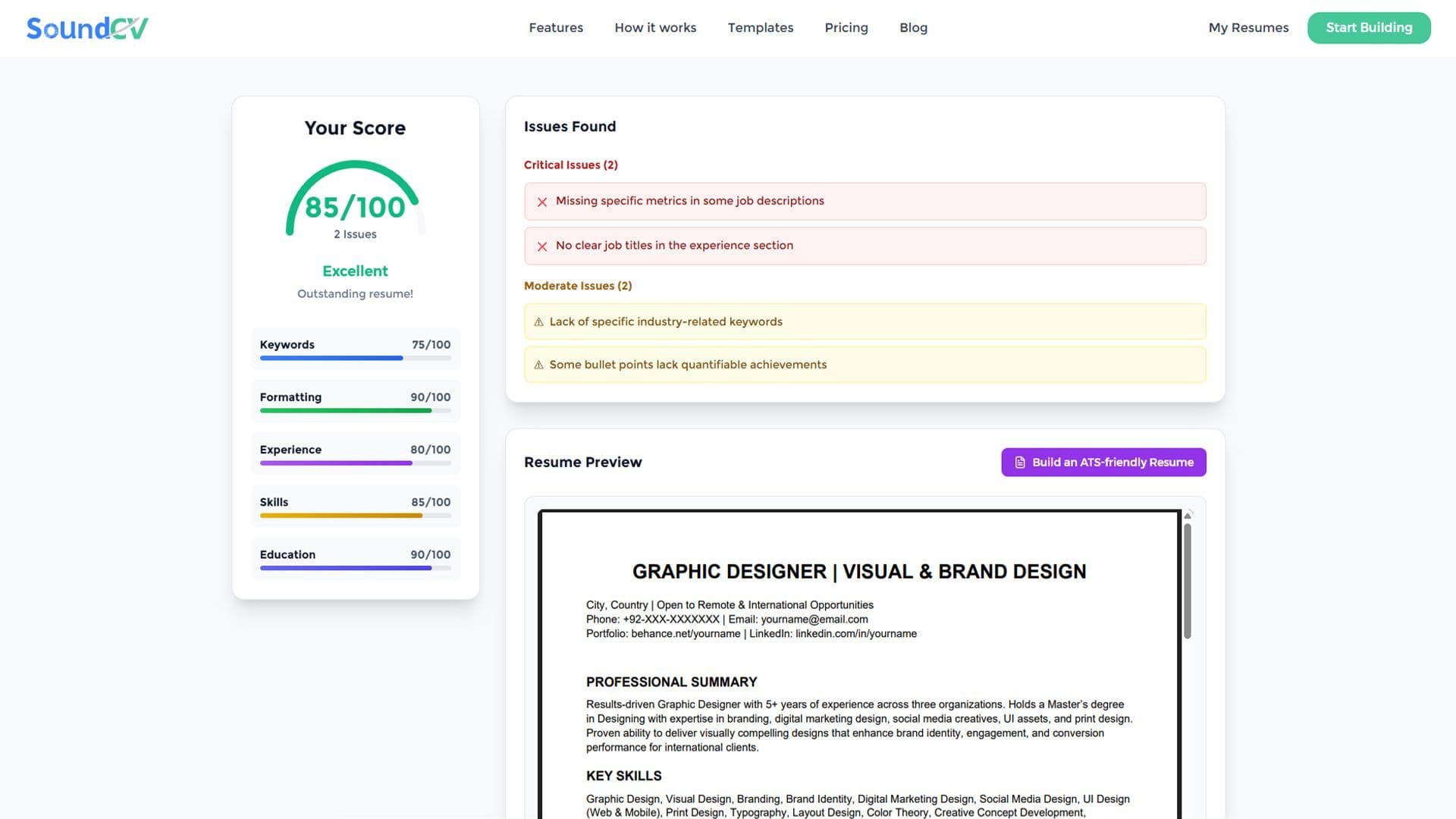
The Sound CV Resume Score Checker analyzes your resume against ATS requirements, job-specific keywords, and structure to provide an instant, actionable score.

What Is a Sound CV? Features, Benefits, and How It Works
A Sound CV is an AI-powered resume that is tailored, ATS-optimized, and designed to showcase your skills and achievements to help you stand out to recruiters.