How to List References on a Resume in 2026
Learn the modern 2026 approach to listing references on your resume for maximum professionalism and recruiter impact.
Overview
This guide explains how to list references on a resume in 2026, when to include them, and the correct format. Learn who to choose, how to organize a separate reference page, and avoid common mistakes, with examples for professional, academic, and research CVs. Tools like Sound CV can help create a polished, recruiter-ready reference list to boost credibility and professionalism.
References on a resume are the people who can confirm your skills, work ethic, and past results when a hiring team checks your background. In 2026 you rarely list them on the resume itself. Instead, you prepare a separate reference page and hand it over when an employer asks. This guide shows you who to choose, how to format the page, and exactly what to write, with a copy-ready example you can use today.
Most recruiters no longer expect references on the resume. They ask for them after the first screening, usually once they are seriously considering an offer. So the smart move is to keep your resume focused on your achievements and keep a polished, ready-to-send reference list on standby.
Should you put references on a resume?
No, you should not put references on a resume unless the job posting specifically asks for them. The space is better spent on your experience, skills, and measurable wins. A line of contact details for three people pushes a strong bullet point off the page, and recruiters scan resumes in seconds.
There are a few exceptions. Some government roles, academic positions, and applications that run through an online form will request references upfront. When the instructions say to include them, follow the instructions exactly. The rest of the time, leave references off the resume and prepare them separately.
If you are deciding whether to put references on a resume for a specific role, read the posting twice. When it stays silent on references, assume the employer will request them later and keep your reference list ready as its own document.
How many references on a resume should you include?
List three to five references on your reference page. Three is the standard for most roles. Senior and leadership applications often call for four or five, because the hiring team wants to hear from people who saw you operate at scale. Entry-level candidates can list two or three.
Quality matters more than the count. One former manager who can describe a specific project you led carries more weight than five contacts who only remember your name. Pick people who worked with you closely and recently, then stop. Padding the list with weak contacts hurts you.
Keep the list flexible. If you are applying to very different roles, build a short bench of five or six approved contacts, then choose the three who best fit each job. A reference who managed your sales numbers fits a sales role. A professor fits a research role.
Who to put as a reference
Choose people who can speak to your work with specifics. The strongest professional references have seen your results first hand and will pick up the phone when a recruiter calls. Here are the main types of references and when each one fits.
Professional references
A professional reference is someone who knows your work in a job or formal project. Former managers, team leads, and senior colleagues are the best choices, because they can confirm what you did and how well you did it. A good professional reference can say "she cut our onboarding time from three weeks to eight days," which is exactly what a hiring manager wants to hear.
Work references and former colleagues
Work references include peers, clients, and direct reports who saw your day-to-day performance. A colleague who shared a project with you can describe how you handle deadlines and feedback. A client can confirm the outcome you delivered. These references add useful detail when a manager is unavailable.
Personal reference and character references
A personal reference, sometimes called a character reference, speaks to your reliability and integrity rather than your job skills. Use one only when you lack work history, such as for a first job, or when the employer asks for one. Choose a mentor, coach, volunteer coordinator, or community leader who has known you for a while. Avoid listing family members.
Who to put as a reference when options are limited
If you cannot use a current manager because your job search is private, that is normal. Use a previous manager, a trusted senior colleague, a client, or a professor instead. The goal is a credible voice who can confirm your work, not a perfect title.
How to list references on a resume: format step by step
Knowing how to list references on a resume comes down to a clean, consistent layout. Whether you search how to put references on a resume, how to write references on a resume, or how to write references in resume sections, the structure is the same. Build a separate page that matches your resume design and include these details for each person.
- Full name with any relevant credential, such as "Priya Sharma, CPA."
- Current job title and company, for example "Finance Director, Brightline Retail."
- Your relationship and the dates you worked together, such as "Direct manager, 2022 to 2024."
- Phone number the reference is happy to share.
- Email address, ideally a professional one.
When you learn how to include references on a resume page, match the header to your resume. Put your name and contact details at the top in the same font and size, then list each reference in the same order you would rank them. This makes the document look like one consistent application set, not a last-minute add-on.
To learn how to add references to resume documents the right way, save the page as its own file named FirstName_LastName_References.pdf. Send it only when the employer requests it, or attach it when an online form has a dedicated upload field. Never paste a wall of contact details into the body of your resume.
Resume reference page template
Use this resume reference page template as your starting point. It doubles as a clean template for professional references and works as a reference page for resume template needs across most industries. Adjust the header to match your resume and references template style.
[Your Name]
[Phone] | [Email] | [City, State]
Professional References
1. Daniel Okafor
Engineering Manager, Northwind Software
Relationship: Direct manager, 2021 to 2024
Phone: (555) 014-2290
Email: daniel.okafor@email.com
2. Maria Lopez
Product Lead, Northwind Software
Relationship: Cross-team colleague, 2021 to 2023
Phone: (555) 771-8830
Email: maria.lopez@email.com
3. James Whitfield
Operations Director, Cedar Logistics
Relationship: Former supervisor, 2019 to 2021
Phone: (555) 332-4471
Email: james.whitfield@email.com
This resume references template keeps everything a recruiter needs on one clean page. Copy it, swap in your own contacts, and keep it saved next to your resume so you can send it the moment an employer asks.
Resume reference example you can copy
Here is a single resume reference example written out in full, so you can see the spacing and wording in context. This job reference example shows a former manager, which is usually your most persuasive option.
Sofia Reyes
Marketing Director, Lumen Media
Relationship: My direct manager from March 2022 to August 2024
Phone: (555) 220-7788
Email: sofia.reyes@lumenmedia.com
Notice how the professional references example names the exact relationship and dates. That detail tells the recruiter the reference can speak to recent, relevant work. A vague entry like "Sofia, former boss" raises questions and weakens an otherwise strong list.
If you are building a reference list for job applications in different fields, prepare two or three versions of this entry for each contact, each highlighting the relationship most relevant to the target role.
References on a resume vs cv references
The terms overlap, but there is a small difference worth knowing. In the United States, a resume is a short summary and references sit on a separate page. A CV is longer and common in academia and many countries outside the US, and cv references sometimes appear at the end of the document itself.
Even on a CV, the safer approach in 2026 is a separate, well-formatted reference list rather than a block at the bottom of page three. The format stays the same: name, title, company, relationship, phone, and email. The only thing that changes is the file the page travels with.
If you apply internationally, check local norms. Some European employers still expect cv references included, while US recruiters prefer them held back until requested. When in doubt, prepare the separate page and offer it the moment it is asked for.
More resume reference examples by type
Different roles call for different voices on your list. Below are two more entries that show how to write references in resume documents for a client and an academic contact, so you can match the reference to the job.
Client reference
Aaron Bell
Head of Procurement, Vertex Manufacturing
Relationship: Client on the 2023 supply-chain rollout
Phone: (555) 661-9043
Email: aaron.bell@vertexmfg.com
Academic reference
Dr. Hannah Cole
Associate Professor of Computer Science, State University
Relationship: Thesis advisor, 2022 to 2024
Phone: (555) 480-1175
Email: h.cole@stateuniv.edu
A client reference confirms the outcome you delivered, which works well for sales, consulting, and project roles. An academic reference suits recent graduates and research positions. Pick the entry that best matches the role you are targeting, and lead your reference list for resume submissions with the strongest fit.
What employers ask your references
When an employer calls a job reference, they keep it short and specific. Expect questions about your dates of employment, your main responsibilities, your strengths, and how you handled pressure or feedback. Many also ask the classic closing question: would you hire this person again?
This is why a recent, engaged reference matters. A contact who remembers a concrete win, such as a project you rescued or a target you beat, gives answers that move you forward. Brief your references on the role so their job reference example answers line up with the strengths your resume highlights.
Some employers run a formal background check alongside the reference call, confirming titles and dates. Keeping your reference list accurate protects you here, because a mismatch between your resume and a reference can stall an offer.
How to keep your professional reference list current
Treat your professional reference list as a living document. People change jobs, phone numbers shift, and titles get updated, so review your reference page every few months. A disconnected number or an old title makes you look out of touch with your own network.
Stay in touch between job searches. A short message twice a year keeps each contact warm and willing, so you are never scrambling to find references the week an offer is close. Reciprocate by acting as a reference for them when they ask.
Keep your professional reference list saved next to your resume and reference page, so all three files share one header and travel together. When everything matches, your full application set reads as the work of one organized candidate.
How to format references on a resume the right way
Good references format resume sections with consistency. Use the same font, the same heading style, and the same margins as your resume. Align the text left, keep each reference in its own short block, and leave a blank line between contacts so the page breathes.
When people search how to format references on resume pages, they often cram five contacts into a tight grid. Resist that. Three well-spaced entries read faster and look more professional. If you only need a quick reference list for resume use, a plain document with your header and three clean blocks is enough.
For a printed reference list for job interviews, bring two copies on the same paper stock as your resume. For digital applications, a tagged PDF keeps the formatting intact across devices. A professional reference list that looks rushed undermines the trust the references are meant to build.
Is "references available upon request" still needed?
No. The line "references available upon request" is outdated and wastes a line of resume space. Employers already know they can ask for references, so stating it adds nothing. Recruiters in 2026 read it as a sign that a resume is using an old template.
Remove the phrase and use that space for an extra achievement or a stronger summary. Keep your references ready in a separate file instead. When the employer asks, you send the page within minutes, which signals that you are organized and prepared.
How to make a reference page for resume applications
Learning how to make a reference page for resume use takes about ten minutes. Open a new document, copy your resume header at the top, add a clear heading that reads "Professional References," then paste three to five contact blocks underneath. Save it as a PDF with your name in the file title.
Build a professional reference list once and reuse it. Update it whenever you change roles or when a contact moves companies, so the phone numbers and titles stay current. A stale reference page with a disconnected number can stall an otherwise smooth hiring process.
If your resume lives in a builder, keep the reference page in the same place so the two files travel together. SoundCV lets you store and format your resume and matching reference page side by side, so both share the same header and font.
How to ask someone to be a reference
Always ask before you list anyone. Send a short message that explains the role you are targeting and asks if they are comfortable speaking to your work. Give them an easy way to say no, so the ones who say yes are genuinely willing to help.
Once they agree, share your current resume and a short note on the job, so the reference can tailor their comments. Tell them when to expect a call. A reference who knows the role and the timing gives a sharper, more confident answer than one caught off guard.
Keep your contacts informed throughout your search. A quick thank-you message after each interview keeps them engaged and ready. Treating references with care protects relationships you will likely need again in your career.
How to list references with no experience
You can still build a strong reference list with no work history. For a first job, lean on people who have seen your reliability in other settings. A teacher, professor, coach, volunteer supervisor, or internship mentor all make credible references for early-career applications.
When you list references with no experience, label the relationship clearly, such as "Volunteer coordinator, City Food Bank, 2024 to 2025." The hiring team understands that entry-level candidates draw on academic and community contacts, and a specific, honest description reads better than a borrowed job title.
Pair a clear reference page with a resume that highlights coursework, projects, and volunteer results. Together they show a hiring manager that you bring real, verifiable effort even without a long employment record.
Aim for three references for a first job, even when one is a teacher and one is a coach. Brief each of them on the role so their answers connect to the skills the employer wants. A focused entry-level reference list, backed by a resume that proves your effort, competes well against candidates who have more experience but weaker, less prepared references.
When do employers ask for references?
Employers usually ask for references late in the process, after one or more interviews and often just before an offer. By that point the hiring team likes you and wants a final check before committing. That timing is exactly why your reference page should already be built and saved.
Some online application forms request references at the very start, with dedicated fields for names and contact details. When a form has those fields, fill them in. When it does not, leave references off and wait for the request. Reading each posting tells you which path applies.
The faster you respond when references are requested, the stronger your impression. A candidate who sends a clean professional reference list within the hour looks prepared and serious, while a slow, scrambled reply can cool an employer's interest at the worst moment.
Common mistakes with job references
The fastest way to lose points is to list a reference you never asked. A surprised contact gives a flat or hesitant answer, and that hesitation reads as a red flag. Always confirm permission first.
Other common mistakes include outdated phone numbers, listing family members, and choosing contacts who barely remember you. A reference who cannot recall a specific project you worked on adds no value. Trim the list to people who can speak in detail.
Finally, do not mix your reference page formatting with a different style from your resume. A mismatched cv references page looks like it belongs to someone else. Keep one consistent design across every document you send.
Build your resume and reference page with SoundCV
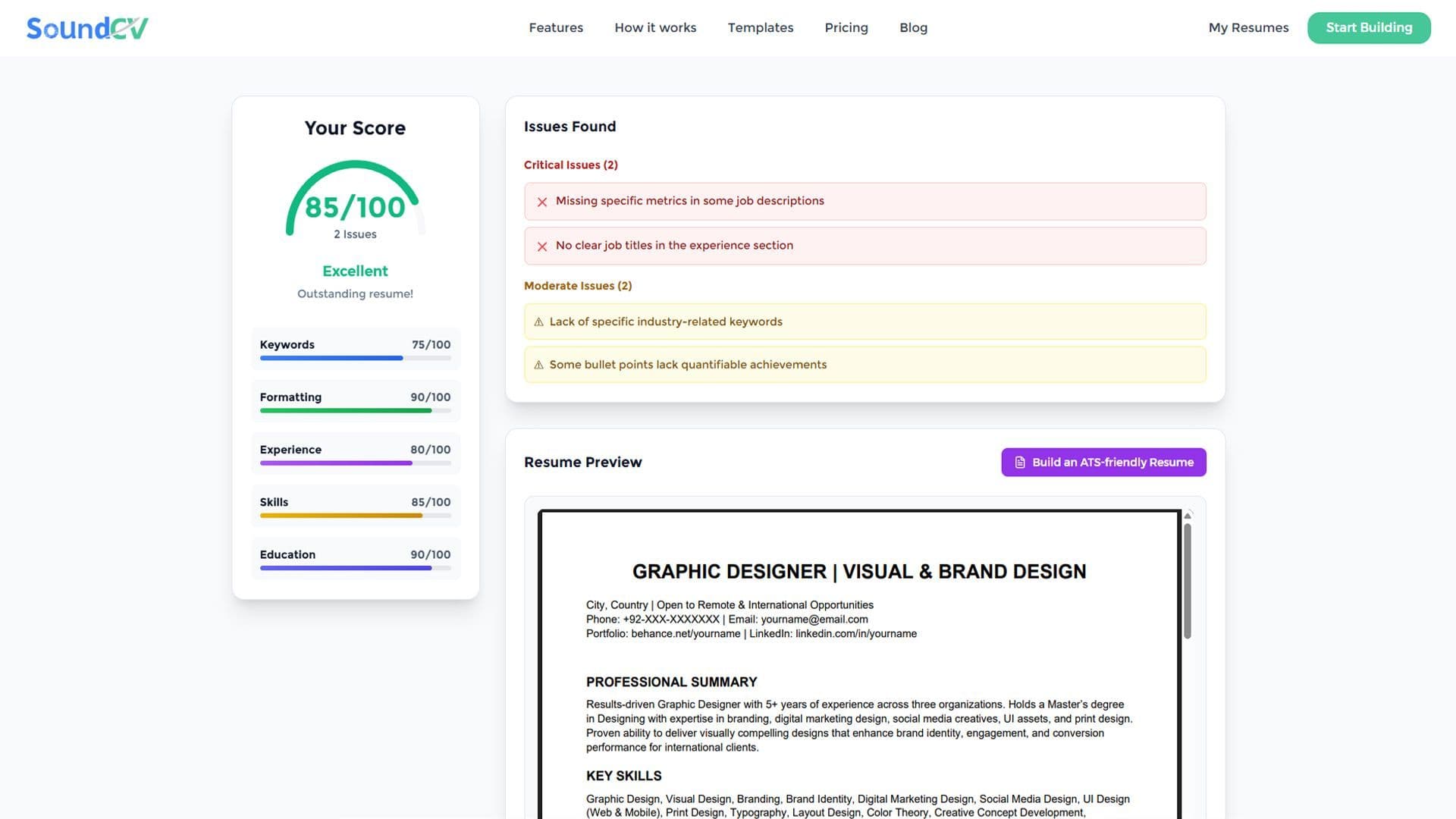
Your references back up the story your resume tells, so the resume needs to be strong first. SoundCV scores your resume against ATS rules and shows exactly which sections to fix, then formats a matching reference page using the same header and font. You can check your resume score free in under a minute and see where to improve.
For deeper guidance, read our companion guide on how to put references on a resume in 2026, and learn how to present supporting sections in how to list publications on a resume and achievements in a resume. If you are early in your career, resume summary tips for freshers pairs well with a clean reference page. When your resume is ready, build it with SoundCV and keep your reference page in the same place.
FAQs
Frequently asked questions about this topic
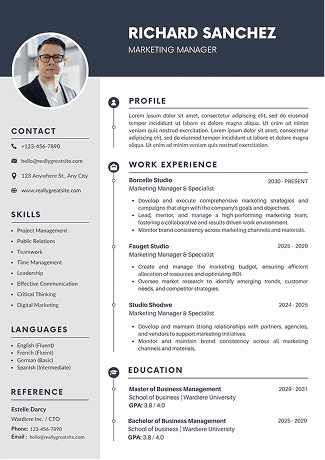
Related Blogs
Explore more insights and guides you might like.
Is Sound CV good for students and fresh graduates with no experience?
Sound CV is perfect for students and fresh graduates, helping them create professional resumes that highlight skills, projects, and potential even with little or no work experience.
Why Sound CV Is Different from Other AI Resume Builders
Sound CV stands out by creating job-focused, ATS-friendly resumes that highlight real achievements, not just generic content.
Resume Format for HR Job: Professional Guide and Sample Templates
A complete guide to the best resume format for HR jobs, with expert tips and sample templates to help you create a professional and job-ready resume.
How Does the Sound CV Resume Score Checker Work?
The Sound CV Resume Score Checker analyzes your resume against ATS requirements, job-specific keywords, and structure to provide an instant, actionable score.

What Is a Sound CV? Features, Benefits, and How It Works
A Sound CV is an AI-powered resume that is tailored, ATS-optimized, and designed to showcase your skills and achievements to help you stand out to recruiters.
Zety vs Kickresume vs Novoresume vs SoundCV 2026: Which Resume Builder Is Actually Worth It?
A hands-on comparison of Zety, Kickresume, Novoresume, and SoundCV in 2026. Free plans, pricing, AI features, ATS tools, and which one to actually use.