Words to Describe Yourself: Best Examples for Resume & Interview
Learn powerful words to describe yourself for resumes and interviews with examples, tips, and strategies to stand out professionally
Overview
Explore the best words to describe yourself in resumes and job interviews. Get expert tips, real examples, and strategies to create a strong professional impression, improve ATS scores, and stand out to recruiters
Whether you are updating your resume or preparing for a job interview, knowing the right words to describe yourself can make a significant difference in how recruiters and hiring managers perceive you. The language you use to present your skills, personality, and professional value speaks volumes before you even walk through the door. Choosing powerful, accurate, and relevant words to describe yourself is one of the most underrated yet highly impactful steps in your job search journey.
In this guide, you will discover the best adjectives to describe yourself for a resume, proven ways to answer the classic "describe yourself" interview question, and a comprehensive list of positive words to describe yourself in any professional context. By the end, you will have everything you need to present yourself confidently, authentically, and compellingly.
Why the Words You Use to Describe Yourself Matter
Recruiters spend an average of six to seven seconds scanning a resume before deciding whether to read further. During a job interview, your first impression is formed within the first 30 seconds of conversation. In both scenarios, the words you choose to describe yourself either open doors or close them.
Using generic, vague language like "hardworking" or "team player" without context does little to set you apart. However, pairing strong descriptive words with concrete examples creates a vivid, credible picture of who you are as a professional. The right vocabulary demonstrates self-awareness, communication skills, and alignment with company culture, all qualities that employers actively seek.
Beyond personal branding, the specific words to describe yourself also affect Applicant Tracking System (ATS) scores. Many companies use ATS software to filter resumes before a human ever sees them. Incorporating industry-relevant descriptors helps your resume pass these automated filters and reach the hiring manager's desk.
Top Positive Words to Describe Yourself on a Resume
Your resume is a marketing document, and like any good marketing copy, it must use language that resonates with its audience. The best adjectives to describe yourself for a resume are specific, action-oriented, and backed by evidence. Below are curated categories of positive words to describe yourself, grouped by the professional qualities they highlight.
Also Read : Resume for Hotel Job With No Experience (Guide + Example)
Words That Show Leadership and Initiative
• Visionary – You see the big picture and inspire others toward a shared goal.
• Decisive – You make informed, timely decisions even under pressure.
• Proactive – You anticipate challenges and take action before problems arise.
• Influential – You have the ability to persuade and motivate those around you.
• Strategic – You plan methodically and align daily tasks with long-term goals.
Words That Demonstrate Technical and Analytical Ability
• Analytical – You break down complex information and draw actionable insights.
• Detail-oriented – You notice the nuances that others often overlook.
• Methodical – You follow systematic approaches to ensure accuracy.
• Tech-savvy – You are comfortable adopting new tools and technologies.
• Data-driven – You base decisions on evidence rather than assumptions.
Words That Reflect Strong Work Ethic and Reliability
• Dedicated – You commit fully to your responsibilities and follow through.
• Dependable – Colleagues and managers can count on you consistently.
• Diligent – You work persistently and carefully toward high-quality outcomes.
• Resourceful – You find smart solutions even with limited resources.
• Accountable – You own both your successes and your mistakes.
Words That Show Communication and Collaboration Skills
• Articulate – You express ideas clearly, whether in writing or speech.
• Empathetic – You understand others' perspectives and communicate with sensitivity.
• Collaborative – You thrive in team environments and value collective success.
• Persuasive – You present ideas in compelling, well-structured ways.
• Adaptable – You adjust your communication style to suit different audiences.
Also Read : CV Format for Dubai Jobs: Examples, Writing Tips & UAE Resume Guide
Words to Describe Yourself on a Resume: How to Use Them Effectively
Knowing which words to describe yourself on a resume is only half the battle. The other half is knowing how to integrate them naturally so they add credibility rather than sounding hollow. Recruiters are trained to spot resume buzzwords that lack substance, so the key is to always pair a descriptive word with a quantified achievement or concrete context.
In the Professional Summary
Your professional summary is the first section a recruiter reads, making it the most important place to use strong words to describe yourself. This two-to-four sentence paragraph should instantly communicate your professional identity and value proposition.
Weak example: "Hardworking professional looking for a new opportunity."
Strong example: "Results-driven and analytical marketing manager with 7+ years of experience crafting data-driven campaigns that increased customer acquisition by 42%. Known for being collaborative, articulate, and consistently proactive in identifying growth opportunities."
In the Skills Section
The skills section is an excellent place to embed positive words to describe yourself alongside hard skills. Instead of listing bare technical competencies, pair them with descriptive context where possible. For example, rather than just writing "Project Management," consider "Strategic project management with a track record of delivering projects 20% under budget." This approach strengthens both your ATS performance and your overall professional narrative.
In Bullet Points Under Work Experience
Each bullet point under your work history should open with a strong action verb and implicitly communicate one of your key descriptors. If you want to position yourself as innovative, lead with verbs like "Pioneered," "Redesigned," or "Introduced." If you want to convey dependability, use "Maintained," "Ensured," or "Consistently delivered."
Also Read : How to Make a Resume for a Teacher Job | Step-by-Step Guide
How to Describe Yourself in a Job Interview: The Complete Answer Guide
The question "Tell me about yourself" or "How would you describe yourself?" is among the most common and most mishandled interview questions. Many candidates either give a rehearsed, robotic answer or ramble without a clear structure. Learning how to describe yourself in a job interview effectively requires preparation, authenticity, and a clear understanding of what the interviewer actually wants to hear.
What Interviewers Are Really Asking
When an interviewer asks how to answer the "describe yourself" interview question, they are not simply asking for a biography. They want to understand three things: your professional identity, your key strengths that are relevant to the role, and how well you fit the team's culture. Your answer should address all three dimensions concisely within 60 to 90 seconds.
The PPF Framework for Answering "Describe Yourself"
A highly effective structure for this question is the PPF Framework: Past, Present, and Future.
• Past: Briefly mention your background and most relevant experience.
• Present: Highlight two or three words to describe yourself that are directly relevant to the role, backed by a recent achievement.
• Future: Connect your strengths to what you hope to contribute in this new position.
Sample Answer Using Strong Self-Descriptive Words
"I would describe myself as a results-oriented and highly collaborative software engineer. Over the past five years at my current company, I have been the go-to person for cross-functional projects because I am both technically meticulous and deeply empathetic in how I communicate with non-technical stakeholders. Most recently, I led a team initiative that reduced our app's load time by 35%, which directly improved user retention. I am now looking for a role where I can bring that same blend of analytical thinking and team-driven problem-solving to drive even greater impact."
Notice how this answer uses positive words to describe yourself, including results-oriented, collaborative, meticulous, empathetic, and analytical, but every descriptor is anchored to a real achievement or behavioral example. This is the gold standard for how to describe yourself in a job interview.
Also Read : 2 Year Experience Resume Format (Free Template + Pro Tips)
Words to Avoid: What Not to Say When Describing Yourself
Just as important as knowing which words to describe yourself to use is understanding which ones to avoid. Certain overused phrases and hollow buzzwords actively hurt your candidacy because they communicate nothing specific and signal a lack of self-reflection.
Overused Words That Lack Impact
• "Hardworking" Every candidate claims this. Show it through your achievements instead.
• "Passionate" Without context, passion is meaningless. Describe what you are passionate about and why.
• "Go-getter" This is informal and vague. Use proactive or results-driven instead.
• "Team player" Replace with collaborative or cross-functional experience to add substance.
• "Dynamic" This word has become so overused it no longer carries any meaning in professional contexts.
Every time you are tempted to use one of these generic words to describe yourself, challenge yourself to replace it with a more specific descriptor paired with a real example. This discipline alone will significantly elevate the quality of both your resume and your interview performance.
Also Read : Indian Resume Format (Free Template + Pro Tips) | Resume Guide for Indian Job Seekers
Tailoring Words to Describe Yourself for Different Industries
The most effective words to describe yourself are those that align with the language and values of your target industry. A one-size-fits-all approach rarely works in competitive job markets. Here is a quick industry-specific guide to the best adjectives to describe yourself for a resume and interview.
• Technology & Engineering: Analytical, systematic, innovative, detail-oriented, scalable-thinking
• Marketing & Creative: Imaginative, brand-conscious, data-informed, storytelling, audience-centric
• Finance & Accounting: Precise, risk-aware, compliance-oriented, strategic, trustworthy
• Healthcare & Social Work: Compassionate, patient-focused, composed, collaborative, evidence-based
• Sales & Business Development: Persuasive, tenacious, relationship-driven, goal-oriented, energetic
• Education & Training: Inspiring, patient, structured, adaptive, learner-centered
Review the job description carefully and identify the language the employer uses to describe their ideal candidate. Mirroring that language, where it is authentic to your experience, is one of the most powerful tactics for ensuring your words to describe yourself resonate with that specific hiring team.
Also Read : Where to Put GPA on a Resume (Best Placement + Examples)
Conclusion
The words to describe yourself that you choose on your resume and in job interviews are far more than filler language. They are the foundation of your professional brand. When selected thoughtfully and supported with evidence, strong positive words to describe yourself create a compelling narrative that sticks in a recruiter's mind long after they have reviewed dozens of other candidates.
Remember the core principles: be specific, be authentic, be relevant to the role, and always back your descriptors with concrete examples. Avoid overused buzzwords, tailor your language to the industry, and maintain consistency across your resume, online profiles, and spoken interview answers. Whether you are learning how to describe yourself in a job interview, crafting the perfect professional summary, or selecting the best adjectives to describe yourself for a resume, the goal is the same: to communicate your unique professional value with clarity and confidence.
Your resume is often the first impression you make on an employer. Make it count by ensuring every word earns its place on the page.
Ready to Build a Resume That Truly Reflects Who You Are?
Try SoundCV's AI-powered resume builder and analyzer today. Our smart platform helps you choose the best words to describe yourself, optimizes your resume for ATS systems, and gives you a real-time ATS score so you always know where you stand. Start for free at soundcv and craft a resume that gets you noticed.
FAQs
Frequently asked questions about this topic
Related Blogs
Explore more insights and guides you might like.

Signs Your Interview Went Bad: How to Spot the Red Flags
Not sure how your interview went? Here are the key signs it may have taken a wrong turn and what they mean for you.
Resignation Letter Format 2026: 10 Free Templates and Samples
The exact resignation letter format for 2026, plus ten free templates and samples you can copy in minutes.
JavaScript Interview Questions and Answers: Complete Guide for Developers
Learn resignation letter format with 7 free templates for different situations. Write professional, clear, and effective resignation letters easily.
Python Interview Questions and Answers (Complete Guide for Beginners & Experts)
Comprehensive Python interview questions and answers guide covering basics, advanced concepts, and expert tips to help you land your dream job.
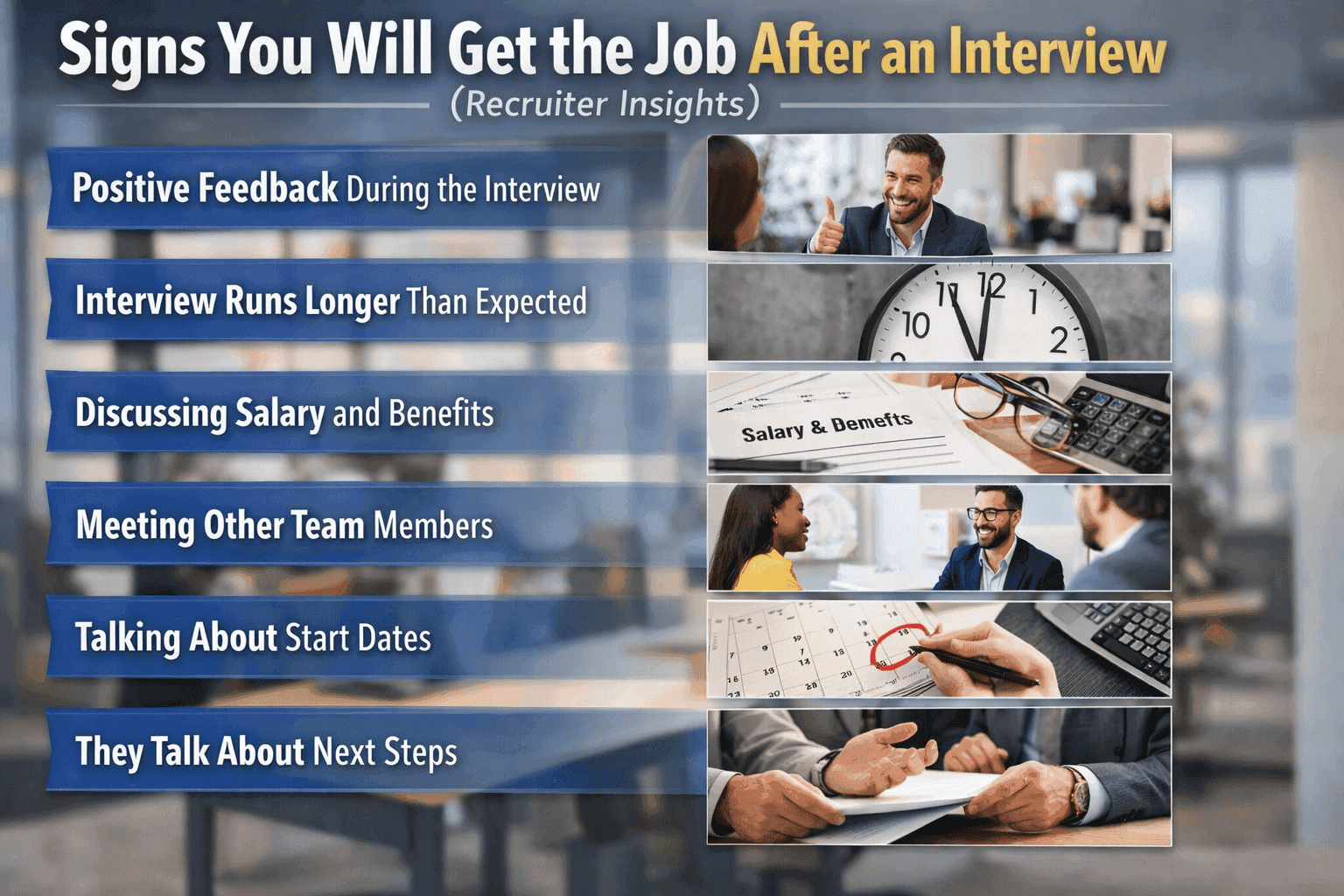
Signs You Will Get the Job After an Interview (Recruiter Insights)
Learn the most reliable signs you will get the job after an interview and how to understand recruiter signals.
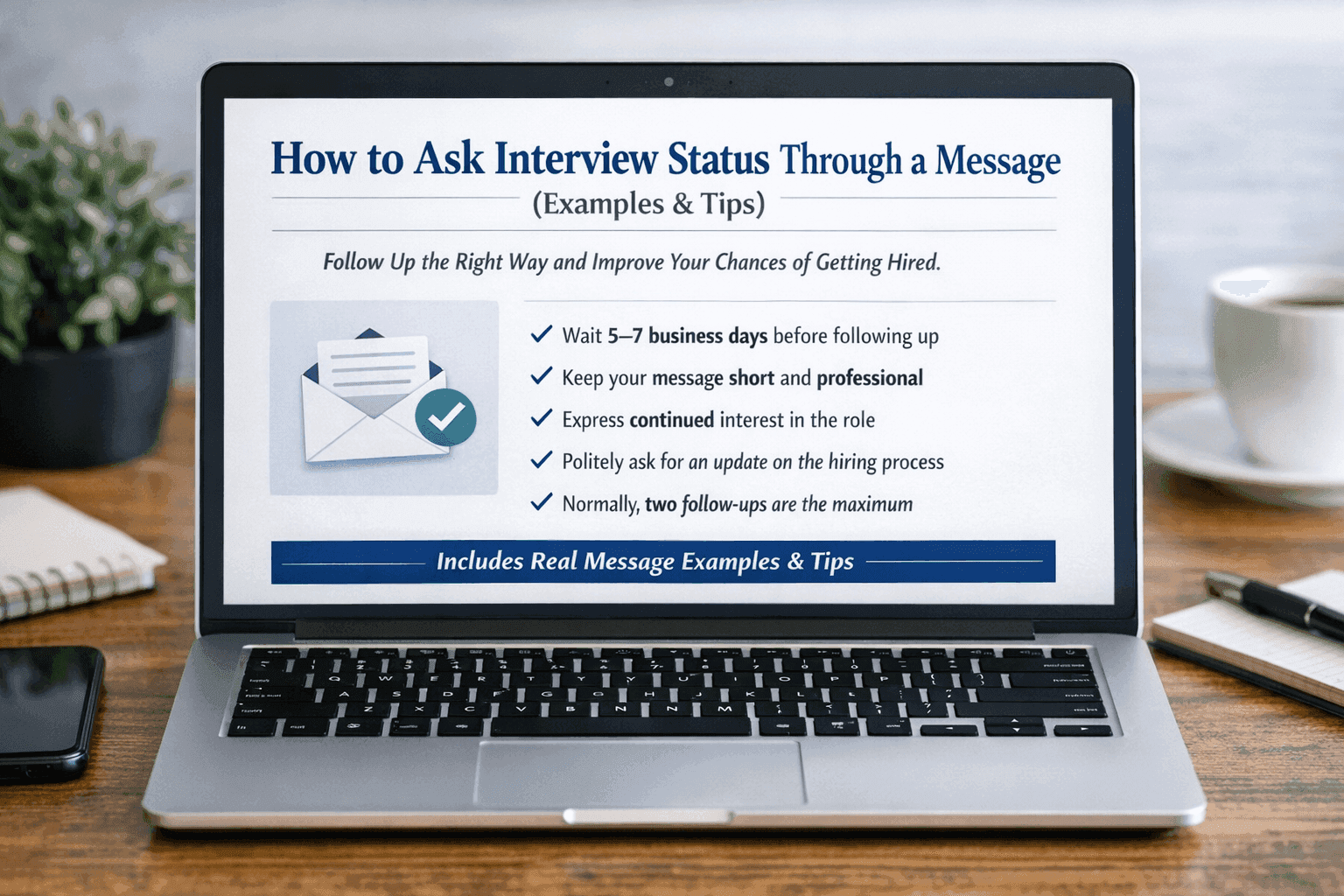
How to Ask Interview Status Through a Message (Examples & Tips)
Learn how to ask about interview status politely with professional follow-up messages, timing tips, and real examples to improve hiring chances.