Signs You Will Get the Job After an Interview (Recruiter Insights)
Learn the most reliable signs you will get the job after an interview and how to understand recruiter signals.
Overview
Not sure how your interview went? Discover the most reliable signs you will get the job after an interview, including recruiter language, body language signals, interview length, and follow-up cues that indicate strong hiring interest.
It also helps to read the other side of the coin. Learn the signs your interview went bad so you can weigh the positive and negative signals together.
You just walked out of a job interview, and now the waiting game begins. Your mind is racing. Did it go well? Will they call? How do you even know if the interview went well? If you're trying to decode the hidden signals from your interviewer, you're not alone. Most candidates spend hours (or days) anxiously replaying every moment, searching for signs they will get the job after the interview.
The good news? Hiring managers and interviewers often send clear though unspoken signals that reveal their interest level. Whether it's the way they extended the conversation, introduced you to the team, or talked about the role using "you" and "when" instead of "the candidate" and "if," these cues are worth paying attention to.
In this guide, we break down the most reliable positive signs after a job interview backed by recruiter insights so you can accurately gauge your chances and take the right next steps. Let's dive in.
Key Points
• Interview ran longer than scheduled
• Interviewer used future-focused language
• You were introduced to team members
• Interviewer started selling the company
• Questions about notice period or availability
• Positive body language and engagement
• Clear hiring timeline provided
The Interview Ran Longer Than Scheduled
One of the most consistent signs your interview went well is when it runs significantly over the allotted time. Interviewers are busy professionals; they don't stretch conversations with candidates they're not interested in.
If your 30-minute interview turned into a 60-minute deep conversation, take that as a strong positive sign after a job interview. The interviewer was engaged, curious, and invested in learning more about you.
Practical Example
Sarah applied for a marketing manager role. Her scheduled slot was 45 minutes, but the conversation extended to nearly 90 minutes, with the hiring manager asking detailed questions about her past campaigns and requesting specific metrics. She received an offer three days later. The extended time was a clear sign that the employer liked her after the interview.
The Interviewer Used Future-Oriented Language
Pay close attention to the language your interviewer uses. This is one of the most telling signs that you will get hired after the interview, and many candidates overlook it entirely.
When an interviewer shifts from hypothetical language ("the person in this role would...") to inclusive language ("you would be working with...", "when you join the team...", "you'll report directly to..."), it signals that they're already mentally placing you in the position.
Key Phrases to Listen For
• "When you start, you'll be onboarded by..."
• "Your desk would be right next to the team lead"
• "We think you'd really enjoy working on X project"
• "You'd be leading the quarterly strategy sessions"
This type of language is one of the strongest positive signs after a job interview. It shows the interviewer has mentally transitioned from evaluating you to envisioning you in the role.
Also Read : How to Make a Resume for a Teacher Job | Step-by-Step Guide
They Introduced You to Other Team Members
If your interviewer went out of their way to introduce you to colleagues, whether a quick walk-by introduction, an impromptu meeting with a team lead, or an invitation to join a secondary round with other stakeholders, this is a very strong sign the employer likes you after the interview.
Hiring managers don't typically invest their colleagues' time in candidates they're going to reject. Informal introductions are a way of beginning the social integration process before an official offer is made.
What This Looks Like in Practice
James interviewed for a software engineering position. After the formal interview, the hiring manager casually walked him over to meet two senior developers, saying, "These are the guys you'd be collaborating with most." That phrase "you'd be collaborating", combined with the introduction, was a clear sign that your interview went well, and an offer was forthcoming. He got the job.
The Interviewer Sold the Company and Role to You
There's an interesting shift that happens during interviews when a hiring manager is genuinely excited about a candidate. They stop interrogating and start selling.
If your interviewer started enthusiastically describing the company culture, the growth opportunities, the team dynamics, upcoming exciting projects, or the perks and benefits without you prompting them, this is one of the clearest positive signs after a job interview.
They're making the case for why you should accept their offer. This happens when they want you to say yes, and that means they're already planning to offer.
Also Read : 2 Year Experience Resume Format (Free Template + Pro Tips)
Signs the Interviewer Is Selling the Role
• Unprompted discussion of salary ranges or compensation packages
• Emphasis on career growth, promotion timelines, and learning opportunities
• Detailed explanation of team culture, work-life balance, or flexibility
• Mentioning exciting upcoming projects or company milestones
They Asked About Your Availability and Notice Period
"When would you be able to start?" or "How much notice do you need to give your current employer?" If you hear these questions, treat them as strong signs that you will get the job after the interview.
Interviewers ask logistical, planning-oriented questions only when they're seriously considering you. They're gathering the information needed to draft an offer and plan your onboarding. This is a direct signal they're thinking beyond the interview itself.
Other Logistical Questions That Signal Interest
• "Do you have any competing offers we should know about?"
• "Are you open to relocating or working hybrid?"
• "What salary range are you expecting?"
• "Would you be available for a follow-up call next week?"
These are all ways to know if the interview went well. The recruiter or hiring manager is doing practical groundwork for the next step.
Also Read : Indian Resume Format (Free Template + Pro Tips) | Resume Guide for Indian Job Seekers
Body Language and Energy Were Positive Throughout
Verbal cues aren't the only signs your interview went well; nonverbal communication matters enormously. Interviewers who are genuinely interested in a candidate naturally exhibit warmer, more engaged body language.
Positive Body Language Signals to Look For
• Sustained eye contact and genuine smiling throughout the conversation
• Leaning forward when you spoke, showing active listening
• Nodding frequently and affirming your responses
• Open posture, no crossed arms, relaxed shoulders
• Taking notes while you were speaking
By contrast, a disinterested interviewer might give shorter answers, avoid eye contact, check their watch or phone, or seem distracted. If you noticed warmth, energy, and genuine engagement, these are reliable positive signs after a job interview.
Also Read : Where to Put GPA on a Resume (Best Placement + Examples)
They Gave You a Clear and Specific Timeline
Vague responses like "we'll be in touch" can mean anything. But when an interviewer ends the conversation with a specific, concrete timeline, "we'll get back to you by Thursday" or "we're making a decision by the end of next week", this is a meaningful sign the employer likes you after the interview.
Specificity signals urgency. Hiring managers only give real timelines when they're actively moving forward with their top candidates. They want you to stay engaged and not accept another offer in the meantime.
Comparing Vague vs Specific Responses
• Vague: "We'll reach out soon" neutral, no commitment
• Specific: "Expect a call from HR by Friday afternoon" is a strong positive sign
• Very specific: "Our final decision is Tuesday, we'll confirm then", excellent sign
Signs to Be Cautious About (Not All "Good" Signs Are Equal)
While knowing how to know if an interview went well is important, it's equally important to avoid misreading neutral signals as positive ones. Here are a few things that can be misleading:
• A very friendly, chatty interviewer, some people are just naturally warm, regardless of hiring intent
• Being told "you're one of our top candidates", this phrase is often used with multiple finalists
• A long interview that involved many difficult, probing questions doesn't always mean rejection, but it can
• Generic follow-up emails, these are often automated or templated, not a personal sign of interest
The most reliable signs you will get the job after an interview are concrete actions, introductions, reference requests, specific timelines, and salary discussions, rather than just warm feelings or general positivity.
Also Read : ATS-Friendly Marketing Resume Keywords With Examples
What to Do After Spotting These Positive Signs
Recognising signs that the employer likes you after the interview is just the first step. How you follow up matters enormously.
Send a Thoughtful Thank-You Email Within 24 Hours
A well-crafted thank-you email reinforces the positive impression you left. Reference specific topics from the conversation, reaffirm your enthusiasm for the role, and briefly reiterate one or two reasons why you're a strong fit. This is especially effective when you've already spotted positive signs after a job interview — it seals the deal.
Continue Your Job Search in Parallel
Even when all the signs that your interview went well are present, never stop your job search until you have a written offer in hand. Positions get frozen, budgets get cut, and circumstances change. Stay active and keep applying.
Follow Up if the Timeline Passes Without Contact
If the interviewer gave you a specific date and you haven't heard back, it's completely professional to send a polite follow-up email. A brief, confident message expressing continued interest without sounding desperate is perfectly appropriate and often appreciated.
Also Read : How Long Is a CV? Ideal Length by Career Stage, Industry & Country
Conclusion
Decoding signs you will get the job after an interview is both an art and a science. The signals discussed in this guide, future-oriented language, extended interview time, team introductions, reference requests, logistical questions, and specific timelines are among the most reliable indicators that you made a strong impression.
When multiple positive signs after a job interview align, the odds are genuinely in your favour. But remember: the hiring process involves many decision-makers, budget considerations, and internal dynamics that are completely outside your control. Even the most promising signs that the employer likes you after the interview don't guarantee an offer.
What you can control is how you present yourself, how you follow up, and how you continue building your candidacy even after the interview ends.
Ready to Ace Your Next Interview?
Your resume is often what gets you to the interview in the first place. Make sure it's working as hard as you are. Use SoundCV's AI-powered resume builder to craft a professional, ATS-optimised resume that gets you in the door and puts you in the best position to spot all those positive signs after a job interview.
Build your ATS-ready resume on SoundCV today free to get started.
FAQs
Frequently asked questions about this topic
Related Blogs
Explore more insights and guides you might like.

Signs Your Interview Went Bad: How to Spot the Red Flags
Not sure how your interview went? Here are the key signs it may have taken a wrong turn and what they mean for you.
Resignation Letter Format 2026: 10 Free Templates and Samples
The exact resignation letter format for 2026, plus ten free templates and samples you can copy in minutes.
JavaScript Interview Questions and Answers: Complete Guide for Developers
Learn resignation letter format with 7 free templates for different situations. Write professional, clear, and effective resignation letters easily.
Python Interview Questions and Answers (Complete Guide for Beginners & Experts)
Comprehensive Python interview questions and answers guide covering basics, advanced concepts, and expert tips to help you land your dream job.
Words to Describe Yourself: Best Examples for Resume & Interview
Learn powerful words to describe yourself for resumes and interviews with examples, tips, and strategies to stand out professionally
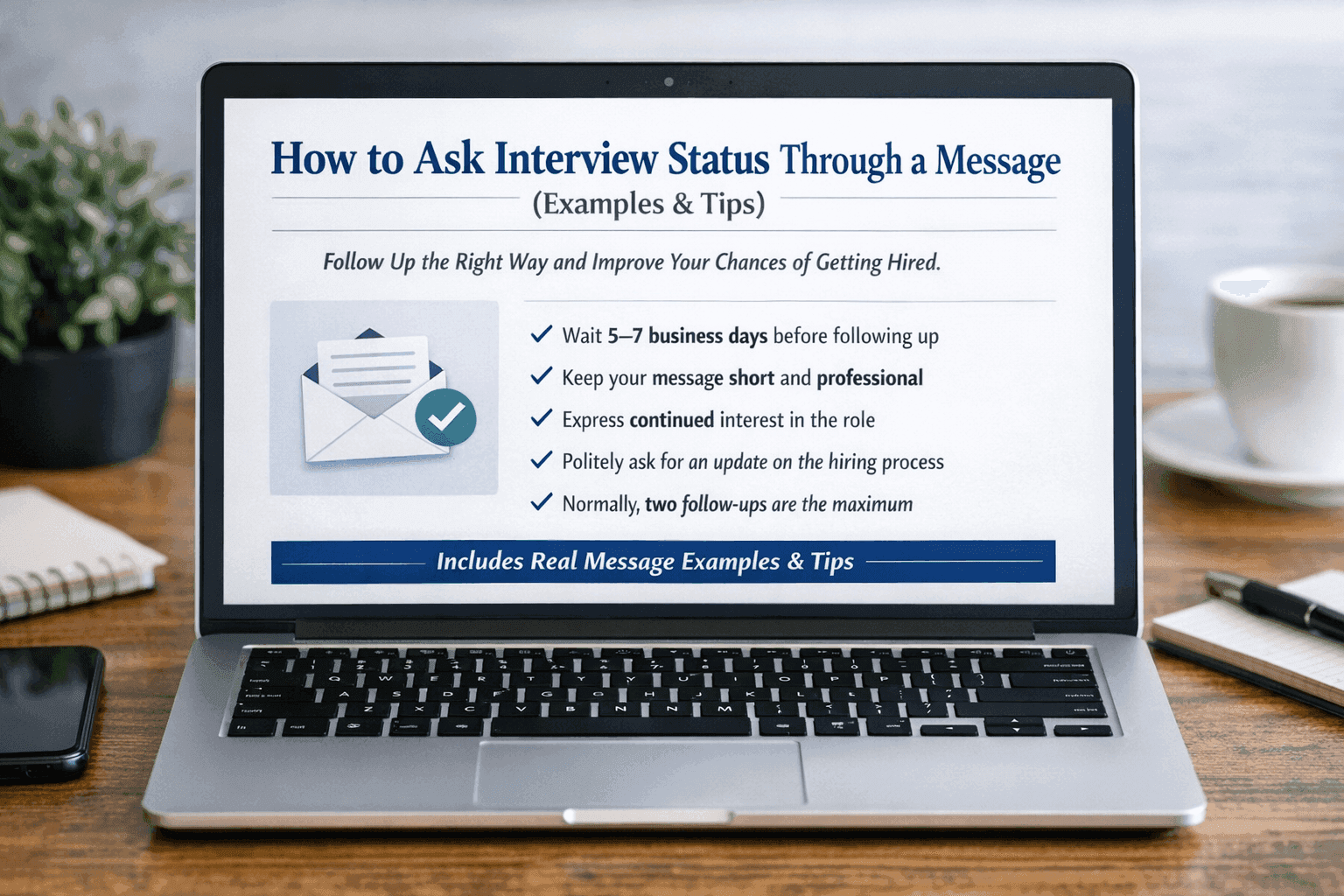
How to Ask Interview Status Through a Message (Examples & Tips)
Learn how to ask about interview status politely with professional follow-up messages, timing tips, and real examples to improve hiring chances.