How to Ask Interview Status Through a Message (Examples & Tips)
Learn how to ask about interview status politely with professional follow-up messages, timing tips, and real examples to improve hiring chances.
Overview
Discover how to ask about interview status professionally after an interview. This guide explains the best timing, polite follow-up messages, email templates, and tips to check interview results without sounding impatient or pushy.
You've just finished an interview. The conversation flowed, you answered every question confidently, and you left with a genuine sense of excitement. And then comes the hardest part: the waiting.
Before you follow up, gauge how the meeting actually went. Reviewing the signs your interview went bad helps you set the right tone in your message.
Days go by. Maybe even a week. You find yourself refreshing your email every hour, wondering whether you should reach out or simply wait. Should you send a follow-up message? Will that come across as desperate, or will it show initiative?
The truth is, knowing how to ask about interview status via message is one of the most
underrated professional skills you can develop. Done correctly, a well-crafted message can reinforce your interest, keep you top of mind, and even accelerate the hiring decision. Done poorly, it can undermine all the progress you made during the interview.
Many candidates also wonder how to ask about interview results without sounding impatient, or how to follow up after an interview message that gets a response. This guide answers all of that from when to reach out, to exactly what to write including real interview follow-up message examples you can use right away. By the end, you'll know exactly how to ask for interview status via message in any situation, on any platform.
- Send a thank-you message within 24 hours after the interview.
- Wait 5–7 business days before asking about interview status if no timeline is given.
- If the interviewer provided a timeline, respect it before following up.
- Keep your follow-up short, polite, and professional (4–6 sentences).
- Express continued interest in the role and company.
- Ask for an update politely instead of demanding a decision.
- Email is the best platform to follow up; LinkedIn can also work.
- Avoid following up too soon or sending too many messages.
- Normally, two follow-ups are the maximum.
- A well-timed professional message can improve your chances of getting hired.
Why Following Up on Interview Status Matters
Before diving into the how, it's worth understanding the why. Many job seekers avoid following up because they fear seeming pushy or impatient. But hiring managers and recruiters generally view a professional follow-up very differently.
Whether you want to know how to check interview status or politely ask for it, the act of reaching out itself signals professionalism. Here is why following up works in your favor:
• It demonstrates genuine interest in the role and company
• It shows initiative and proactive communication traits most employers value
• It keeps your name visible at a critical decision-making moment
• It gives you a chance to address anything you didn't fully express in the interview
• It can provide closure if the company has moved in a different direction
A 2023 survey by TopInterview found that over 68% of hiring managers said a follow-up after an interview positively influenced their impression of a candidate. Not following up, in contrast, can sometimes read as disinterest.
The key is doing it right and that starts with timing.
Also Read : How to Make a Resume for a Teacher Job | Step-by-Step Guide
When to Ask About Your Interview Status
Respect the Timeline They Gave You
The most important rule: if the interviewer gave you a specific timeline for their decision, respect it fully before you consider asking for interview status via a message. If they said 'We'll be in touch within two weeks,' send your follow-up on day 15 at the earliest.
Reaching out before the window closes signals impatience. Hiring processes involve multiple stakeholders calendars, approvals, and internal reviews and pushing too soon puts the recruiter in an uncomfortable position.
The 5-7 Business Day Rule
If no timeline was given, a good rule of thumb is to wait 5 to 7 business days before sending your first follow-up message. This gives the hiring team reasonable time to complete interviews with other candidates, confer internally, and move through their normal process.
For senior or executive-level positions, waiting up to 10 business days is appropriate, as these decisions typically involve more layers of review.
Send a Thank-You Note First
Before you ever ask how to check interview status, you should have already sent a thank-you message within 24 hours of your interview. This is not a status inquiry it's a gratitude note that briefly recaps your enthusiasm. The status follow-up comes later, after the thank-you.
Also Read : 2 Year Experience Resume Format (Free Template + Pro Tips)
How to Ask Interview Status Politely: 5 Core Principles
Whether you're sending an email, a LinkedIn message, or a text, these five principles separate a professional follow-up from one that backfires. Knowing how to ask interview status politely is about tone, timing, and structure working together. Many people ask how to politely ask about interview status; the answer always comes down to these fundamentals. Professionals who consistently get callbacks know how to ask about interview status at exactly the right moment, politely.
1. Be Brief and Respectful of Their Time
Hiring managers are busy people managing multiple candidates simultaneously. Your message should be short, no more than 4 to 6 sentences. Get to the point without unnecessary preamble.
2. Express Continued Enthusiasm for the Role
Every follow-up is an opportunity to reaffirm your interest. Mention something specific about the role or the conversation that you're still excited about. This makes your message feel personal and genuine rather than generic.
3. Request an Update Don't Demand an Answer
There is a significant tonal difference between 'Can you tell me your decision?' and 'I wanted to check in on the timeline and see if there's anything I can provide.' The latter is collaborative. The former feels pressured. When learning how to ask about interview results, always lean toward collaborative language.
4. Make It Easy to Respond
End your message with a simple, open-ended statement that invites a response without demanding one. Something like 'Please let me know if there's any additional information I can share' is low-pressure but effective.
5. Proofread Carefully Before Sending
A follow-up message with typos or grammatical errors can undo the positive impression you
created during your interview. Always read the message at least twice before hitting send.
Also Read : Indian Resume Format (Free Template + Pro Tips) | Resume Guide for Indian Job Seekers
How to Follow Up After an Interview Message: Examples for Every Situation
Below are ready-to-use interview follow-up message examples for different situations. Each one is designed to help you learn how to ask about interview status in a message that sounds natural and professional. Personalize them with specific details from your interview before sending.
Interview Follow-Up Message Example 1: Standard Email After an Interview
Subject: Following Up – [Your Name] | [Position Title] Interview
Hi [Interviewer's Name], I hope you're doing well. I wanted to follow up regarding the [Position Title] role I interviewed for on [Date]. I remain very excited about the opportunity to join [Company Name] and contribute to [specific goal discussed]. If there are any updates on the hiring timeline or if you need any additional information from my end, please don't hesitate to let me know. Thank you again for your time — I look forward to hearing from you.
Best regards, [Your Full Name] [Phone Number] | [LinkedIn URL]
Interview Follow-Up Message Example 2: Short LinkedIn or Text Message
Hi [Name], I hope your week is going well! I wanted to briefly check in on the status of the [Position Title] role. I'm still very interested and would love to know if there are any next steps. Thanks so much!
Interview Follow-Up Message Example 3: When You Have a Competing Offer
Subject: Update on My Application – [Your Name] | [Position Title]
Hi [Interviewer's Name], I hope all is well. I wanted to reach out because I've recently received another offer and have been asked to respond by [Date]. That said, [Company Name] remains my first choice, and I wanted to check in before making any decisions. If there are any updates on your end, I would greatly appreciate hearing from you. I'm happy to provide any additional information that might be helpful. Thank you for your time and consideration. Best, [Your Name]
Interview Follow-Up Message Example 4: Second Follow-Up (No Response Yet)
Hi [Name], I hope everything is going well. I know you're likely managing a busy schedule, so I'll keep this brief I wanted to follow up once more on the [Position Title] opportunity. I remain enthusiastic about the role and would appreciate an update on the timeline at your convenience. Thank you, and I look forward to your reply. [Your Name]
Interview Follow-Up Message Example 5: How to Ask Interview Feedback Politely
If you want to know how to politely ask for interview feedback after being rejected, or even after a long silence, this template works perfectly. Here is also how to ask interview feedback politely without burning any bridges:
Hi [Name], Thank you again for the opportunity to interview for the [Position Title] role. I understand if the position has moved forward with another candidate. If possible, I would truly appreciate any feedback you might be willing to share on my interview. Your insights would be invaluable as I continue to develop professionally. Thank you so much for your time.
Best regards, [Your Name]
This is one of the most professional ways to ask for interview feedback politely it's gracious, brief, and leaves the door open to future opportunities with the same company.
Also Read : Where to Put GPA on a Resume (Best Placement + Examples)
How to Check Interview Status on Different Platforms
Knowing how to check interview status also means knowing which channel is most appropriate. The right platform depends on how you've been communicating throughout the process.
Via Email
Email is almost always the best channel for asking about interview status in a professional setting. It creates a written record, allows the recruiter to respond at a convenient time, and is the format most hiring teams prefer. Use the interview follow-up message examples above and send them to the same address you've been using throughout the process. This is the most reliable way to check interview status without overstepping professional boundaries.
Via LinkedIn Message
If you connected with the interviewer on LinkedIn, a brief message there is acceptable particularly if you don't have their direct email. Keep it shorter than an email and more conversational. This is also a great way to ask about interview results if your primary communication has been through LinkedIn.
Via Phone Call
Calling to check on interview status is generally less preferred unless a recruiter specifically invited you to call. If you do call, introduce yourself clearly, reference the role and date of your
interview, and keep the call brief and professional.
Via Recruiter Portal or ATS
Many large companies use Applicant Tracking Systems that include a candidate portal where you can check your interview status directly. Knowing how to check interview status through an ATS portal is the easiest route. Always check there first before reaching out directly, as the status may already be updated and can save you from an unnecessary message.
Also Read : ATS-Friendly Marketing Resume Keywords With Examples
How to Ask About Interview Results: Common Mistakes to Avoid
Even well-intentioned messages can miss the mark. When figuring out how to ask about interview results or how to follow up after an interview message, avoid these common pitfalls. These mistakes can make even a well-written follow-up feel pushy especially when you're trying to figure out how to ask interview status politely.
Following Up Too Soon
Reaching out before the stated timeline or within just a day or two of the interview can come across as impatient. Always give the hiring team adequate time before sending your first follow-up.
Sending Too Many Messages
Two follow-ups are generally the maximum. If you've sent two messages and received no response, it's usually a signal that the company has moved in a different direction. Following up a third or fourth time rarely changes the outcome and can damage your professional reputation.
Making It About You
Phrases like 'I really need this job' or 'I've been waiting anxiously' put emotional pressure on the recipient and come across as desperate. Keep the focus on your enthusiasm for the role itself, not on your personal situation.
Using a Casual or Informal Tone
Unless you've established a very informal rapport with the recruiter, avoid slang or overly casual language. Match the professional tone of your previous communications especially when politely asking about interview status.
Using a Generic, Unpersonalized Message
Generic messages are easy to spot. Always reference the specific role, the date of your interview, and ideally something memorable from your conversation. This is what separates an effective interview follow-up message example from a forgettable template. It also shows you know how to ask interview status politely with context, not just a cold check-in.
Also Read : How Long Is a CV? Ideal Length by Career Stage, Industry & Country
Conclusion
Knowing how to ask interview status through a message is ultimately about striking the right balance between showing enthusiasm and respecting boundaries, between being proactive and being patient.
The candidates who land great jobs aren't always the most qualified. They're often the ones who communicate with clarity and professionalism at every stage including after the interview. Whether you need to know how to politely ask about interview status, how to check interview status on a specific platform, how to politely ask for interview feedback after a rejection, or how to follow up on an interview message that never got a reply, every situation has the right approach.
Use the interview follow-up message examples in this guide as your starting point. Personalize them, send them at the right time, and always proofread before you hit send. A single well-written message, sent at the right moment, can be the thing that tips a hiring decision in your favor.
Ready to Land Your Next Role?
Pick one of the interview follow-up message examples above, personalize it with real details from your most recent interview, and send it with confidence today. Your next opportunity might be one professional message away.
FAQs
Frequently asked questions about this topic
Related Blogs
Explore more insights and guides you might like.

Signs Your Interview Went Bad: How to Spot the Red Flags
Not sure how your interview went? Here are the key signs it may have taken a wrong turn and what they mean for you.
Resignation Letter Format 2026: 10 Free Templates and Samples
The exact resignation letter format for 2026, plus ten free templates and samples you can copy in minutes.
JavaScript Interview Questions and Answers: Complete Guide for Developers
Learn resignation letter format with 7 free templates for different situations. Write professional, clear, and effective resignation letters easily.
Python Interview Questions and Answers (Complete Guide for Beginners & Experts)
Comprehensive Python interview questions and answers guide covering basics, advanced concepts, and expert tips to help you land your dream job.
Words to Describe Yourself: Best Examples for Resume & Interview
Learn powerful words to describe yourself for resumes and interviews with examples, tips, and strategies to stand out professionally
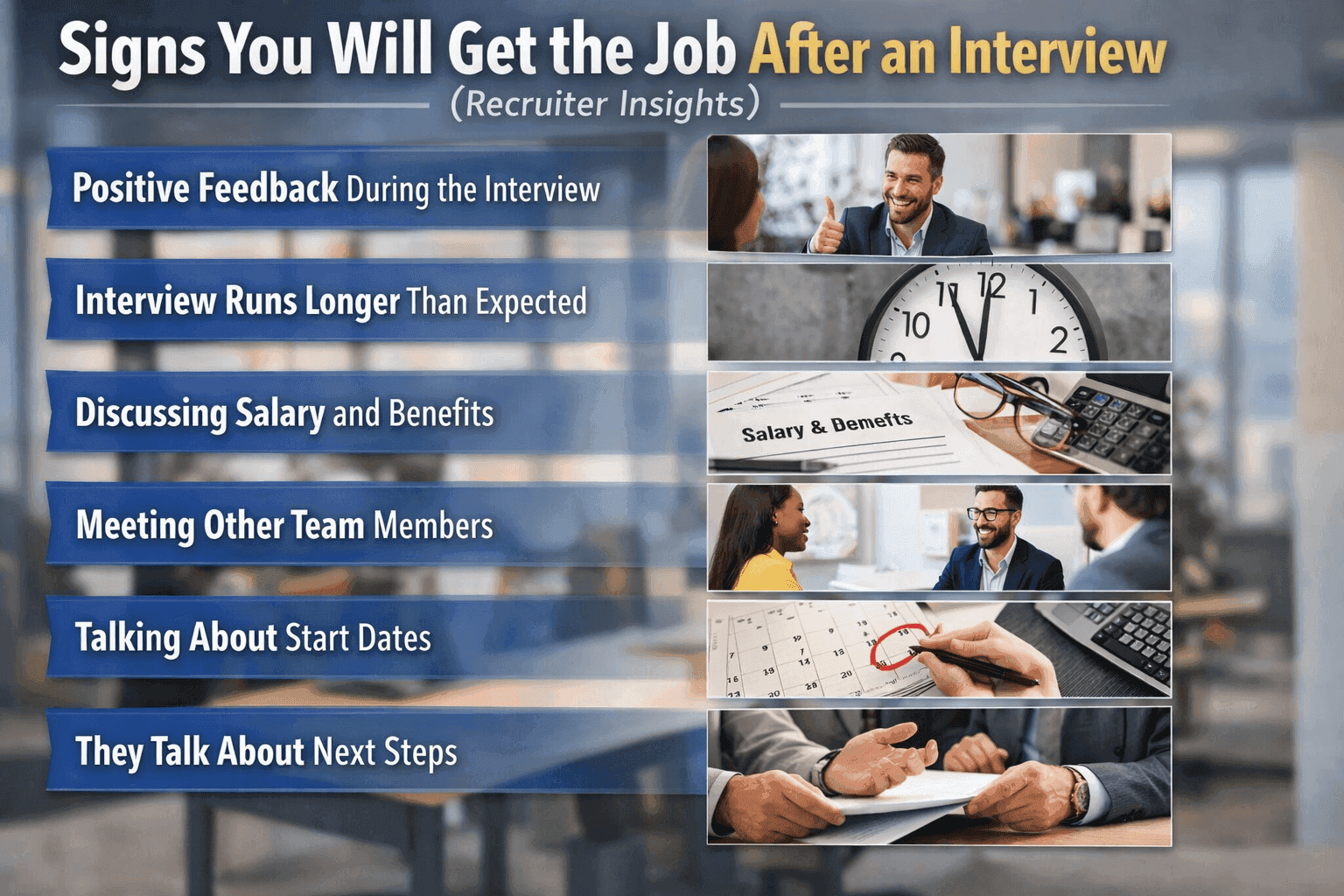
Signs You Will Get the Job After an Interview (Recruiter Insights)
Learn the most reliable signs you will get the job after an interview and how to understand recruiter signals.