Problem Solving Skills Examples with Samples & Writing Tips
Boost your resume with these practical problem-solving skills examples, plus tips on how to showcase them effectively.
Overview
Problem-solving is a top skill employers value, demonstrating critical thinking, adaptability, and practical solutions. This guide explains what problem-solving skills are, why they matter, and how to showcase them on your resume with real-world examples across industries. Learn how to list them in skills, experience, and summaries, use measurable results, and prepare for interviews with the STAR method to impress recruiters.
Every employer values one skill above most others — the ability to solve problems. Whether you’re managing a project, assisting a customer, or leading a team, challenges arise daily. What sets standout employees apart is their ability to analyze, adapt, and act.
That’s why showcasing problem solving skills examples on your resume can instantly capture a recruiter’s attention. These skills demonstrate that you can think critically, stay calm under pressure, and find practical solutions traits every organization needs.
In this guide, we’ll explore problem solving skills examples, how to list them on your resume, and how to describe them with real-world samples and writing tips for 2026.
Key Points:
Keep problem-solving skills clear and results-focused.
Essential skills: analytical thinking, creativity, decision-making, teamwork, communication, adaptability.
Show examples in Skills section, Work Experience bullets, and Professional Summary.
Use measurable results: quantify achievements wherever possible.
Highlight cross-industry relevance: admin, IT, marketing, education, finance.
Complement with soft skills: leadership, time management, strategic thinking, emotional intelligence.
Prepare for interviews using STAR method: Situation, Task, Action, Result.
Avoid vague claims, generic statements, and unproven buzzwords.
What Are Problem Solving Skills?
Problem solving skills refer to your ability to identify issues, analyze root causes, develop solutions, and implement them effectively. It’s a blend of several soft skills like communication, creativity, critical thinking, and decision-making.
Employers across all industries from tech to education to healthcare value these skills because they show you can handle uncertainty, make sound judgments, and drive results.
In simple terms: problem-solving skills are how you turn obstacles into opportunities.
Why Problem Solving Skills Matter in the Workplace
Modern workplaces thrive on innovation and adaptability. Even the most well-planned projects encounter unexpected issues technical glitches, customer complaints, workflow bottlenecks, or communication gaps.
Employers look for candidates who can:
Identify problems early
Think analytically and creatively
Propose data-driven solutions
Collaborate effectively with others
Including problem solving skills examples on your resume shows employers you’re not just task-oriented — you’re outcome-driven.
Also Read:Personal Details in Resume with Examples in 2026
Types of Problem Solving Skills With Real-World Examples
Problem-solving involves several complementary skills. Here’s a breakdown of the most sought-after ones, with examples for your resume:
Analytical Thinking
Ability to break down complex problems into smaller, understandable parts.
Example for Resume:
Analyzed sales data to identify performance gaps, resulting in a 15% improvement in quarterly sales.
Creativity
Coming up with innovative or unconventional solutions to problems.
Example for Resume:
Developed a creative digital marketing campaign that increased engagement by 40%.
Decision-Making
Choosing the best solution after evaluating all options.
Example for Resume:
Made key process adjustments that reduced customer complaints by 25%.
Team Collaboration
Solving problems by working with colleagues across departments.
Example for Resume:
Collaborated with product and design teams to resolve user experience issues before launch.
Critical Thinking
Evaluating data, identifying biases, and making evidence-based decisions.
Example for Resume:
Assessed vendor performance using key metrics and recommended a new supplier, saving 10% in operational costs.
Communication
Explaining problems and solutions clearly to teammates, clients, or management.
Example for Resume:
Presented solutions to the management team that reduced project delays by improving task delegation.
Adaptability
Staying flexible and positive when problems change direction.
Example for Resume:
Adjusted project plan mid-campaign to accommodate new regulations without affecting delivery timelines.
These examples show recruiters that your problem-solving approach is structured, logical, and results-oriented.
How to Include Problem Solving Skills on Your Resume
There are three key places to include problem solving skills examples:
In the Skills Section
Create a dedicated section titled “Core Skills” or “Key Competencies” and list both technical and soft skills.
Example:
- Problem Solving & Critical Thinking
- Analytical Decision-Making
- Conflict Resolution
- Creativity & Innovation
- Communication and Collaboration
In Your Work Experience Section
Use bullet points to show how you’ve used problem solving in real situations.
Example:
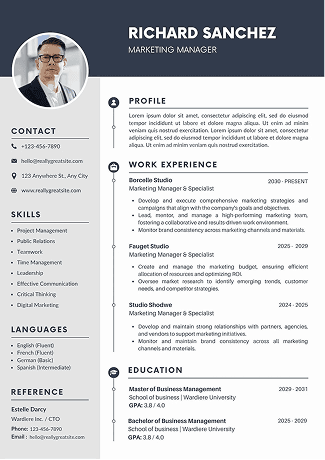
Customer Support Executive | ABC Tech | 2023–2025
- Identified recurring customer complaints and streamlined the reporting system, reducing response time by 30%.
- Collaborated with developers to implement a chatbot solution that resolved 70% of user queries automatically.
This method not only highlights the skill but also provides measurable results a great strategy for keyword-rich resumes
In Your Professional Summary
Summarize your problem-solving ability in your opening paragraph to grab immediate attention.
Example:
Detail-oriented professional with strong problem-solving and analytical skills. Experienced in identifying process inefficiencies and implementing solutions that improve productivity and customer satisfaction.
Also Read:How to Write LinkedIn Profile in Resume
Problem Solving Skills Resume Examples
Here are examples of how problem-solving skills appear in resumes across different industries:
Administrative / Office Role
- Resolved scheduling conflicts between departments, improving workflow coordination.
- Implemented a filing system that reduced document retrieval time by 40%.
IT or Technical Role
- Diagnosed and fixed server downtime issues, ensuring 99.9% system uptime.
- Developed scripts to automate repetitive tasks, saving 10+ hours weekly.
Marketing / Creative Role
- Analyzed ad performance data and optimized strategy, increasing click-through rates by 22%.
- Solved client content delivery bottlenecks by introducing a new workflow using project management tools.
Education / Teaching Role
- Addressed diverse learning needs by designing interactive lesson plans.
- Resolved classroom behavioral issues through positive reinforcement and personalized engagement.
Finance / Business Role
- Detected reporting errors and implemented verification checks, improving data accuracy.
- Reduced budget overruns by identifying cost-saving opportunities during quarterly reviews.
These resume skills examples prove that problem-solving is universal it applies to every job type and experience level.
Examples of Problem-Solving Skills Used by Top Tech Companies
Top tech companies like Google, Amazon, Microsoft, Meta, and Apple use structured problem-solving skills such as data-driven decision-making, analytical reasoning, experimentation, system design thinking, and customer-centric innovation to solve complex technical and business problems.
Data-Driven Decision Making by Google
Google relies on quantitative analysis to validate ideas and fix issues.
Example: Using A/B testing and statistical modeling to improve search ranking quality or optimize UX on YouTube.
Skill demonstrated: Analytical thinking, experimentation, pattern detection.
Root Cause Analysis By Amazon
Amazon uses mechanisms like the 5 Whys and Working Backwards documents to identify the root cause of customer pain points.
Example: Detecting slow delivery times and tracking the issue back to warehouse pick-path inefficiencies.
Skill demonstrated: Logical reasoning, process optimization, customer obsession.
System Design Thinking by Meta & Microsoft
Large-scale systems require solving performance, scalability, and reliability challenges.
Example: Meta engineers redesigning feed ranking architecture to reduce latency across billions of daily users.
Skill demonstrated: Systems thinking, architectural problem solving, scalability strategies.
Rapid Prototyping & Iteration by Apple
Apple solves product problems by building fast prototypes, testing them with real users, and refining until they meet usability and design standards.
Example: Iterative hardware prototypes to reduce Apple Watch battery drain.
Skill demonstrated: Creative problem solving, iterative testing, user-centered design.
Machine Learning Based Problem Solving by Netflix
Netflix applies ML to predict viewer preferences, detect anomalies, and optimize content distribution.
Example: Using anomaly detection to solve streaming quality drops during peak hours.
Skill demonstrated: Algorithmic thinking, modeling, data interpretation.
Cross-Functional Collaboration by Microsoft Teams, Google Workspace
Tech companies solve large problems by combining engineering, UX, product, and data science.
Example: Microsoft Teams improving meeting latency through joint engineering + network teams.
Skill demonstrated: Communication, collaboration, multi-disciplinary problem solving.
Incident Response & Crisis Management by AWS and Cloudflare
When outages happen, companies use structured problem-solving frameworks like postmortems and blameless analysis.
Example: AWS conducting a postmortem after a regional outage and implementing safeguards.
Skill demonstrated: High-pressure problem solving, diagnostic reasoning, scenario analysis.
Also Check Out Our Other Resume Related Blogs:
How to Describe Problem Solving in an Interview
Adding problem solving skills examples to your resume is only half the job you must also be ready to talk about them in interviews.
Use the STAR method (Situation, Task, Action, Result) when describing a problem you solved:
- Situation: Describe the context or challenge.
- Task: Explain your role.
- Action: Describe the steps you took.
- Result: Highlight measurable outcomes.
Example:
During a major website relaunch, the design team faced compatibility issues. I coordinated between developers and testers, identified coding conflicts, and created a shared bug tracker. As a result, the site launched on time and received a 98% user satisfaction score.
This structured storytelling approach demonstrates leadership, initiative, and impact key elements employers love.
Also Read:Skills in Resume for Freshers with No Experience
Other Soft Skills That Support Problem Solving
While problem solving is essential, it often works hand-in-hand with other soft skills examples that strengthen your profile.
Here are complementary soft skills to include:
- Time management
- Leadership
- Emotional intelligence
- Active listening
- Strategic thinking
- Negotiation and persuasion
Together, these skills show that you’re not only capable of finding solutions but also communicating and executing them effectively.
Also Read:Resume Summary for Freshers with Best Examples
Writing Tips to Highlight Problem Solving Skills
To make your resume more compelling, keep these writing tips in mind:
Use Action Verbs: Start each bullet with strong words like “resolved,” “implemented,” “analyzed,” or “improved.”
Quantify Results: Numbers make your achievements more credible (e.g., “Reduced errors by 20%”).
Tailor for Each Job: Match your skills to the employer’s job description.
Be Concise: Avoid vague claims like “Good at solving problems.” Instead, use evidence-backed examples.
Highlight Collaboration: Many workplace problems require teamwork — mention who you worked with and how.
Common Mistakes to Avoid When Writing Problem Solving Skills
Listing problem solving as a single skill without proof.
Using generic statements like “I’m a problem solver.”
Overloading your resume with buzzwords but no measurable impact.
Ignoring industry-specific keywords that recruiters search for.
Your goal is to show, not just tell, that you can solve problems.
Also Read:Good CV Examples for Your First Job
Conclusion
Every great professional has one thing in common the ability to solve problems. Whether you’re streamlining workflows, resolving conflicts, or finding creative ways to achieve goals, your problem solving skills examples define your value.
By showcasing specific achievements, measurable results, and action-driven descriptions, you can make your problem solving skills resume stand out from the crowd.
At Sound CV, we help candidates highlight their strengths through expertly written resumes that blend soft skills examples, professional experience, and results-driven storytelling.
FAQs
Frequently asked questions about this topic
Related Blogs
Explore more insights and guides you might like.

Signs Your Interview Went Bad: How to Spot the Red Flags
Not sure how your interview went? Here are the key signs it may have taken a wrong turn and what they mean for you.
Resignation Letter Format 2026: 10 Free Templates and Samples
The exact resignation letter format for 2026, plus ten free templates and samples you can copy in minutes.
JavaScript Interview Questions and Answers: Complete Guide for Developers
Learn resignation letter format with 7 free templates for different situations. Write professional, clear, and effective resignation letters easily.
Python Interview Questions and Answers (Complete Guide for Beginners & Experts)
Comprehensive Python interview questions and answers guide covering basics, advanced concepts, and expert tips to help you land your dream job.

Words to Describe Yourself: Best Examples for Resume & Interview
Learn powerful words to describe yourself for resumes and interviews with examples, tips, and strategies to stand out professionally
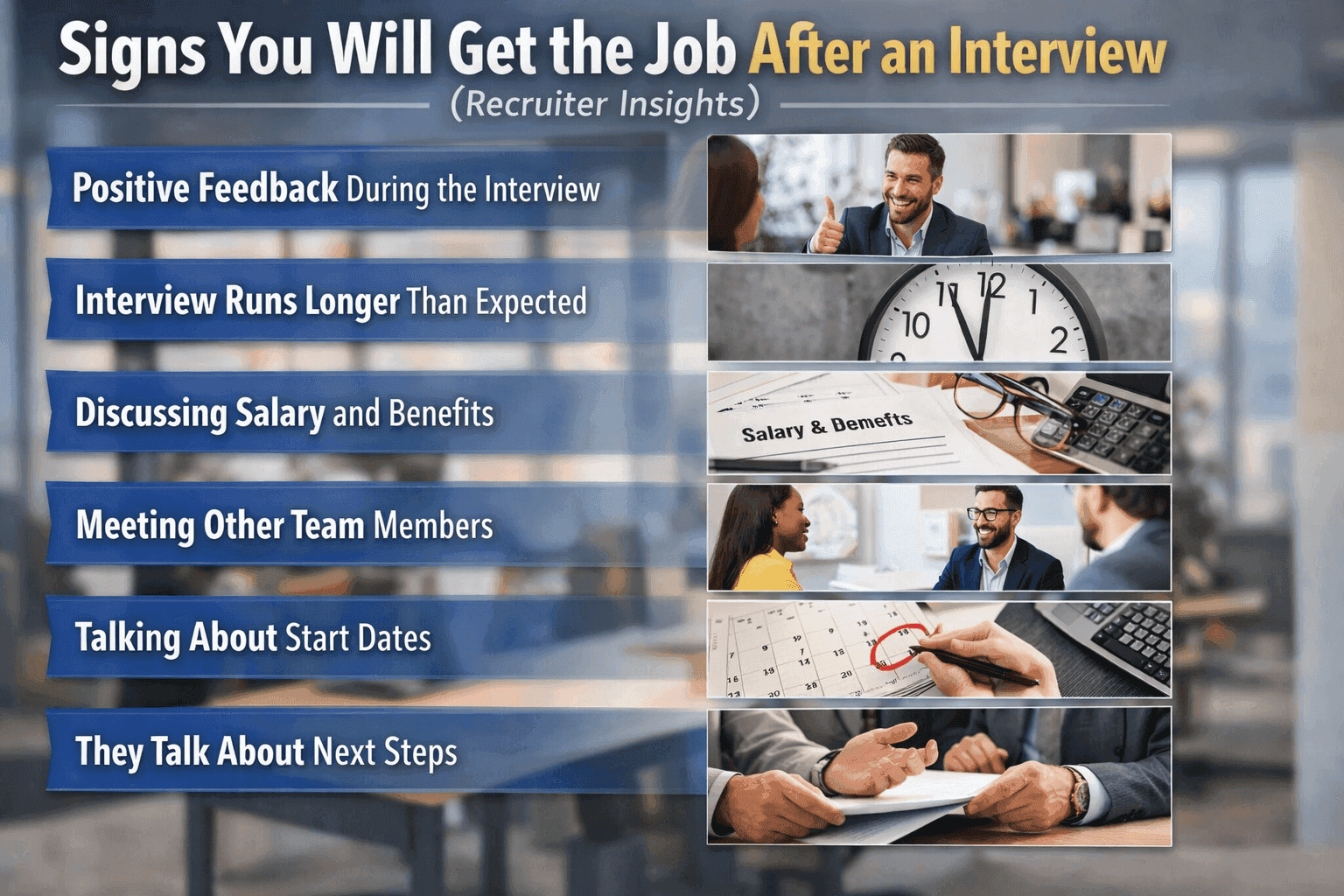
Signs You Will Get the Job After an Interview (Recruiter Insights)
Learn the most reliable signs you will get the job after an interview and how to understand recruiter signals.