Technical Skills for a Resume: Examples & Tips 2026
Learn which technical skills employers expect in 2026, with practical examples and clear tips to list them effectively on your resume.
Overview
Technical skills play a major role in building a strong, ATS-friendly resume in 2026. This guide explains what technical skills are, why recruiters value them, and how to list the right ones with real examples. Learn industry-specific skills, common mistakes to avoid, and practical tips to stand out using Sound CV expert recommendations.
In 2026, employers are looking for candidates who not only have strong soft skills but also possess the right technical skills for a resume that prove they can perform efficiently in a digital-first environment. Whether you’re a software engineer, designer, marketer, or finance expert, your technical abilities make you stand out.
This comprehensive guide will explain what technical skills are, how to list them on your resume, and provide technical skills examples for various industries to help you craft a competitive, ATS-optimized resume.
Key Points:
Technical skills are measurable, job-specific abilities gained through training or experience.
Recruiters and ATS systems prioritize resumes with relevant technical skills.
Technical skills should be listed in a dedicated, well-organized section.
Always tailor skills to match the job description.
Group skills by category to improve clarity and readability.
Support technical skills with real results in your experience section.
In-demand technical skills in 2026 include IT, programming, data analytics, design, marketing, finance, and project management tools.
Industry-specific technical skills help your resume stand out.
Certifications, portfolios, and LinkedIn profiles strengthen skill credibility.
Avoid listing outdated, irrelevant, or unproven skills.
A balanced mix of technical and soft skills improves hiring success.
Sound CV recommends keeping skills current, focused, and results-driven for ATS and recruiter impact.
What Are Technical Skills?
Technical skills often referred to as hard skills are the specific, teachable abilities you gain through education, training, or hands-on experience. These are measurable skills that help you perform job-specific tasks and operate particular tools, software, or equipment.
For instance:
- A graphic designer might include Adobe Photoshop or Figma.
- A data analyst might list SQL, Power BI, or Python.
- A marketing specialist might highlight SEO tools or Google Analytics.
Technical skills differ from soft skills because they demonstrate what you can do, not just how you do it.
Also Read:Achievements in a Resume
Why Technical Skills Are Important on a Resume
In today’s competitive job market, recruiters and Applicant Tracking Systems (ATS) prioritize candidates who demonstrate relevant technical skills for resume sections.
Here’s why these skills matter:
- ATS Optimization: Most companies use software to scan resumes for keywords related to required skills.
- Professional Credibility: Listing specific technical skills shows your capability to perform the job efficiently.
- Industry Relevance: In every field from healthcare to finance technical literacy is becoming a standard requirement.
- Competitive Edge: The right combination of technical and soft skills helps you stand out among hundreds of applicants.
Also Read:Top 20 AI Resume Builders for Fresh Graduates and Job Seekers
How to List Technical Skills on Your Resume
Your technical abilities deserve their own section. Here’s how to structure and present them effectively:
1. Create a Dedicated Section
Use clear headers like:
- Technical Skills
- Tools & Technologies
- Core Competencies
Example:
Technical Skills: HTML, CSS, JavaScript, React, Git, Figma, Google Analytics
2. Group Skills by Category
If you have a diverse set of skills, organize them into logical categories for readability.
Example:
- Programming Languages: Python, Java, C++
- Design Tools: Adobe Illustrator, Canva, Figma
- Data Analysis: Power BI, SQL, Excel
3. Include Skills in Experience Section
Mention how you’ve used technical skills to achieve results.
Developed automated dashboards using SQL and Tableau, reducing manual reporting time by 40%.
4. Prioritize Relevance
Always list skills that align directly with the job description. Outdated or irrelevant tools can make your resume look generic.
Also Read:Upload Resume to LinkedIn: Resume Guide with Examples
Top Technical Skills for Resume in 2026
As industries evolve, certain technical skills examples remain in high demand across different professions. Here’s a breakdown:
1. Computer & IT Skills
- Microsoft Office Suite (Excel, Word, PowerPoint)
- Operating Systems (Windows, macOS, Linux)
- Cloud Computing (AWS, Azure, Google Cloud)
- Network Security & Troubleshooting
2. Programming & Software Development
- Python, Java, C++, JavaScript
- React, Node.js, Django
- Git, GitHub, Docker
- Database Management (MySQL, MongoDB)
3. Data Analytics & Research
- Power BI, Tableau, Google Data Studio
- SQL, R Programming, Python (Pandas, NumPy)
- Statistical Analysis, Forecasting
- Machine Learning Fundamentals
4. Design & Creative Tools
- Adobe Photoshop, Illustrator, InDesign
- Canva, Figma, Sketch
- Video Editing (Premiere Pro, After Effects)
- 3D Design (AutoCAD, Blender)
5. Marketing & SEO Tools
- Google Analytics, Google Ads
- SEMrush, Ahrefs, Moz
- Email Marketing (Mailchimp, HubSpot)
- Content Management Systems (WordPress, Shopify)
6. Business & Finance Tools
- Excel (Macros, Pivot Tables, Formulas)
- QuickBooks, SAP, Oracle
- CRM Software (Salesforce, Zoho CRM)
- ERP Tools
7. Project Management Tools
- Trello, Asana, Jira, ClickUp
- Agile & Scrum Methodologies
- Slack, Notion, Microsoft Teams
Also Read:Graphic Design Skills
Industry-Specific Technical Skills Examples
For Software Developers
- Languages: Python, JavaScript, PHP
- Frameworks: React, Angular
- Tools: GitHub, Docker, Jenkins
For Designers
- Tools: Adobe Creative Suite, Figma, Sketch
- Skills: UI/UX Design, Wireframing, Typography
For Data Analysts
- SQL, Power BI, Python, Excel
- Data Visualization and Reporting
For Digital Marketers
- SEO Optimization, Google Analytics, Meta Ads
- Email Automation, A/B Testing, Social Media Campaigns
For Accountants
- QuickBooks, Excel Advanced Functions, SAP
- Financial Reporting, Tax Management
Also Check Out Resume Related Blog:
How to Choose the Right Technical Skills for Resume
Here’s a step-by-step strategy to select relevant skills for each job application:
- Study the Job Description: Highlight recurring tools and technologies mentioned by the employer.
- Evaluate Your Own Strengths: Include only skills you’re confident in demonstrating.
- Use Keywords Strategically: Match your wording to the employer’s phrasing to boost ATS scores.
- Show Results: Support technical proficiency with quantifiable achievements.
Example: Automated monthly data reports using Power BI, saving 15 hours per week.
How to Showcase Technical Skills Beyond the Resume
To make your skills more credible:
- Include Certifications: (e.g., Google Analytics, AWS, or Microsoft Certified)
- Share a Portfolio: For developers, link to GitHub; for designers, attach your Behance or portfolio site.
- Add Skills to LinkedIn: Recruiters often verify your technical skill endorsements.
- Mention Tools in Cover Letter: Explain how your technical strengths align with the company’s needs.
Common Mistakes to Avoid When Adding Technical Skill in Resume
Many candidates weaken their resumes by making avoidable mistakes in the technical skills section. One common issue is listing too many irrelevant skills. Adding tools or technologies that are not related to the job role can confuse recruiters and reduce the impact of your core strengths.
Another mistake is including outdated technologies, such as tools or software that are no longer widely used. This can make your skill set appear outdated and signal that you have not kept up with industry changes.
Candidates also often overuse buzzwords without proof. Simply listing skills like “expert in Python” or “advanced data analysis” without supporting them through work experience, projects, or results lowers credibility.
Copy-pasting random skill lists from the internet is another major problem. Recruiters can quickly spot generic resumes that do not reflect real experience or understanding.
To avoid these issues, keep your technical skills section focused, relevant, and supported by real-world experience or measurable outcomes. Quality always matters more than quantity when it comes to technical skills on a resume.
Conclusion
Your technical skills for a resume are the foundation of your professional value. They show recruiters you can perform, adapt, and excel in your field. Whether you’re applying for a developer role or a creative position, aligning your technical skills examples with the job requirements is the key to getting noticed in 2026.
At Sound CV, we recommend keeping your skills updated, organized, and results-driven. When combined with strong soft skills, your resume is more likely to pass ATS filters and make a strong impression on human recruiters.
FAQs
Frequently asked questions about this topic
Related Blogs
Explore more insights and guides you might like.
How to List References on a Resume in 2026
Learn the modern 2026 approach to listing references on your resume for maximum professionalism and recruiter impact.
Is Sound CV good for students and fresh graduates with no experience?
Sound CV is perfect for students and fresh graduates, helping them create professional resumes that highlight skills, projects, and potential even with little or no work experience.
Why Sound CV Is Different from Other AI Resume Builders
Sound CV stands out by creating job-focused, ATS-friendly resumes that highlight real achievements, not just generic content.
Resume Format for HR Job: Professional Guide and Sample Templates
A complete guide to the best resume format for HR jobs, with expert tips and sample templates to help you create a professional and job-ready resume.
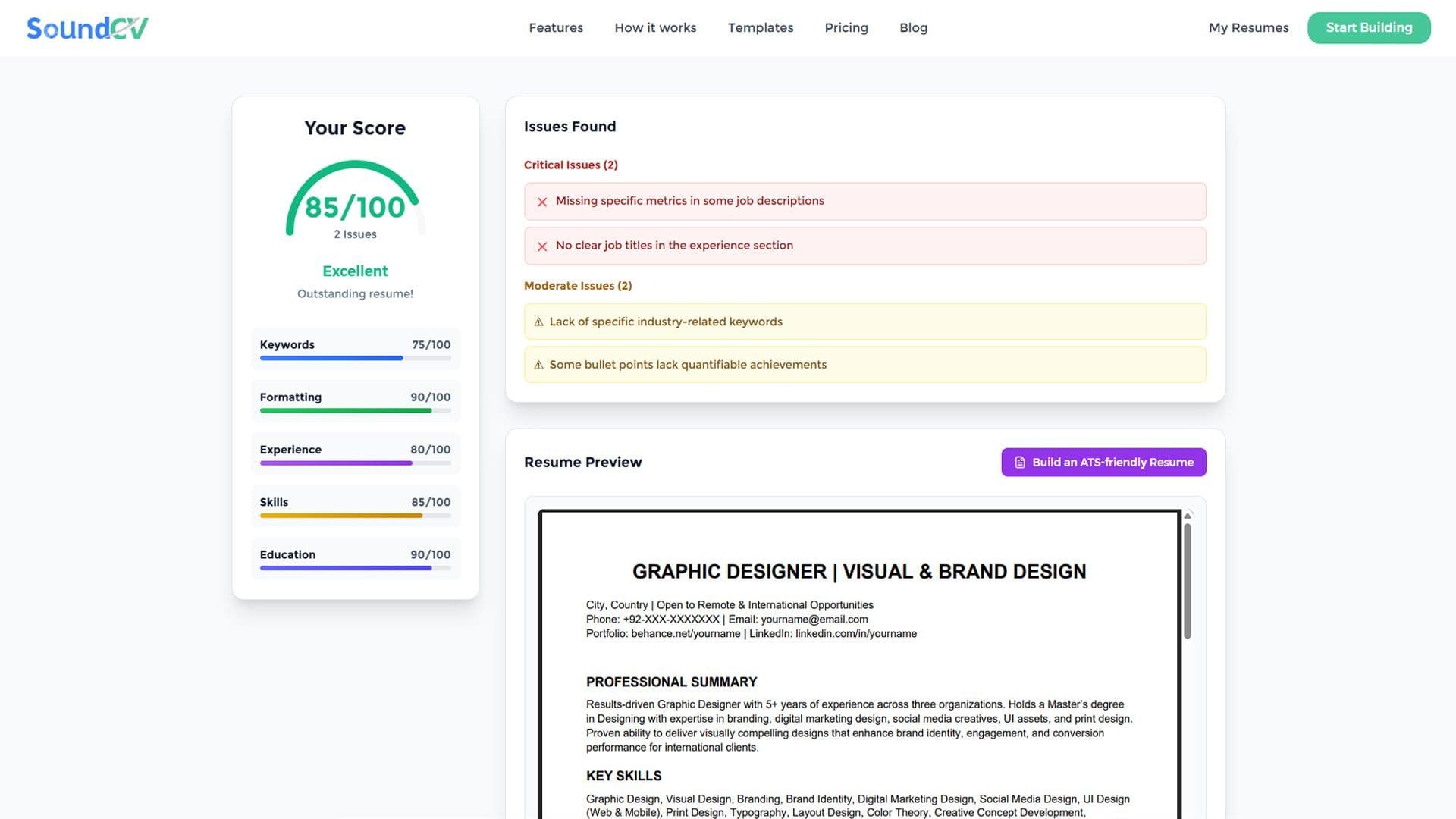
How Does the Sound CV Resume Score Checker Work?
The Sound CV Resume Score Checker analyzes your resume against ATS requirements, job-specific keywords, and structure to provide an instant, actionable score.

What Is a Sound CV? Features, Benefits, and How It Works
A Sound CV is an AI-powered resume that is tailored, ATS-optimized, and designed to showcase your skills and achievements to help you stand out to recruiters.