Most Effective Resume Format (2026) | Ultimate Job Seeker Guide
Learn the most effective resume format for 2026, including ATS-friendly layouts, recruiter preferences, and examples that increase interview callbacks.
Overview
This ultimate 2026 guide explains the most effective resume format for modern job seekers. Compare chronological, functional, and hybrid resumes, learn ATS-optimization strategies, and see real examples designed to boost interview rates across industries, experience levels, and competitive job markets.
In 2026, hiring has become faster, more competitive, and almost entirely technology-driven. Recruiters now rely heavily on Applicant Tracking Systems (ATS) before reviewing resumes personally. This shift means qualified candidates often get rejected not because of weak experience but because their resume format isn’t readable by screening software or easy for recruiters to skim. Choosing the most effective resume format has become just as important as listing the right skills or experience.
An effective resume today must do two things perfectly:
- Pass ATS scanning systems.
- Communicate value clearly to human recruiters within seconds.
This guide explains what resume formatting truly means, why it matters more than ever, and how to choose the most effective structure for your career level and industry in 2026.
Key Points
- ATS-optimized chronological resumes have the highest pass rate across industries
- Resume format impacts both software screening and recruiter skimming behavior
- Simple, single-column layouts outperform visually complex designs
- Skills placement near the top increases visibility in skills-based hiring
- Hybrid resumes work best for career switchers and graduates
- Creative formats should be reserved only for design-centric roles
- ATS-friendly formatting can be the difference between rejection and interview
What Is a Resume Format?
A resume format refers to the overall structure and layout used to present your professional information clearly on a page. It is not just about visual design it determines how easily both recruiters and Applicant Tracking Systems (ATS) can locate, interpret, and evaluate your qualifications. A well-chosen format organizes your details into a logical, easy-to-scan framework that highlights your strengths effectively within seconds.
Key elements of resume formatting include:
- Section order – arranging content such as summary, skills, experience, and education in a strategic hierarchy that reflects hiring priorities.
- Headings and bullet usage – using consistent headers and concise bullet points to separate sections cleanly while improving readability.
- Font selection and spacing – choosing standard, ATS-compatible fonts and applying balanced spacing to prevent clutter or visual confusion.
- Skill placement – positioning core skills prominently so keyword scanning systems and recruiters identify qualifications immediately.
- Experience layout – structuring work history clearly with job titles, companies, dates, and achievement-based bullet points for fast comprehension.
Formatting directly influences scanning accuracy and visual clarity. ATS software relies on straightforward text processing to rank candidates based on keyword matching and section alignment. If your layout contains tables, columns, images, modern typography, or decorative icons, the ATS may misread or skip vital information entirely leading to rejection before human review.
For recruiters, poor formatting also causes frustration. Busy hiring managers skim resumes quickly and favor resumes that allow instant identification of skills, experience relevance, and professional scope. A cluttered or unconventional layout slows this process and may result in early dismissal.
Even highly qualified candidates can lose opportunities when formatting obstructs accessibility. Modern resumes must balance aesthetic clarity with technical compatibility, ensuring that information remains professional, readable, and ATS-friendly. A clean resume format does not just make your document look better it dramatically improves your chances of being accurately evaluated and shortlisted in today’s competitive job market.
Also Read : Top 5 Resume Format for Freshers: Best Layouts to Land Your First Job in 2026
Why Resume Format Matters More in 2026
In 2026, resume formatting has become more important than ever due to the increasing reliance on technology and fast-paced recruitment processes. One of the most significant changes is the dominance of Applicant Tracking Systems (ATS). Over 85% of organizations now use ATS software to handle the initial screening of job applications. These systems analyze resumes for structure, keyword usage, and document compatibility before assigning rankings that determine which candidates move forward. Resumes featuring complex layouts—such as multi-column designs, icons, images, text boxes, or decorative tables often cause parsing errors. This can result in text misalignment, missing content, or rejection before a recruiter ever sees the profile. In contrast, simple line-based formatting consistently performs best, making clean structure essential for candidate visibility.
Another factor is recruiter skimming behavior. Hiring managers typically spend just 6–10 seconds scanning each resume during early review. They favor layouts that make essential information instantly noticeable. The most effective resumes ensure rapid visibility of:
- Professional summaries
- Skills sections
- Job titles and achievement bullet points
- Certifications, projects, or training credentials
Cluttered designs slow this scanning process and can dilute strong qualifications, increasing the risk of immediate dismissal.
Additionally, hiring trends have shifted toward skills-based recruitment. Employers now prioritize transferable competencies such as problem-solving ability, digital literacy, teamwork, leadership, and adaptability over traditional job titles alone. Modern resumes must therefore highlight skills strategically throughout the document especially near the top so they are not buried under work history. Layouts that integrate skill categories clearly alongside professional experience consistently outperform resumes that hide competencies in lower sections.
Ultimately, modern resume success depends on intelligent formatting that balances ATS readability with human usability. Resumes that emphasize simplicity, logical structure, and skill visibility gain a decisive advantage in 2026’s competitive hiring environment.
Also Read : Is It Bad to Use a Resume Builder? Pros, Cons & Expert Advice (2026)
The Most Effective Resume Formats
Different situations require different layouts, but a few formatting styles consistently outperform others.
1. ATS-Optimized Chronological Format (BEST OVERALL)
Overview
This format lists work experience in reverse chronological order after an opening professional summary and skills section.
Structure
- Contact Information
- Professional Summary
- Skills
- Experience (Most Recent First)
- Education
- Certifications
When to Use
1+ years of experience
Internship or contract work history
Corporate, administrative, banking, healthcare, or IT roles
Why It’s Most Effective
- Perfect ATS readability
- Familiar layout for recruiters
- Demonstrates career growth
- Positions skills and experiences clearly
Pros
Highest ATS pass-rate
Universally accepted
Professional appearance
Cons
Less ideal for candidates with no experience
Also Read : Top 5 Resume Formats for Freshers in 2026 (Best Layouts)
2. Hybrid (Combination) Resume Format
Overview
Combines a skills-first header with a chronological experience section.
Structure
- Summary
- Core Skills
- Work/Internships
- Education
- Certifications/Projects
Best For
Recent graduates with projects and internships
Career switchers
Multi-skilled professionals
Pros
Balanced skills + experience focus
Excellent ATS performance
Flexible for most roles
Cons
Can exceed page limits if poorly managed
Also Read : Is It Bad to Use a Resume Builder in 2026? Pros, Cons & Expert Advice
3. Functional (Skills-Based) Resume Format
Overview
Prioritizes skills instead of job history.
Structure
- Summary
- Skill Categories with Achievements
- Education
- Experience (brief)
Best For
Fresh graduates without experience
Gap-year candidates
Freelancers
Pros
Shifts focus to competencies
Great when experience is thin
ATS-improved if done correctly
Cons
Recruiters still prefer experience-heavy resumes
Also Read : Sample Resume for Bank Jobs (ATS-Friendly 2026 Guide)
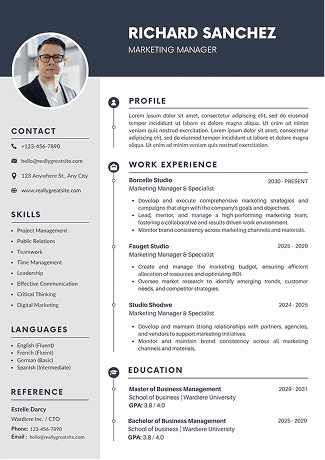
4. Creative Resume Format
Overview
Uses colors, icons, charts, and visual layouts to showcase creativity.
Best For
Design, marketing, animation careers
Portfolio-driven roles
Pros
High visual appeal
Strong personal branding
Cons
ATS-unfriendly
Risk of rejection by corporate recruiters
Also Read : Job Responsibilities Examples: A Simple Guide for 2026
Sections That Improve Effectiveness
Regardless of layout, strong resumes always include:
Contact Header
- Name
- City/Country
- Professional Email
- Phone
Summary or Objective
3–4 lines capturing professional focus and key strengths.
Skills Section
Critical for ATS matching:
- Software tools
- Technical abilities
- Languages
- Certifications
Experience Bullets
Achievement-based format:
“Improved onboarding efficiency by 17%”
“Managed CRM pipelines with 30+ accounts”
Education & Certifications
Simple, consistent structure:
- Degree
- Institution
- Graduation year
- Certifications
ATS-Friendly Formatting Rules
To ensure your resume passes Applicant Tracking System (ATS) screening, following proper formatting rules is essential. Always use standard fonts such as Arial, Calibri, or Times New Roman, as these are easily readable by scanning software. Avoid adding images, icons, charts, tables, or multi-column layouts, since these elements can disrupt parsing and cause details to be skipped or misplaced.
Structure your resume with clear, standard headings like “Skills,” “Experience,” and “Education” to help ATS categorize information correctly. Present achievements and responsibilities using simple bullet lists instead of long paragraphs to maintain clarity. When submitting files, choose Word (.docx) format whenever possible, or use an ATS-safe PDF if required by the employer. Clean formatting ensures consistency, improves scan accuracy, and increases recruiter readability.
Also Read : How to Make a Student Resume (Complete 2026 Guide)
Common Ineffective Resume Formats to Avoid
Certain resume formats can significantly reduce your chances of passing initial screenings and attracting recruiter attention. Infographic resumes, while visually appealing, contain heavy graphics that ATS software cannot read accurately. Tables and charts also create parsing problems, often causing text to shift or disappear during automated scans. Using multiple-column templates may look modern but can confuse ATS systems and disrupt content order, leading to incomplete resume processing.
Additionally, academic CV layouts designed for research or teaching roles are usually too lengthy and differently structured for standard job applications, making them unsuitable for most corporate recruitment processes. These ineffective formats hinder both machine interpretation and human readability by cluttering essential information. To maximize success, choose clean, single-column layouts that maintain clarity for ATS scanning and allow recruiters to review key qualifications quickly and easily.
Tips to Choose the Most Effective Resume Format
- Choose chronological if you have work history
- Functional layouts for no experience
- Hybrid resumes for mixed profiles
- Avoid visuals unless applying to creative fields
- Always ATS-test your final resume
- Keep documents 1–2 pages maximum
Conclusion
Choosing the most effective resume format in 2026 is about balancing two essential goals:
Machine readability (ATS)
Human clarity (for recruiters)
The ATS-optimized chronological resume remains the gold standard for job success across industries. Hybrid formats also perform exceptionally well for graduates and career pivoters, while functional resumes support early-career applicants needing skill emphasis. Creative layouts should be reserved strictly for visual professions.
Technology now plays a key role in formatting success. Platforms like Sound CV help candidates identify the most effective resume format for their career path by offering ATS-tested templates, automatic keyword scoring, smart section ordering, and AI-backed personalization tools. Sound CV ensures resumes are not just beautiful but fully optimized for screening success and storytelling clarity.
In a highly competitive job market, selecting the right format may be the deciding factor between rejection and interview. With intelligent design choices and supportive tools like Sound CV, candidates can build resumes that speak clearly to recruiters and confidently pass ATS systems every time.
FAQs
Frequently asked questions about this topic
Related Blogs
Explore more insights and guides you might like.
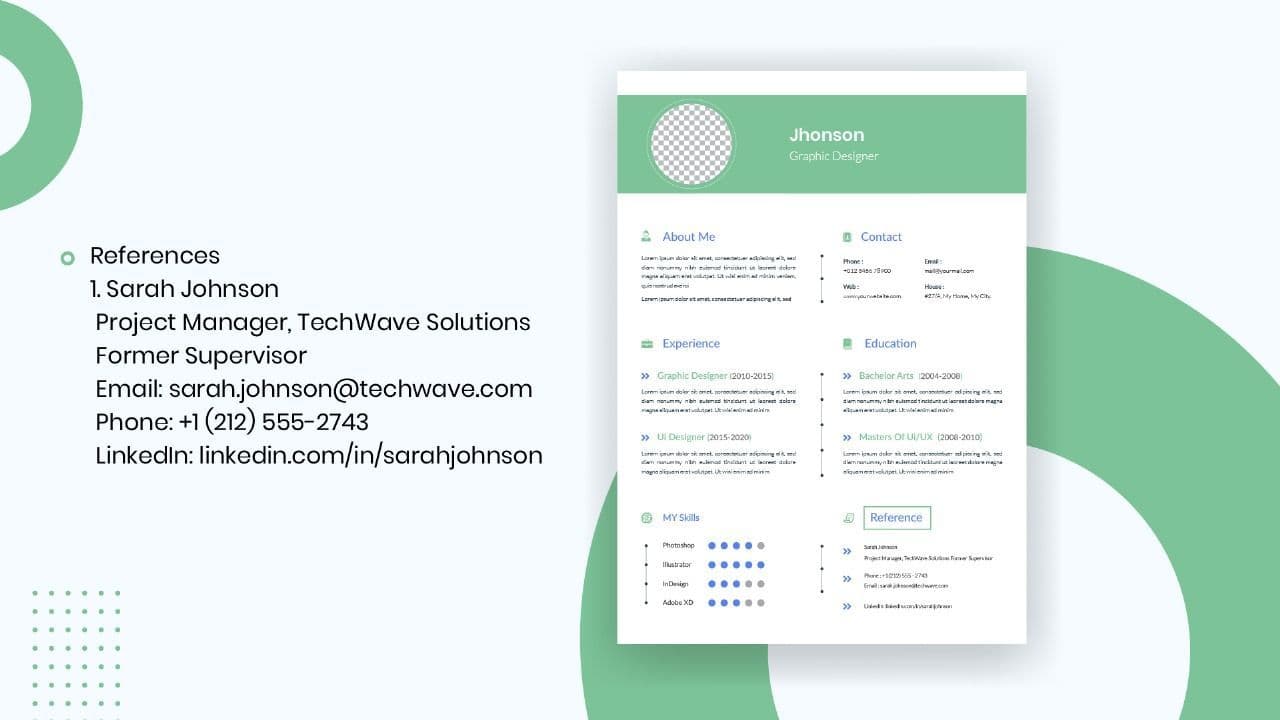
How to List References on a Resume in 2026
Learn the modern 2026 approach to listing references on your resume for maximum professionalism and recruiter impact.
Is Sound CV good for students and fresh graduates with no experience?
Sound CV is perfect for students and fresh graduates, helping them create professional resumes that highlight skills, projects, and potential even with little or no work experience.
Why Sound CV Is Different from Other AI Resume Builders
Sound CV stands out by creating job-focused, ATS-friendly resumes that highlight real achievements, not just generic content.
Resume Format for HR Job: Professional Guide and Sample Templates
A complete guide to the best resume format for HR jobs, with expert tips and sample templates to help you create a professional and job-ready resume.
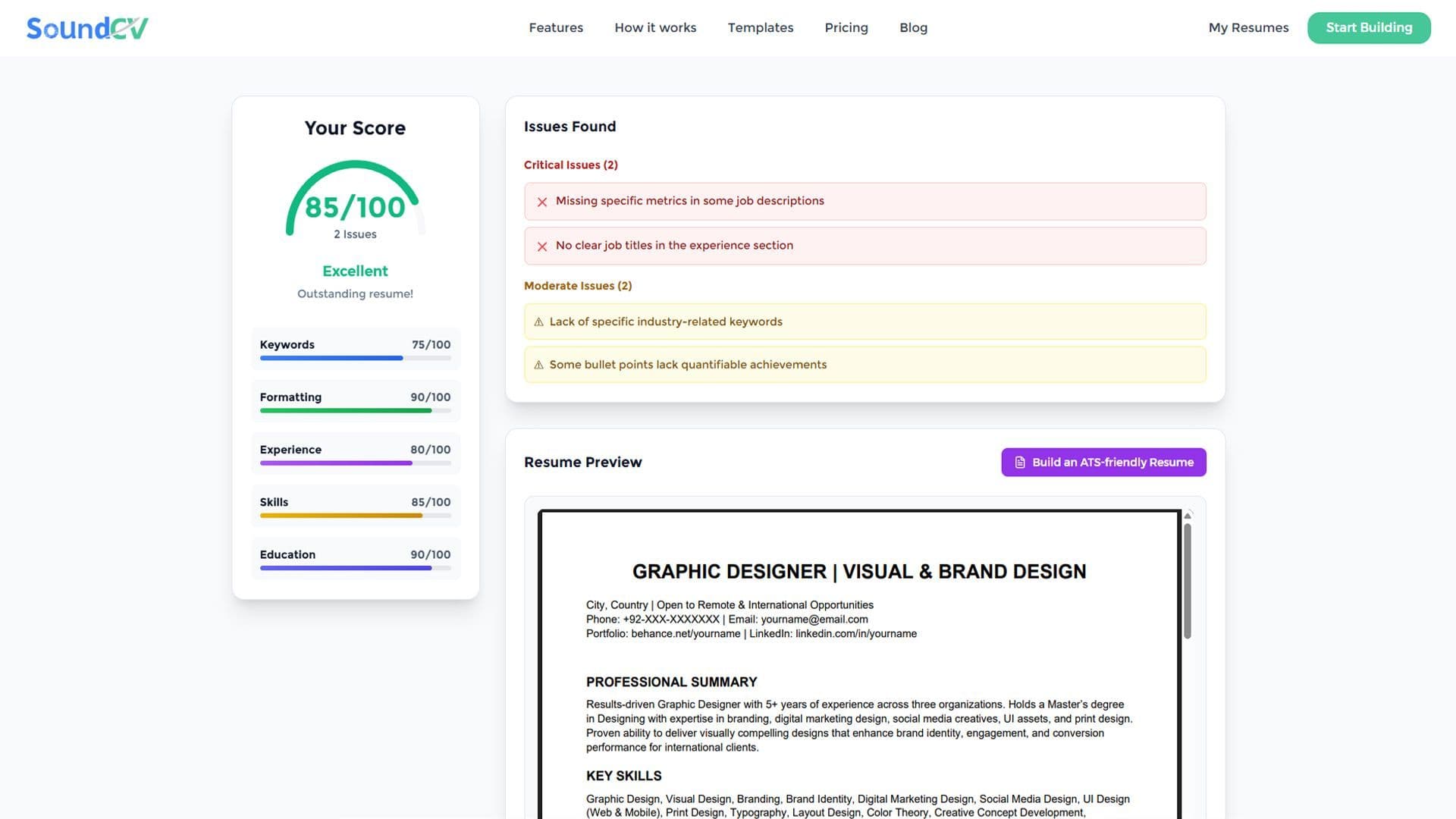
How Does the Sound CV Resume Score Checker Work?
The Sound CV Resume Score Checker analyzes your resume against ATS requirements, job-specific keywords, and structure to provide an instant, actionable score.
What Is a Sound CV? Features, Benefits, and How It Works
A Sound CV is an AI-powered resume that is tailored, ATS-optimized, and designed to showcase your skills and achievements to help you stand out to recruiters.