Lawyer Resume Writing Strategies That Impress Employers (ATS Guide)
Learn how to create a professional lawyer resume with strong formatting, legal skills, ATS optimization, and strategies to impress employers.
Overview
Discover proven lawyer resume writing strategies to highlight legal expertise, internships, case experience, and specialization. Learn ATS optimization, proper formatting, and role-specific tips to create a professional resume that attracts law firms, corporate employers, and government recruiters.
The legal profession is one of the most competitive career paths, where academic excellence alone is no longer enough to secure interviews. Law firms, corporate legal departments, and government organizations receive hundreds of applications for a single role. In such a crowded landscape, your resume becomes the first and most critical test.
A strong Lawyer Resume does more than list degrees and casework. It presents your legal expertise, practical experience, analytical thinking, and professional credibility in a concise, compelling format. Employers want to see not only where you studied law, but how you apply it in real-world situations.
This guide explains proven lawyer resume writing strategies that help candidates stand out, impress employers, and increase interview shortlisting whether you are a fresher, junior associate, or experienced legal professional.
Key Points
- Why lawyer resumes require a strategic and professional approach
- What legal employers look for in candidates
- Best resume format for lawyers (reverse-chronological)
- Ideal structure of a professional lawyer resume
- How to write a strong professional summary
- Essential legal skills to include
- Writing impact-focused experience bullet points
- Resume tips for freshers and law students
- How to present legal education properly
- Importance of bar enrollment and certifications
- Including publications and research work
- Tailoring resumes for litigation vs corporate roles
- ATS optimization tips for legal resumes
- Common lawyer resume mistakes to avoid
- Ideal resume length for different experience levels
- Important legal keywords for ATS and recruiters
- Proofreading and final review checklist
- How to demonstrate specialization and credibility
- Keeping your resume updated with new experience
- Creating ATS-friendly resumes using SoundCV
Why Lawyer Resume Writing Requires a Strategic Approach
Legal employers are detail-oriented by nature. They look for precision, clarity, and professionalism in every document, especially resumes. A poorly structured resume signals lack of attention, even if the candidate is highly qualified.
An effective Lawyer Resume helps employers quickly assess:
- Your area of legal expertise
- Your experience level and career progression
- Your ability to research, draft, and analyze
- Your fit for the specific role
Resume writing for lawyers is not about creativity, it's about credibility, structure, and relevance.
Also Read : MBA Resume Format in 2026: How to Craft an ATS-Optimized MBA Resume
Understanding What Employers Look for in a Lawyer Resume
Before writing your resume, it’s important to understand how employers evaluate candidates.
Legal recruiters typically look for:
- Clear specialization (corporate, litigation, IP, compliance, etc.)
- Relevant legal experience and internships
- Strong research and drafting skills
- Court exposure or transactional experience
- Academic background and certifications
Your resume should be aligned with the role you’re applying for, not written as a general legal profile.
Also Read : Winning Business Development Manager Resume: Step-by-Step Guide (ATS Tips)
Choosing the Right Resume Format for Lawyers
The format of your resume plays a crucial role in how easily employers can scan your information.
Best Resume Format for Lawyers
The reverse-chronological format is the most preferred format for legal professionals. It highlights your most recent experience first, which is what recruiters care about most.
This format works well for:
- Law firm associates
- In-house counsel
- Litigation lawyers
- Experienced legal professionals
Freshers may also use this format by emphasizing internships and academic projects.
Ideal Structure of a Lawyer Resume
A professional Lawyer Resume should follow a clean and logical structure:
- Header (Name, Contact Information)
- Professional Summary
- Key Legal Skills
- Professional Experience / Internships
- Education
- Certifications and Bar Enrollment
- Publications or Achievements (Optional)
Avoid unnecessary sections that do not add value.
Also Read : How to Write a Data Scientist Resume That Impresses Recruiters
Writing a Strong Professional Summary for Lawyers
The professional summary is your elevator pitch. It should immediately communicate your legal identity and expertise.
What Makes a Strong Summary
- Mentions your area of practice
- Highlights years of experience (if applicable)
- Reflects professional tone and confidence
Example Summary
“Detail-oriented corporate lawyer with 4+ years of experience in contract drafting, regulatory compliance, and corporate governance. Proven ability to support cross-functional teams and deliver legally sound business solutions.”
A focused summary strengthens your Lawyer Resume by setting clear expectations from the start.
Also Read : Quality Analyst Resume Guide (2026) | ATS-Friendly QA Resume Tips
Highlighting Legal Skills Employers Value
The skills section should reflect both technical legal abilities and professional competencies.
Core Legal Skills
- Legal research and case analysis
- Contract drafting and review
- Litigation support
- Due diligence
- Regulatory compliance
Professional Skills
- Analytical reasoning
- Written and verbal communication
- Attention to detail
- Client advisory
Avoid vague terms like “hardworking” unless supported by examples elsewhere in the resume.
Also Read : English Teacher Resume Guide With Format and Examples
Showcasing Legal Experience Effectively
Your experience section should focus on impact, not just responsibilities.
Weak Example
“Assisted senior lawyers in legal matters.”
Strong Example
“Conducted legal research and drafted pleadings for civil litigation cases, contributing to favorable outcomes in multiple hearings.”
Each bullet point should demonstrate how you added value in your role.
Also Read : Digital Marketing Resume Tips & Examples to Get Interviews
Writing Resume Bullet Points That Impress Law Firms
Strong bullet points:
- Start with action verbs
- Focus on outcomes
- Show responsibility level
Examples:
Drafted and reviewed commercial agreements including NDAs, MOUs, and service contracts.
Assisted in court proceedings and prepared case briefs for senior counsel.
Conducted due diligence for mergers and acquisitions.
This approach makes your Lawyer Resume more results-oriented.
Lawyer Resume Tips for Freshers and Law Students
Freshers often worry about lack of experience. Employers understand this and focus on internships and exposure.
What Freshers Should Include
- Legal internships
- Moot court experience
- Research papers
- Legal clinics or workshops
Describe internships professionally, just like full-time roles.
Education Section: Presenting Legal Qualifications Properly
Education is critical in the legal field.
Include:
- Degree (LLB, LLM, etc.)
- University or law school name
- Graduation year
- Honors or distinctions (if any)
Avoid listing school-level education unless required.
Also Read : HR Executive Resume Guide With Format, Skills, and Examples
Bar Enrollment and Certifications
Always include:
- Bar Council enrollment details
- Jurisdiction (if applicable)
Optional certifications:
- Corporate law
- Intellectual property law
- Arbitration or mediation
These add credibility and specialization to your Lawyer Resume.
Including Publications and Legal Research
If you have published articles or research papers, include them in a separate section.
This is especially useful for:
- Academic roles
- Research-oriented positions
- Policy or think-tank roles
Publications demonstrate thought leadership and writing ability.
Also Read : Entry-Level Software Tester Resume: Sample, Format & ATS Tips for Freshers
Tailoring Your Lawyer Resume for Different Roles
Not all legal jobs require the same focus.
Litigation Roles
- Court appearances
- Case preparation
- Legal drafting
Corporate Law Roles
- Contract management
- Compliance
- Corporate advisory
Tailoring your resume increases relevance and interview chances.
Also Read : Project Manager Resume: Examples, Skills & ATS Writing Tips
Optimizing Lawyer Resumes for ATS
Many large law firms and corporate employers use ATS software.
ATS Optimization Tips
- Use standard headings
- Avoid tables and graphics
- Include keywords from job descriptions
- Use professional fonts
An ATS-optimized Lawyer Resume ensures your profile reaches human reviewers.
Common Lawyer Resume Mistakes to Avoid
Avoid these common errors:
- Long paragraphs instead of bullet points
- Listing irrelevant experience
- Poor formatting
- Grammar or spelling mistakes
In law, presentation reflects professionalism.
Resume Length Guidelines for Lawyers
- Freshers: 1 page
- 3–7 years experience: 1–2 pages
- Senior lawyers: Up to 2 pages
Conciseness shows clarity of thought.
Also Read : The Ultimate Guide to Crafting an Effective Cover Letter Header
Importance of Keywords in Legal Resumes
Legal resumes should include role-specific keywords such as:
- Contract law
- Litigation
- Compliance
- Due diligence
Keyword alignment improves ATS performance and recruiter relevance.
Proofreading and Final Review
Before submission:
- Check formatting consistency
- Verify legal terminology
- Remove unnecessary content
A single error can cost an interview opportunity.
Also Read : Resume for Power BI Developer: How to Write an Effective CV
Conclusion
A well-crafted Lawyer Resume is a reflection of your professionalism, legal expertise, and attention to detail. Employers look for clarity, relevance, and proof that you can apply legal knowledge effectively. By choosing the right format, highlighting key skills, and tailoring your resume to specific legal roles, you significantly improve your chances of standing out in a competitive job market.
Resume building is not a one-time activity. As your legal career evolves, your resume should evolve with it reflecting new skills, cases, and responsibilities.
Tools like Sound CV help legal professionals create ATS-optimized, role-specific resumes that align with employer expectations. With the right strategy and presentation, your resume can open doors to rewarding legal opportunities.
FAQs
Frequently asked questions about this topic
Related Blogs
Explore more insights and guides you might like.
How to List References on a Resume in 2026
Learn the modern 2026 approach to listing references on your resume for maximum professionalism and recruiter impact.

Is Sound CV good for students and fresh graduates with no experience?
Sound CV is perfect for students and fresh graduates, helping them create professional resumes that highlight skills, projects, and potential even with little or no work experience.

Why Sound CV Is Different from Other AI Resume Builders
Sound CV stands out by creating job-focused, ATS-friendly resumes that highlight real achievements, not just generic content.
Resume Format for HR Job: Professional Guide and Sample Templates
A complete guide to the best resume format for HR jobs, with expert tips and sample templates to help you create a professional and job-ready resume.
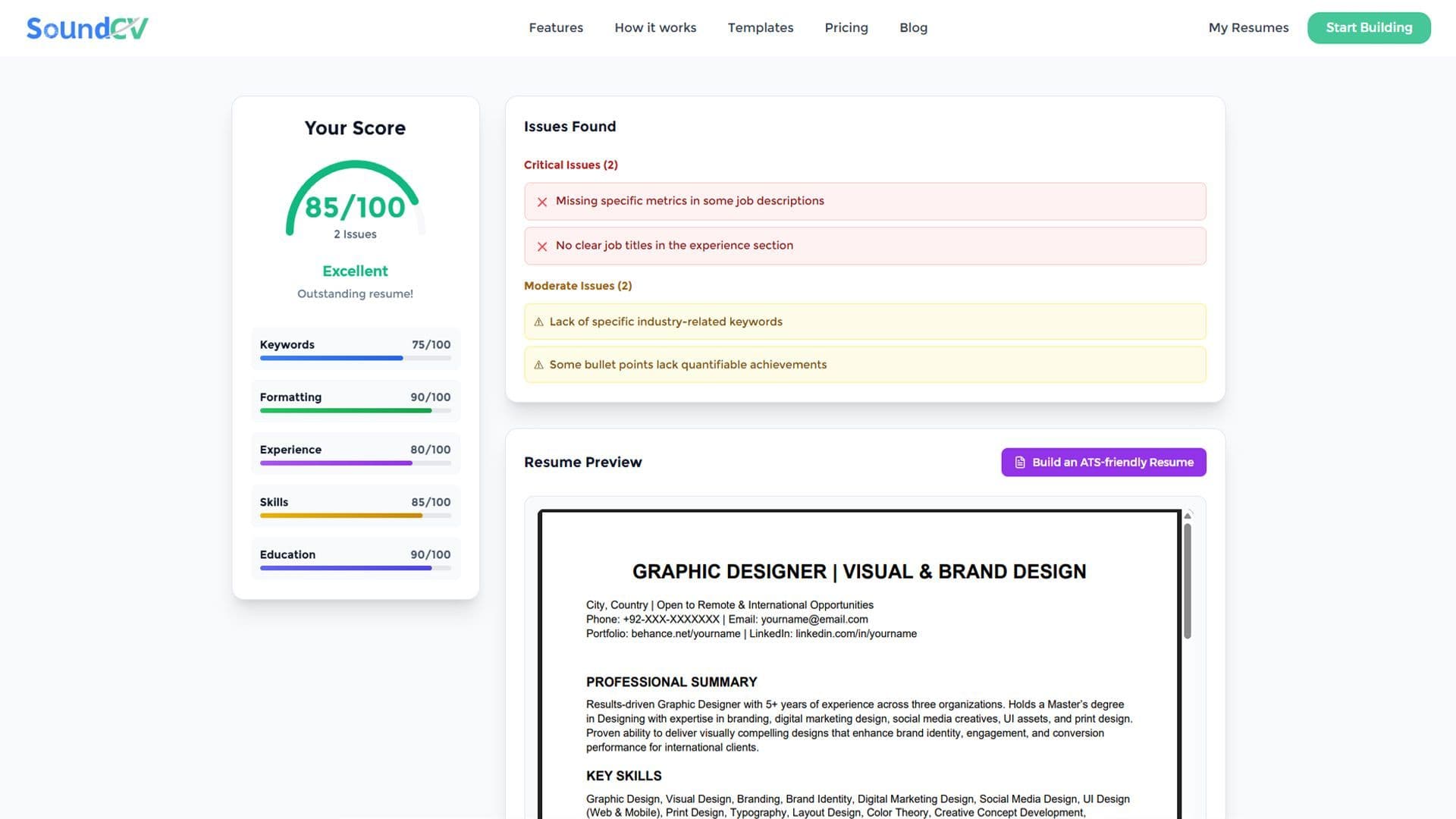
How Does the Sound CV Resume Score Checker Work?
The Sound CV Resume Score Checker analyzes your resume against ATS requirements, job-specific keywords, and structure to provide an instant, actionable score.

What Is a Sound CV? Features, Benefits, and How It Works
A Sound CV is an AI-powered resume that is tailored, ATS-optimized, and designed to showcase your skills and achievements to help you stand out to recruiters.