MBA Resume Format in 2026: How to Craft an ATS-Optimized MBA Resume
Learn how to create an ATS-friendly MBA resume in 2026 that highlights leadership, skills, and measurable business impact effectively.
Overview
Discover the latest MBA resume format for 2026 with expert tips on structure, ATS optimization, leadership positioning, and measurable achievements to help MBA professionals stand out and secure high-impact roles in today’s competitive job market.
The job market in 2026 is more competitive, data-driven, and technology-powered than ever before. Recruiters no longer rely only on degrees or job titles when evaluating candidates. Instead, they focus on skills, leadership impact, and measurable business outcomes. For MBA graduates and professionals, this means that using the right MBA resume format is critical to standing out.
An MBA resume is not just a summary of education and experience, it is a strategic document that communicates your leadership potential, business acumen, and readiness for high-impact roles. With Applicant Tracking Systems (ATS), AI screening tools, and skill-based hiring becoming standard, outdated resume formats simply do not work anymore.
This guide explains how to craft an effective MBA resume format in 2026, step by step, so your resume aligns with modern recruiter expectations and opens doors to top opportunities.
Key Points
- Use a reverse-chronological format for better ATS and recruiter readability
- Focus on measurable business impact, not just responsibilities
- Include a strong professional summary tailored to each role
- Highlight leadership, strategy, and decision-making experience
- Keep the resume one page (early career) or two pages (experienced)
- Add core competencies aligned with the job description
- Showcase MBA projects, specializations, and case work
- Use keywords from job postings for ATS optimization
- Avoid heavy graphics, tables, or design elements
- Customize your resume for consulting, finance, product, or marketing roles
Understanding What Recruiters Look for in an MBA Resume (2026)
Recruiters in 2026 assess MBA resumes very differently than they did in the past. While academic credentials and prestigious institutions still hold value, they are no longer the primary deciding factors in hiring decisions. Employers are now far more interested in what candidates can actually do and the impact they have delivered in real business environments. As a result, MBA resumes must clearly demonstrate leadership capability, strategic thinking, and measurable business outcomes.
Hiring practices have shifted from a title-first approach to a skills-first evaluation. Recruiters want evidence of problem-solving and decision-making rather than just job titles or degrees. They look closely at the business challenges you have faced, the strategies you applied, and the results you achieved. Key questions recruiters ask when reviewing an MBA resume include: What business problems did this candidate solve? How did they contribute to revenue growth, cost reduction, or operational efficiency? Can they lead teams, influence stakeholders, and make data-driven decisions?
Industry-specific expectations also play an important role in how MBA resumes are evaluated. Consulting firms prioritize structured thinking, client-facing experience, and measurable project impact. Finance roles place strong emphasis on analytical ability, financial modeling, risk assessment, and quantifiable financial results. Product management and marketing roles focus on strategy development, execution, innovation, and cross-functional collaboration with engineering, sales, and leadership teams.
Because of these expectations, an effective MBA resume format in 2026 focuses on outcomes rather than responsibilities. Instead of listing what you were “responsible for,” recruiters want to see what you achieved and how your actions influenced business success. Highlighting leadership initiatives, strategic contributions, and measurable results makes your resume far more compelling. When your MBA resume clearly reflects impact, relevance, and leadership, it aligns with modern recruiter expectations and significantly improves your chances of securing interviews.
Also Read : How to Write a Data Scientist Resume That Impresses Recruiters
Choosing the Right MBA Resume Format
Selecting the correct format is one of the most important decisions when building your resume.
Reverse-Chronological Format
This is the most preferred MBA resume format in 2026. It lists your most recent experience first and clearly shows career progression. Recruiters and ATS systems both favor this format because it is easy to scan and understand.
Hybrid / Combination Format
Ideal for career switchers or professionals with diverse experience. This format highlights skills and achievements at the top, followed by work experience. It works well for MBAs transitioning into consulting, product management, or leadership roles.
Functional Format (When to Avoid)
Functional resumes focus on skills rather than experience. In 2026, most recruiters discourage this format for MBA candidates, as it hides career progression and raises red flags.
Choosing the right MBA resume format ensures clarity and credibility.
Also Read : Quality Analyst Resume Guide (2026) | ATS-Friendly QA Resume Tips
Ideal Length and Structure for an MBA Resume
Resume length is a common concern for MBA candidates.
- One-page resumes are ideal for early-career MBAs and recent graduates
- Two-page resumes are acceptable for experienced professionals with 7+ years of experience
Structure matters just as much as length. Sections should appear in a logical order that highlights impact early.
Recommended structure:
- Header
- Resume summary
- Core competencies / skills
- Professional experience
- Education (MBA focus)
- Certifications and achievements
White space, clean margins, and readable fonts improve visual balance and recruiter engagement.
Also Read : English Teacher Resume Guide With Format and Examples
Essential Sections of an MBA Resume
Resume Header
Include your full name, professional title, phone number, email, LinkedIn profile, and portfolio if relevant. Keep it clean and professional.
Professional Summary
A short section highlighting leadership experience, domain expertise, and business impact.
Core Competencies / Key Skills
List leadership, strategy, analytics, and industry-relevant skills.
Professional Experience
Focus on achievements, business outcomes, and leadership responsibilities.
Education
Highlight your MBA degree, specialization, and institution.
Certifications, Projects, and Achievements
Include relevant certifications, case competitions, and key accomplishments.
Also Read : Digital Marketing Resume Tips & Examples to Get Interviews
Writing a Strong MBA Resume Summary
Your resume summary is one of the most critical sections of your MBA resume, as it is often the first part recruiters read. In just three to four lines, this section should clearly communicate your professional value, leadership strengths, and career direction. A strong summary helps recruiters quickly understand who you are and why you are a good fit for the role.
Avoid generic or vague statements such as “MBA graduate seeking challenging opportunities.” These phrases add little value and fail to differentiate you from other candidates. Instead, focus on leadership experience, strategic thinking, and measurable results. For example, describing yourself as a “strategic MBA professional with 6+ years of experience driving revenue growth, leading cross-functional teams, and delivering data-driven business solutions” immediately highlights impact and credibility.
Your resume summary should also be tailored to each role you apply for. MBA positions vary widely across industries such as consulting, finance, product management, and marketing. By aligning your summary with the specific requirements of the job description, you demonstrate relevance and intent. Incorporating role-specific keywords not only helps your resume resonate with recruiters but also improves performance in Applicant Tracking Systems (ATS), which often filter resumes before human review.
Keep your summary concise, focused, and outcome-oriented. Avoid listing too many skills or tools in this section. Instead, emphasize your core strengths, leadership abilities, and business impact. A well-written summary sets the tone for the entire MBA resume format, guiding recruiters’ expectations and encouraging them to explore your experience in more detail. When crafted thoughtfully, this section becomes a powerful introduction that strengthens your overall resume and improves your chances of landing interviews.
Also Read : HR Executive Resume Guide With Format, Skills, and Examples
Showcasing Work Experience with Business Impact
Recruiters care more about impact than responsibilities.
Instead of:
“Managed sales operations.”
Write:
“Led a regional sales strategy that increased revenue by 28% and expanded market presence across three new territories.”
Use metrics such as:
- Revenue growth
- Cost reduction
- Efficiency improvements
- Team size managed
Achievement-driven bullet points demonstrate leadership and decision-making ability.
How to Present Your MBA Education Effectively
Your MBA education section should highlight more than just the degree title and institution. Recruiters want to see how your MBA translates into real business skills and practical experience. Include your MBA specialization to show your area of focus, along with relevant coursework that aligns with the role you are applying for. Mention capstone projects, live consulting assignments, or case competitions that demonstrate hands-on problem-solving, strategic thinking, and teamwork.
The placement of your education section depends on your level of experience. Recent MBA graduates should position education near the top of the resume to emphasize academic achievements and project work. Experienced professionals should place it after the work experience section, allowing leadership and results to take priority. Presenting your MBA this way strengthens the MBA resume format by showcasing applied learning and real-world business impact.
Also Read : Entry-Level Software Tester Resume: Sample, Format & ATS Tips for Freshers
Skills Section for MBA Resumes in 2026
MBA resumes in 2026 require a balanced skills section.
Business and Leadership Skills
- Strategic planning
- Stakeholder management
- Team leadership
Data, Analytics, and Digital Skills
- Data analysis
- Business intelligence tools
- Digital transformation
Industry-Specific Skills
Tailor based on consulting, finance, marketing, or product roles.
Avoid long, generic lists. Focus on skills that match the job description.
Also Read : Project Manager Resume: Examples, Skills & ATS Writing Tips
Optimizing Your MBA Resume for ATS
Most companies use ATS and AI screening tools.
To optimize your MBA resume format:
- Use keywords from job descriptions
- Avoid images, tables, and icons
- Use standard section headings
- Keep formatting simple
ATS-friendly resumes improve visibility and increase interview chances.
Common MBA Resume Format Mistakes to Avoid
Avoid these mistakes:
- Overcrowded layouts
- Vague leadership claims
- One resume for all applications
- Design-heavy templates
- Ignoring ATS requirements
A clean, focused MBA resume format performs far better.
Also Read : The Ultimate Guide to Crafting an Effective Cover Letter Header
Tips to Make Your MBA Resume Stand Out in 2026
To stand out:
- Customize your resume for each role
- Use metrics and impact-driven language
- Highlight leadership and strategy
- Add LinkedIn or portfolio links
Recruiters value clarity and relevance over flashy design.
Also Read : What Is the Purpose of a Cover Letter? Why It Still Matters in 2026
Conclusion
Crafting an effective MBA resume format in 2026 requires more than listing education and experience. It demands strategic thinking, clarity, and a strong focus on business impact. By choosing the right format, structuring content effectively, optimizing for ATS, and highlighting measurable outcomes, you significantly improve your chances of landing interviews for high-growth roles.
An MBA resume should tell a clear story of leadership, decision-making, and value creation. When done right, it becomes a powerful career tool that supports long-term professional growth.
With Sound CV, MBA professionals can build ATS-optimized, recruiter-ready resumes with confidence. Sound CV’s AI-powered resume builder helps analyze job descriptions, select the right keywords, and apply the most effective MBA resume format—making it easier to stand out and succeed in the competitive job market of 2026.
FAQs
Frequently asked questions about this topic
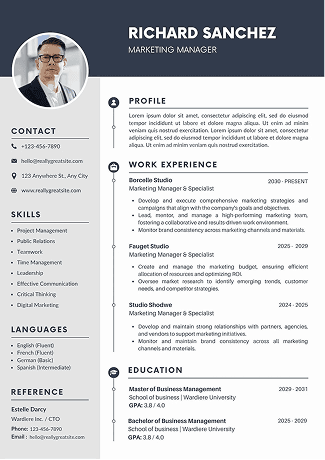
Related Blogs
Explore more insights and guides you might like.
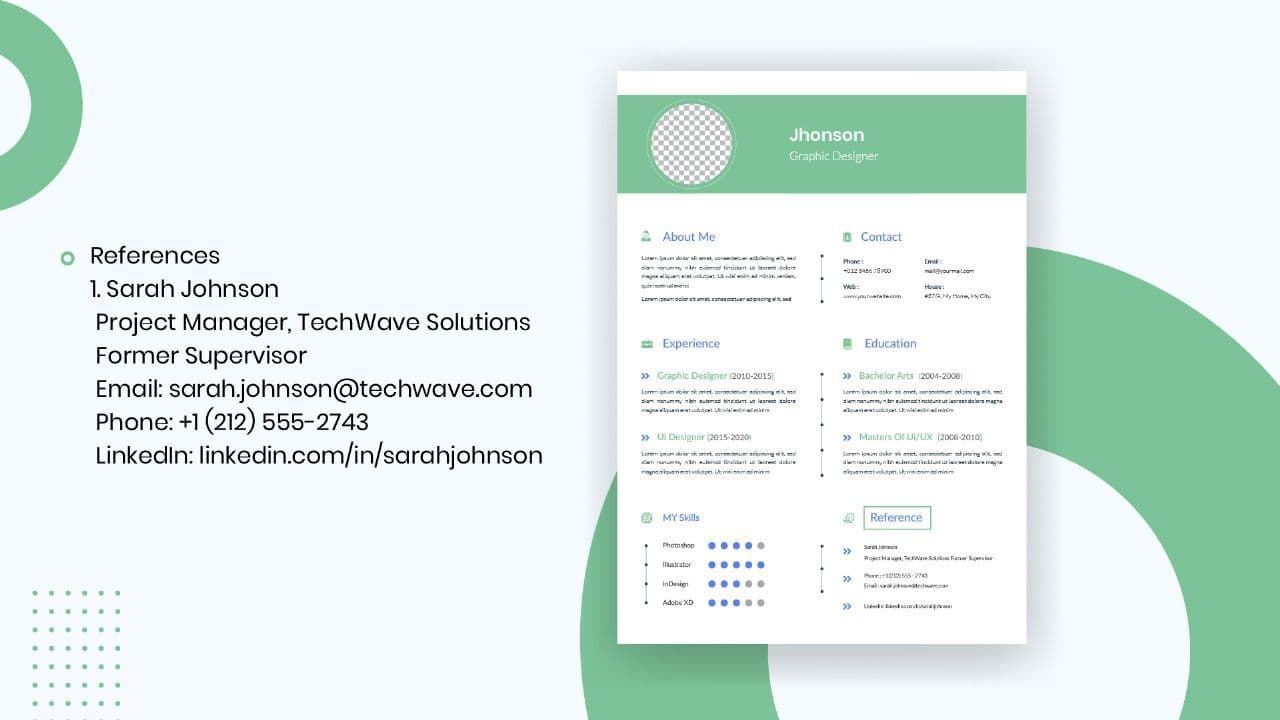
How to List References on a Resume in 2026
Learn the modern 2026 approach to listing references on your resume for maximum professionalism and recruiter impact.

Is Sound CV good for students and fresh graduates with no experience?
Sound CV is perfect for students and fresh graduates, helping them create professional resumes that highlight skills, projects, and potential even with little or no work experience.
Why Sound CV Is Different from Other AI Resume Builders
Sound CV stands out by creating job-focused, ATS-friendly resumes that highlight real achievements, not just generic content.
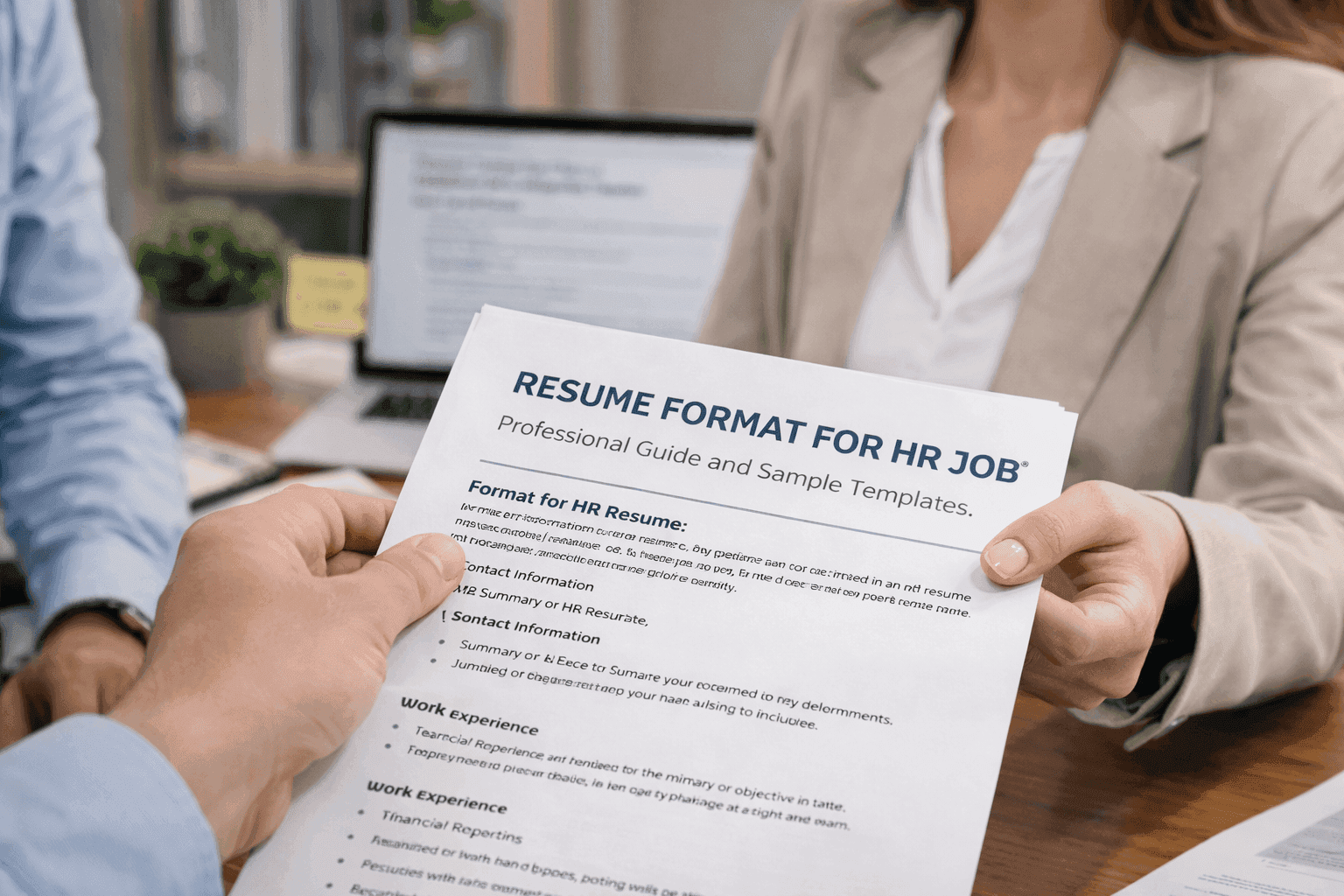
Resume Format for HR Job: Professional Guide and Sample Templates
A complete guide to the best resume format for HR jobs, with expert tips and sample templates to help you create a professional and job-ready resume.
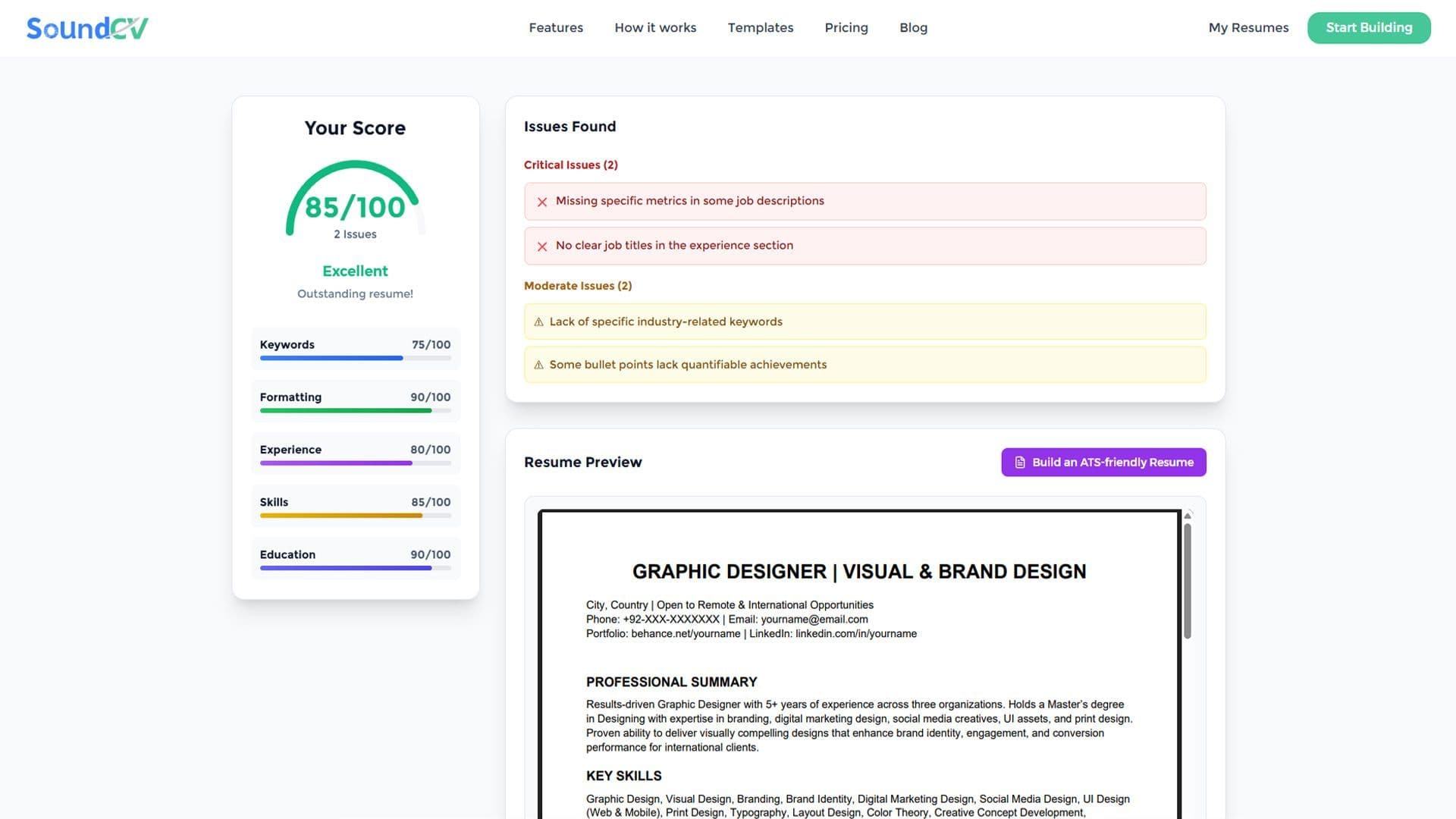
How Does the Sound CV Resume Score Checker Work?
The Sound CV Resume Score Checker analyzes your resume against ATS requirements, job-specific keywords, and structure to provide an instant, actionable score.

What Is a Sound CV? Features, Benefits, and How It Works
A Sound CV is an AI-powered resume that is tailored, ATS-optimized, and designed to showcase your skills and achievements to help you stand out to recruiters.