Resume Format for College Students: Easy Guide with Samples
A resume format for college students should be clean and simple, clearly highlighting education, skills, internships, projects, and academic achievements.
Overview
A resume format for college students should focus on clarity, structure, and skills rather than work history. Recruiters look for clean layouts that highlight education, projects, and potential. Using the right format helps your resume pass ATS screening and makes it easier for employers to quickly assess your suitability for internships and entry-level roles.
Creating your first resume as a college student can feel confusing. You may have strong academic knowledge, projects, and skills, but little or no full-time work experience. The good news is that recruiters do not expect college students to have long job histories. What they expect is a clear, well-structured resume that highlights potential, skills, and readiness for the workplace.
This is where choosing the right resume format for college students becomes critical. A good resume format helps recruiters quickly understand who you are, what you are studying, and what value you bring to an internship, part-time job, or entry-level role. It also helps your application pass Applicant Tracking Systems (ATS), the software many companies use to filter resumes before a human reads them.
In this guide you will learn what a resume format is, which layouts work best for students, how to write each section step by step, and how to build a resume even with no experience. You will also see student resume examples, per-major samples, and a before-and-after comparison you can copy.
Why Resume Format Matters for College Students
College students face a unique challenge when applying for jobs and internships. For many, it is the first time building a professional resume, so it is hard to decide how to present education, skills, projects, and activities. As a result, students often copy a generic template or focus on colors and graphics while ignoring structure and clarity.
The right resume format for college students fixes this by organizing information the way recruiters expect to read it. Recruiters spend only a few seconds scanning each resume. If your layout buries important details, your strengths get missed even when you are qualified. A clean structure puts your education, skills, and achievements where a recruiter looks first.
Format also decides whether your resume survives ATS screening. These systems scan for keywords, standard section headings, and a logical reading order. A simple, single-column student resume format is readable by both the software and the human who reviews it next, which raises your odds of passing the first stage. If you want to test this, run your draft through a free ATS resume checker before you apply.
What Is a Resume Format?
A resume format is the structure and order in which information appears on your resume. It controls how sections like education, skills, experience, and projects are arranged. Format is not the same as design. Design covers colors, fonts, and visual elements. Format covers section order, headings, content flow, and overall logical structure.
For students, structure matters far more than decoration. Recruiters prefer simple, clean resumes that scan in seconds. Overdesigned resumes with icons, photos, and multi-column tables often break ATS parsing and reduce clarity. Choosing the right resume format ensures your most important information is seen first and understood quickly.
Best Resume Formats for College Students
There are three main resume formats. Each has strengths and suits a different situation.
Chronological Resume Format
The chronological resume format lists experience in reverse order, starting with the most recent role. Use it if you already have internships or part-time jobs and a consistent history. It is easy to read and shows progression clearly. The drawback is obvious for students: it is weak if you have little or no work experience, because the experience section looks empty.
Functional Resume Format
The functional resume format groups your abilities under skill categories instead of job titles. Use it only when you have no formal work experience and want to lead with skills and coursework. It highlights strengths over history, but recruiters trust it less because it can hide gaps. Use this format carefully and only when experience is very limited.
Combination Resume Format
The combination format blends skills and education with any experience you have. It leads with a short summary, then education and skills, then projects or experience. This is ATS-friendly, balanced, and the layout recruiters prefer for early-career applicants. For most students, this is the recommended resume format for college students.
Recommended Resume Format for Most College Students
For the majority of students, the combination format works best. It lets you showcase skills, education, and projects even when your experience is thin. A typical combination student resume format follows this order:
- Header with contact information
- Resume summary or objective
- Education
- Skills
- Experience, internships, or academic projects
- Activities, leadership, and awards
This order puts your strengths in the top third of the page, where a recruiter actually looks. If you are still deciding between layouts, our guide on the best student first-job resume format for freshers walks through each option with sample structures.
Resume vs CV for Students: What Is the Difference?
Students often ask whether they need a resume or a CV. In the United States, a resume is a one-page summary used for jobs and internships. A CV (curriculum vitae) is longer and used mainly for academic, research, scholarship, and some international applications. If you are applying to graduate school or a research role, you may need cv examples for students rather than a standard resume.
Most undergraduates need a resume, not an academic CV. But the line blurs for scholarships, fellowships, and overseas roles, where a curriculum vitae example for students is the expected document. The good news is that the same sections apply. A clean student cv sample uses the same education-first order as a resume, just with more academic detail like publications, conferences, and coursework.
If a posting asks for a CV, follow a curriculum vitae template for students and keep it to one or two pages as an undergraduate. If it asks for a resume, keep it to one page. A clean cv format for students uses the same education-first order, only with extra academic detail. When the role is academic and international, graduate cv examples and an undergraduate cv template are the safer reference. When it is a job or internship, use a resume.
Essential Resume Sections for College Students
Every resume format for college students should include these core sections in order.
Header and Contact Information
Keep your header simple and professional. Include your full name, phone number, a professional email address, your city and country, and a LinkedIn or portfolio link. Avoid photos, date of birth, marital status, or your full street address. A clean header is the first thing both ATS and recruiters read, so keep it plain text, not a graphic.
Resume Summary or Objective
A resume objective is a short statement explaining who you are and the role you want. A strong objective names your degree or field, highlights two or three key skills, and aligns with the job. For example: "Computer science student seeking a software internship to apply Python and problem-solving skills on real projects." Avoid vague lines that mention no skills or goals.
Education Section
Education is the most important section for most students, so place it near the top. Include your degree name, university or college, expected or completed graduation year, and your GPA only if it is 3.3 or higher. You can also add relevant coursework, academic achievements, and scholarships. Listing scholarships also helps if you are repurposing the resume into scholarship resume examples for funding applications.
Skills Section
The skills section helps your resume pass ATS filters and shows fit fast. Include a mix of technical skills (software, tools, programming languages) and soft skills (communication, teamwork, time management). Only list skills relevant to the job you are applying for. For a deeper list by role, see our guide to skills in a resume for freshers.
Experience Section
If you have experience, include internships, part-time jobs, freelance work, and volunteering. Focus on what you did and the result, not the job title alone. Use action verbs and add a number wherever you can. "Tutored 12 first-year students in calculus, raising average quiz scores by 15 percent" beats "responsible for tutoring."
Projects and Activities
Academic projects, hackathons, clubs, and leadership roles fill the experience gap for students. Treat a capstone project or a club role like a job: name it, give your role, and describe the outcome. This section is what turns a thin resume into a strong one when you have no formal work history.
How to Write a Resume With No Experience
Many students worry about having no work history. Recruiters understand this for early-career applicants. What matters is how you present what you do have. A resume for students with no experience leans on education, skills, projects, and activities instead of job titles.
You can include academic projects, group assignments, case studies, college activities, volunteering, and certifications. Focus on transferable skills such as research, teamwork, communication, and problem-solving. A student resume with no work experience still follows the same combination format, with education and skills carrying the most weight.
The trick is to quantify everything. "Led a 5-person marketing project that grew a club Instagram from 200 to 1,400 followers" reads like real experience even though it was coursework. Strong resume examples for students with no work experience always turn classroom and campus work into measurable results. For a full walkthrough, read our guide on how to make a student resume in 2026.
Resume Format for Internships
Internship resumes differ slightly from job resumes. They focus more on learning potential than on work history. Customize your resume for each internship, highlight relevant coursework and projects, and keep it to one page. Internship recruiters look for curiosity, effort, and foundational skills, not a finished career.
A resume for internship with no experience should lead with a targeted objective, then skills, then education, then academic projects that match the internship. Mirror the language of the posting. If the internship asks for "data analysis" and "SQL," and you used those in a course project, name them exactly. Reviewing a few internship resume examples before you start helps you match tone and length.
College Student Resume Examples by Major
Your major shapes what goes on your resume. Below are short student resume examples that show how to adapt the same format to different fields.
Computer Science Student
The resume template computer science students use leads with education, then a strong skills section (languages, frameworks, tools) and a projects section. List GitHub links, a capstone app, and any hackathon results. Coursework like data structures and algorithms supports the skills. Quantify projects: "Built a course-scheduling web app used by 60 classmates."
Business and Marketing Student
A business student leads with a summary, then skills like Excel, market research, and analytics, then internships or club leadership. Numbers matter most here: budgets managed, followers grown, events organized, revenue raised for a campus fundraiser.
Nursing and Health Sciences Student
A nursing or health sciences student leads with clinical rotations, certifications (CPR, BLS), and relevant coursework, then volunteering and patient-facing experience. Keep it factual and specific about hours and settings. Note the number of clinical hours completed and the units you rotated through, since recruiters in healthcare look for concrete exposure rather than general claims about caring or dedication.
Student Resume Examples and Sample Templates
Below are sample resume structures you can copy. These work as a college resume template or a student resume template depending on how much experience you have. Each is a sample resume for students that keeps to one page.
Sample 1: No-Experience Student Resume Format
- Header
- Resume Objective
- Education
- Skills
- Academic Projects
- Activities and Volunteering
This is the layout to use for your very first resume. It mirrors the best basic resume examples and first resume examples: education and skills carry the page while projects stand in for work history.
Sample 2: Internship or Part-Time Resume Format
- Header
- Resume Summary
- Education
- Skills
- Internships and Part-Time Jobs
- Projects and Awards
Use this once you have one internship or part-time role to show. It works as a student cv template too if a posting asks for a CV. For undergraduates building an academic version, an undergraduate resume template or undergraduate cv template uses the same order with more coursework detail.
Before and After: A College Student Resume Example
Here is how one bullet changes when you apply the rules above.
Before: "Worked at the campus library and helped students."
After: "Assisted 40+ students daily at the campus library, organized a 2,000-book reshelving system, and cut average checkout time by 20 percent."
The after version names a number, an action, and a result. Apply that pattern to every line. This single habit separates strong resume examples for first job applications from weak ones. A recruiter remembers the result, not the job title.
ATS Tips for College Student Resumes
Most mid-size and large employers screen resumes with ATS before a person reads them. To pass, use a single-column layout, standard headings (Education, Skills, Experience), and a common font like Calibri or Arial at 10 to 12 point. Save as PDF unless the posting asks for Word, and name the file FirstName-LastName-Resume.pdf.
Avoid tables, text boxes, headers-as-images, and graphics, because parsers often drop them. Mirror keywords from the job description in your skills and experience sections. If the posting says "customer service" and "inventory," use those exact phrases where they are true. Then confirm the result with a free ATS resume checker that flags formatting and missing keywords.
Free Student Resume Templates and Tools
You do not need to design a resume from scratch. Free student resume templates give you an ATS-safe structure so you only fill in the content. Pick a single-column template, keep the section order from this guide, and avoid heavy color. Our free resume templates are built to pass ATS and work as a clean college resume template for any major.
If writing the bullets is the hard part, the SoundCV AI resume builder drafts each section from your job history and coursework, then formats it for ATS automatically. You edit the wording, and the layout stays clean. It is a fast way to turn a blank page into a finished one-page resume.
Resume Summary vs Objective: Which Should a Student Use?
Both sit at the top of your resume, but they do different jobs. An objective states the role you want and the skills you bring, which suits students with little experience. A summary highlights what you have already done, which suits students with an internship or strong projects to point to.
If this is your first resume, use an objective. It tells the recruiter your goal and your top two or three skills in one or two lines. If you already have an internship, a part-time job, or a standout project, switch to a summary that leads with that result. Either way, keep it to two lines and tailor it to the specific role, never leave it generic.
Adding Certifications and Online Courses to a Student Resume
Certifications are an easy way to fill a thin resume with proof of skill. A Google Analytics certificate, an AWS cloud badge, a HubSpot content course, or a Coursera specialization all show initiative beyond your degree. List the certificate name, the provider, and the year you earned it.
Place certifications in their own short section below education, or fold them into skills if you only have one or two. For a computer science or data role, certifications often matter as much as coursework, because they prove hands-on tools. Choose certificates that match the job you want rather than listing every course you have ever opened.
Full College Student Resume Example You Can Copy
Theory helps, but a complete example helps more. Here is a full one-page student resume format for a sophomore applying to a marketing internship with no formal work experience. Swap in your own details.
Maya Chen
New York, NY | maya.chen@email.com | (555) 123-4567 | linkedin.com/in/mayachen
Objective
Marketing student (Class of 2027) seeking a summer marketing internship to apply social media, content writing, and analytics skills learned through coursework and campus projects.
Skills
Social media marketing, Canva, Google Analytics, Excel, content writing, market research, teamwork, public speaking.
Education
B.B.A. in Marketing, New York University, Expected May 2027. GPA: 3.6. Relevant coursework: Consumer Behavior, Digital Marketing, Statistics.
Projects and Activities
- Social Media Lead, NYU Marketing Club: grew the club Instagram from 200 to 1,400 followers in one semester using a weekly content calendar.
- Course Project, Digital Marketing: planned a mock ad campaign that scored highest in a class of 45 for targeting and creative.
- Volunteer, Campus Food Drive: organized outreach that collected 800 meals in two weeks.
This example proves you can fill a full page without a single paid job. Education, skills, and quantified projects carry the resume. It reads like one of the stronger student resume examples because every line shows a result, not a duty.
Action Verbs That Strengthen a Student Resume
Weak bullets start with "responsible for" or "helped with." Strong bullets start with an action verb that names what you did. The verb sets the tone and tells the recruiter you took initiative.
Use verbs that match the work. For projects and leadership, try led, organized, launched, coordinated, and built. For research and analysis, try analyzed, researched, measured, and tested. For service and teamwork, try assisted, supported, trained, and resolved. Pair each verb with a number whenever you can, because "organized a 40-person event" carries more weight than "organized events."
Avoid repeating the same verb. If three bullets start with "managed," change two of them. Varied, specific verbs make even a first resume read like the work of someone with experience. This is one of the fastest ways to lift the quality of basic resume examples into something a recruiter remembers.
How to Tailor Your Resume for Each Application
Sending the same resume to every job is the most common student mistake. A tailored resume always beats a generic one because it mirrors the exact language of the posting. ATS and recruiters both reward that match.
Read the job description and underline the skills, tools, and phrases it repeats. Then make sure those exact phrases appear in your skills and experience sections where they are true. If a posting for a data internship lists "Excel," "SQL," and "reporting," and you used those in a course project, name them. This small step moves your resume up the ATS ranking.
Tailoring does not mean rewriting the whole resume. Keep the same structure and swap the objective, the top skills, and two or three bullets to match each role. Ten minutes of tailoring per application beats sending fifty identical copies. You can check the match quickly by running both your resume and the job description through a resume score checker.
How Long Should a College Student Resume Be?
For almost every college student and recent graduate, the answer is one page. You rarely have enough relevant experience to justify two pages, and a recruiter will not read past the first page anyway for an entry-level role. A tight one-page resume signals that you can prioritize and edit.
Only go to two pages if you have extensive research, publications, or several relevant internships, which is more common for graduate and PhD applicants using a curriculum vitae. If you are an undergraduate building a resume for a job or internship, cut the weakest lines until it fits one page. Trim high-school achievements once you have college projects to show, and drop any skill or activity that does not support the role you want.
Common Resume Formatting Mistakes College Students Make
A few mistakes show up again and again on student resumes. Avoid these and you are ahead of most applicants.
- Going past one page when you have under three years of experience.
- Using a two-column or graphic-heavy template that breaks ATS parsing.
- Listing duties instead of results, with no numbers.
- Adding a photo, date of birth, or full home address.
- Using an unprofessional email address.
- Leaving the experience section empty instead of using projects and activities.
- Sending the same resume to every role instead of tailoring it.
Fixing these takes minutes and changes how recruiters read your resume. A one-page, single-column, results-focused resume beats a colorful two-page one almost every time.
Final Resume Checklist for College Students
Before you send your resume, run this checklist:
- One page, single column, standard headings.
- Education near the top with degree, school, and graduation year.
- A targeted summary or objective for the specific role.
- Skills that match the job description.
- Every bullet has an action verb and, where possible, a number.
- No photo, no personal data, professional email only.
- Saved as a PDF named with your full name.
- Checked through an ATS scanner for formatting and keywords.
Conclusion: Build a Strong Resume Before You Graduate
You do not need years of experience to write a strong resume. You need the right resume format for college students, a clear structure, and bullets that show results instead of duties. Lead with education and skills, turn projects and activities into measurable wins, and keep the whole thing to one clean page that passes ATS.
Start with a proven structure, fill in your real coursework and projects, and tailor it to each role. When you are ready, check your resume score free to see exactly what to fix before you apply.
FAQs
Frequently asked questions about this topic
Related Blogs
Explore more insights and guides you might like.
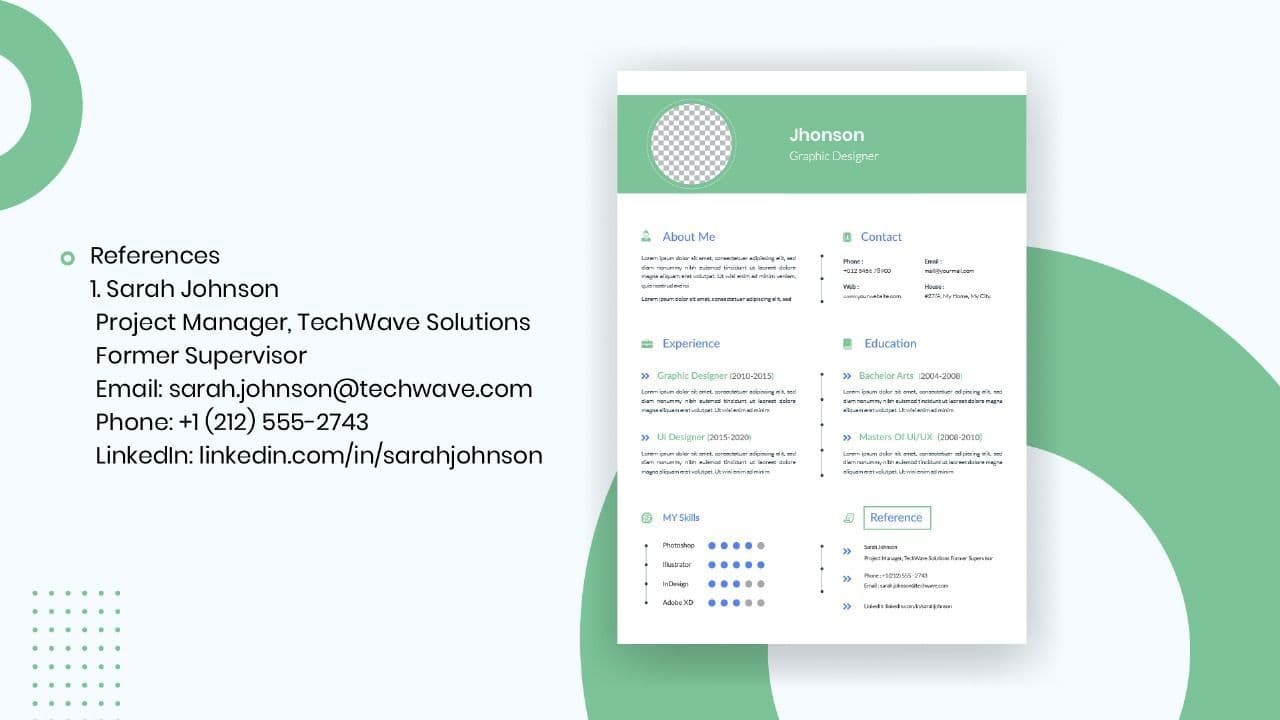
How to List References on a Resume in 2026
Learn the modern 2026 approach to listing references on your resume for maximum professionalism and recruiter impact.
Is Sound CV good for students and fresh graduates with no experience?
Sound CV is perfect for students and fresh graduates, helping them create professional resumes that highlight skills, projects, and potential even with little or no work experience.
Why Sound CV Is Different from Other AI Resume Builders
Sound CV stands out by creating job-focused, ATS-friendly resumes that highlight real achievements, not just generic content.
Resume Format for HR Job: Professional Guide and Sample Templates
A complete guide to the best resume format for HR jobs, with expert tips and sample templates to help you create a professional and job-ready resume.
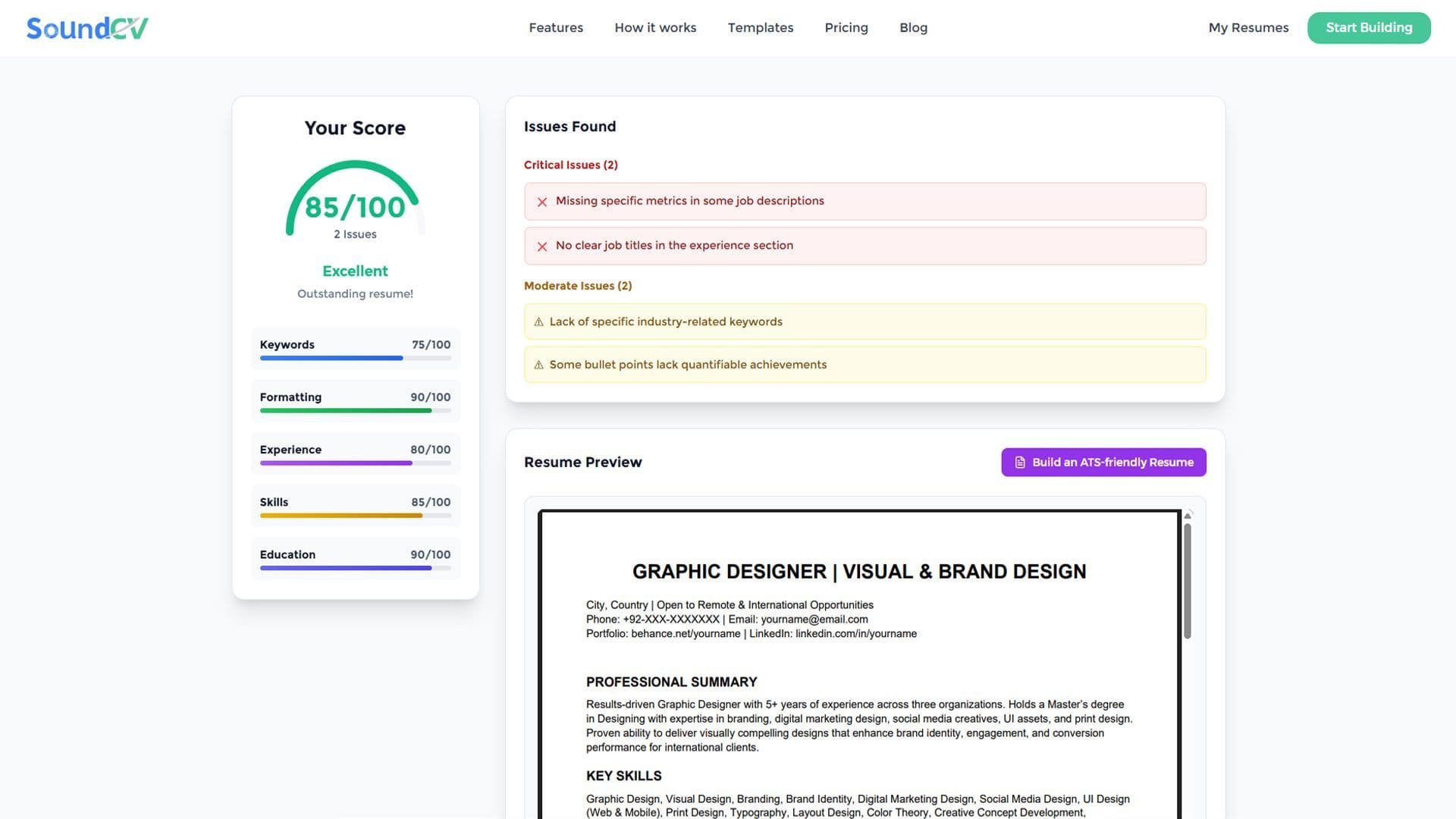
How Does the Sound CV Resume Score Checker Work?
The Sound CV Resume Score Checker analyzes your resume against ATS requirements, job-specific keywords, and structure to provide an instant, actionable score.

What Is a Sound CV? Features, Benefits, and How It Works
A Sound CV is an AI-powered resume that is tailored, ATS-optimized, and designed to showcase your skills and achievements to help you stand out to recruiters.