Resume for Bank Job: Format, Tips & Samples for Freshers and Experienced
Create a professional bank job resume with the right format, skills, and ATS optimization for freshers and experienced candidates.
Overview
Learn how to build a strong, ATS-friendly resume for bank jobs. This guide covers formats, skills, sections, and practical tips for both freshers and experienced banking professionals to improve shortlisting chances and land the right opportunity.
A career in banking is widely respected for its stability, growth opportunities, and professional environment. However, competition for bank jobs is intense. Whether you are a fresher applying for your first banking role or an experienced professional aiming for career advancement, your resume plays a critical role in determining whether you get shortlisted. A well-structured resume for bank job applications must highlight trustworthiness, accuracy, financial knowledge, and professionalism.
Banks rely heavily on structured hiring processes, often combining Applicant Tracking Systems (ATS) with manual screening. This makes it essential to create a resume that is both ATS-friendly and recruiter-approved. In this guide, we explain how to create a strong resume for bank jobs, covering formats, key sections, skills, tips, and sample structures for both freshers and experienced candidates.
Key Points
- Banking resumes must be formal, structured, and error-free.
- Highlight qualities banks value: accuracy, integrity, and attention to detail.
- Use the reverse chronological format (best for experienced candidates).
- Freshers should focus on education, internships, and finance-related projects.
- Include banking-specific skills such as financial analysis, compliance, and customer service.
- Keep the resume ATS-friendly with simple fonts and clear headings.
- Add measurable achievements instead of generic job duties.
- Include relevant certifications and training to strengthen your profile.
- Customize your resume for each bank role and job description.
- Always proofread and submit in PDF or DOCX format.
Why a Bank Job Resume Needs Special Attention
Banking roles come with a high level of responsibility, trust, and accountability. Professionals in this field handle sensitive financial information, manage customer assets, and operate under strict regulatory and compliance frameworks. Because of this, recruiters in the banking sector look for candidates who demonstrate precision, integrity, and ethical conduct. A generic resume often fails to reflect these critical qualities and can quickly lead to rejection.
Unlike creative or technical roles where design flexibility is acceptable, a resume for a bank job must be formal, clean, and highly structured. Recruiters expect resumes that are factual, accurate, and easy to verify. Clear timelines, consistent formatting, and properly listed qualifications help build confidence in a candidate’s reliability. Any exaggeration, inconsistency, or vague information may raise concerns about attention to detail, an essential trait in banking.
Bank recruiters also place strong emphasis on role-specific skills and career progression. They want to see how a candidate’s experience aligns with banking operations, compliance requirements, customer service standards, and financial responsibilities. A poorly tailored resume that does not reflect the specific job role or banking environment may fail to pass both ATS screening and manual review.
Additionally, banks often use structured hiring processes and Applicant Tracking Systems to filter candidates. A resume that is not optimized for these systems can be rejected before reaching a recruiter. For these reasons, a carefully tailored resume for bank job applications is essential. It ensures your qualifications are clearly communicated, your experience is presented professionally, and your profile reflects the trust and competence required in the banking industry.
Also Read : Resume Format for Web Developer: Modern Templates & ATS Tips for 2026
What Recruiters Look for in a Bank Job Resume
Bank recruiters evaluate resumes with a strong emphasis on accuracy, clarity, and relevance. Because banking is a highly regulated and detail-oriented industry, recruiters want clear evidence that a candidate is reliable, precise, and capable of handling financial responsibilities. Even small errors or vague statements can raise concerns, making attention to detail a critical factor in resume evaluation.
One of the first things recruiters look for is strong numerical and analytical ability. Banking roles often involve calculations, financial analysis, and data interpretation, so candidates must demonstrate comfort with numbers. Knowledge of banking operations and compliance is equally important. Recruiters want to see familiarity with banking processes, regulatory requirements, and risk management practices.
Customer service and relationship management skills are also highly valued, especially for front-office and retail banking roles. Banks rely on trust and long-term customer relationships, so the ability to communicate clearly and professionally is essential. Ethical conduct and accountability are non-negotiable qualities, as banking professionals handle sensitive financial information and must adhere to strict standards.
In addition to content, recruiters value resumes that are easy to scan. Clear section headings, consistent formatting, and a logical structure allow recruiters to quickly assess whether a candidate meets job requirements. A well-organized resume reflects professionalism and makes a strong first impression.
Also Read : Resume for Software Developer Fresher: Step-by-Step Guide + Examples
Best Resume Format for Bank Jobs
Choosing the right resume format is crucial for presenting your experience effectively.
Reverse Chronological Format
This is the most preferred resume format for bank jobs, especially for experienced professionals. It lists work experience starting with the most recent role and moves backward.
This format works well because:
- It shows career growth clearly
- Recruiters can quickly assess recent responsibilities
- It highlights stability and consistency
Experienced banking professionals should almost always use this format.
Functional or Combination Format
Freshers or career switchers may benefit from a functional or combination resume format. These formats focus more on skills and competencies rather than work history.
They are useful when:
- You have limited work experience
- You are entering banking from another field
- You want to emphasize transferable skills
However, even functional resumes should include internships, training, or academic projects to demonstrate practical exposure.
Also Read : Resume for Java Developer Fresher: Winning CV Guide
Resume Sections for a Bank Job (Step-by-Step)
A strong resume for bank job applications must include specific sections in the right order.
Header and Contact Information
Your header should be simple and professional. Include:
- Full name
- Phone number
- Professional email address
- City and country
Avoid adding photos, personal details, or unprofessional email IDs.
Professional Summary or Objective
This section introduces you to the recruiter in a few lines.
For experienced professionals, write a professional summary highlighting years of experience, key skills, and achievements.
For freshers, write a career objective that focuses on education, interest in banking, and willingness to learn.
Keep this section concise and targeted.
Also Read : Best Resume Format for Engineering Students (ATS-Friendly Guide)
Skills Section for Bank Jobs
The skills section is critical for ATS screening. Include a balanced mix of technical and soft skills.
Examples include:
- Banking operations
- Financial analysis
- Risk management
- Customer relationship management
- Regulatory compliance
- Attention to detail
- Communication skills
Always align skills with the job description.
Also Read : ATS-Friendly Resume Format for IT Engineers in 2026
Work Experience (For Experienced Candidates)
This section should highlight responsibilities and measurable achievements.
Use bullet points and action verbs. Focus on:
- Job responsibilities
- Process improvements
- Compliance and audit experience
- Customer handling metrics
Avoid listing duties without outcomes. Results matter in banking.
Education Section
List your education in reverse chronological order.
Include:
- Degree name
- Institution
- Year of completion
Commerce, finance, accounting, economics, and business-related degrees are highly relevant for banking roles.
Also Read : Resume for Government Job – How to Write an ATS-Friendly CV
Certifications and Training
Certifications strengthen your resume significantly.
Relevant certifications include:
- Banking exams
- Accounting certifications
- Risk and compliance training
- Financial software courses
This section demonstrates commitment to professional development.
Resume for Bank Job – Freshers Guide
Freshers often worry about lack of experience, but banks understand this. The key is to highlight potential and preparedness.
Freshers should focus on:
- Academic achievements
- Relevant coursework
- Internships or training programs
- College projects related to finance or banking
A fresher resume should emphasize learning ability, discipline, and interest in banking operations.
Also Read : Best Resume Format for Mechanical Engineers (ATS-Friendly Examples)
Resume for Bank Job – Experienced Professionals Guide
Experienced candidates must demonstrate growth, responsibility, and impact.
Highlight:
- Promotions and role progression
- Leadership or team handling experience
- Audit and compliance exposure
- Performance targets achieved
Use numbers wherever possible to show results and accountability.
Key Skills to Include in a Bank Job Resume
Some core skills banks consistently look for include:
- Account management
- Loan processing
- Risk assessment
- Regulatory compliance
- Customer service
- Financial reporting
- Digital banking tools
Soft skills such as integrity, communication, and problem-solving are equally important.
Also Read : Resume Format for Engineering Students - Skills, Projects & ATS Tips
Common Mistakes to Avoid in Bank Job Resumes
Many candidates get rejected due to avoidable mistakes.
Common errors include:
- Using generic resumes for all roles
- Including irrelevant personal information
- Poor grammar or spelling mistakes
- Overloaded designs with graphics
- Ignoring ATS requirements
Bank resumes should be professional, clean, and factual.
ATS Optimization Tips for Bank Job Resumes
Most banks use ATS software to filter resumes before human review.
To optimize for ATS:
- Use standard fonts like Arial or Calibri
- Avoid tables, icons, and images
- Match keywords from the job description
- Use clear section headings
An ATS-friendly resume increases your chances of shortlisting significantly.
Also Read : How to Sell a Product in an Interview (Step-by-Step Guide for Freshers)
Bank Job Resume Sample (Fresher & Experienced)
Fresher Resume Structure
- Header
- Career Objective
- Education
- Skills
- Internship / Training
- Certifications
Experienced Resume Structure
- Header
- Professional Summary
- Skills
- Work Experience
- Education
- Certifications
These structures work because they are easy to scan and aligned with recruiter expectations.
Final Resume Checklist Before Applying
Before submitting your resume:
- Proofread carefully
- Customize it for the specific bank role
- Ensure correct file format (PDF or DOCX)
- Use a professional file name
Small details can make a big difference.
Also Read : Sample Cover Letter for IT Internship (Freshers & Students)
Conclusion
A strong resume for bank job applications is more than a list of qualifications it is a reflection of your professionalism, reliability, and readiness to work in a highly regulated industry. Whether you are a fresher or an experienced banker, your resume must be accurate, structured, and tailored to the role you are applying for.
By choosing the right format, highlighting relevant skills, and optimizing for ATS, you significantly improve your chances of getting shortlisted. Banking recruiters value clarity, consistency, and credibility, and your resume should communicate all three.
Just as banks rely on structured systems to evaluate candidates, job seekers can benefit from smart tools that simplify resume creation. Platforms like SoundCV help candidates create ATS-friendly resumes, highlight the right skills, and present experience professionally—making the job application process more efficient and effective.
With the right resume strategy and tools, landing your next bank job becomes a realistic and achievable goal.
FAQs
Frequently asked questions about this topic
Related Blogs
Explore more insights and guides you might like.
How to List References on a Resume in 2026
Learn the modern 2026 approach to listing references on your resume for maximum professionalism and recruiter impact.

Is Sound CV good for students and fresh graduates with no experience?
Sound CV is perfect for students and fresh graduates, helping them create professional resumes that highlight skills, projects, and potential even with little or no work experience.

Why Sound CV Is Different from Other AI Resume Builders
Sound CV stands out by creating job-focused, ATS-friendly resumes that highlight real achievements, not just generic content.
Resume Format for HR Job: Professional Guide and Sample Templates
A complete guide to the best resume format for HR jobs, with expert tips and sample templates to help you create a professional and job-ready resume.
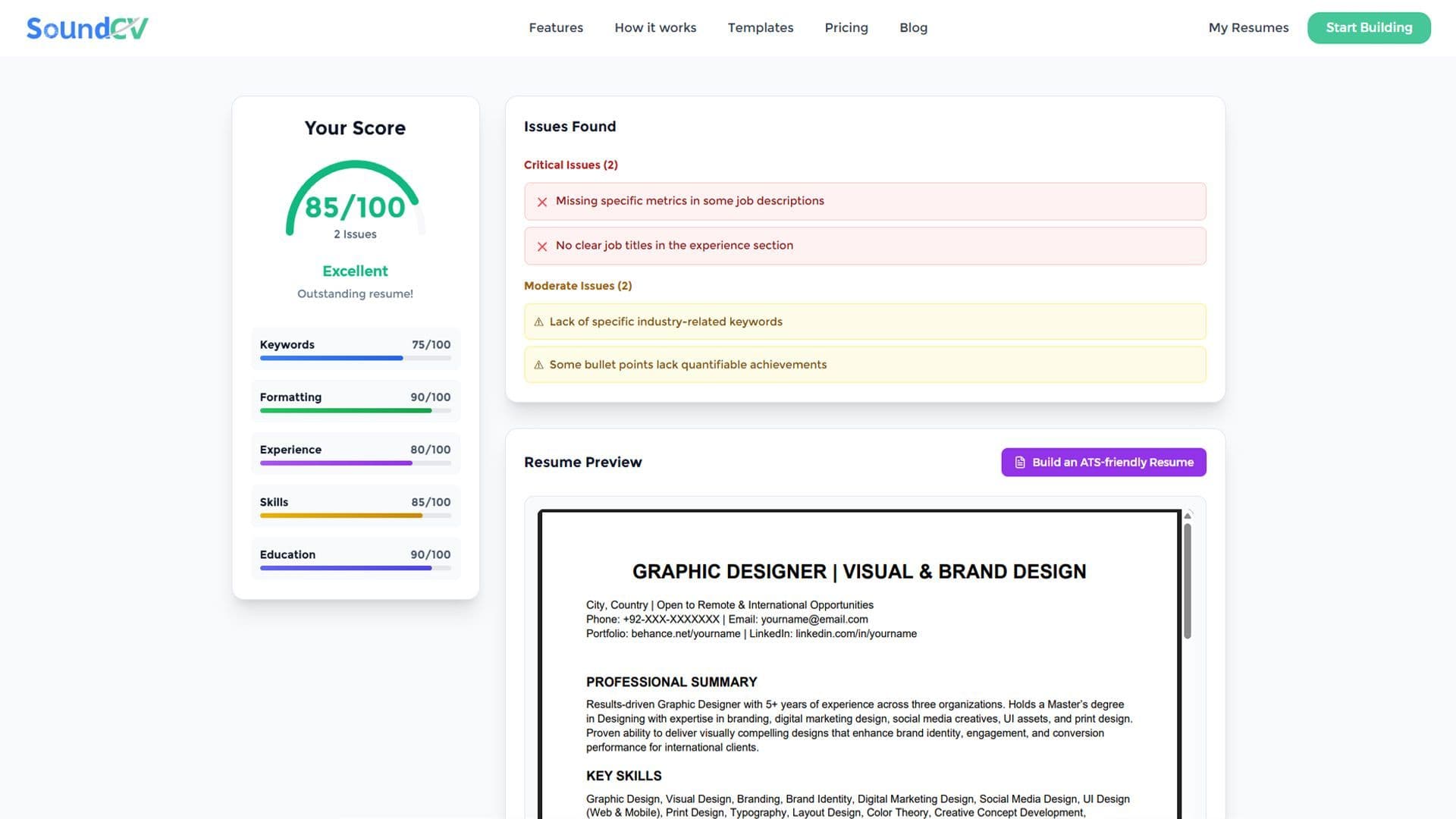
How Does the Sound CV Resume Score Checker Work?
The Sound CV Resume Score Checker analyzes your resume against ATS requirements, job-specific keywords, and structure to provide an instant, actionable score.

What Is a Sound CV? Features, Benefits, and How It Works
A Sound CV is an AI-powered resume that is tailored, ATS-optimized, and designed to showcase your skills and achievements to help you stand out to recruiters.