Accountant Job Description for Resume: Roles, Skills & Examples
A practical guide to writing impactful accountant job descriptions for resumes, with skills, responsibilities, examples, and ATS-friendly tips.
Overview
This guide explains how to write a strong accountant job description for your resume, covering key roles, skills, experience-based examples, common mistakes, and ATS optimization strategies to help accounting professionals stand out to recruiters.
When recruiters review accounting resumes, they look beyond degrees and certifications. What matters most is how clearly your job responsibilities and achievements are presented. A well-written accountant job description for a resume can make the difference between being shortlisted and overlooked, especially in today’s highly competitive finance job market.
Many accounting professionals weaken their resumes by copying generic job descriptions or listing routine duties without context or impact. Simply stating what you were responsible for isn’t enough. Recruiters want to understand what you actually did, how effectively you performed your role, and the value you brought to the organization. Clear, results-focused descriptions help hiring managers quickly assess your skills, experience, and suitability for the role.
A strong accountant job description highlights relevant responsibilities, uses action-oriented language, and, where possible, includes measurable outcomes such as improved accuracy, efficiency, or compliance. It also aligns your experience with the requirements of the role you’re applying for, making your resume more relevant and ATS-friendly.
This guide is designed to help you move beyond generic descriptions and create role-specific, impactful accountant job descriptions that clearly communicate your strengths, improve visibility in applicant tracking systems, and leave a strong impression on hiring managers.
Who Is an Accountant?
An accountant is a financial professional responsible for managing, recording, analyzing, and reporting an organization’s financial information. Accountants play a critical role in ensuring financial accuracy, maintaining compliance with laws and regulations, and supporting business decision-making through reliable and timely financial data. Their work helps organizations track performance, control costs, and make informed strategic choices.
There are several types of accountants, each specializing in different areas of finance. Public accountants typically provide services such as auditing, taxation, and financial consulting to multiple clients. Corporate accountants work within organizations, handling internal financial reporting, budgeting, and compliance. Tax accountants focus on tax planning, filings, and ensuring adherence to tax regulations. Cost accountants analyze production and operational costs to help businesses improve efficiency and profitability. Management accountants support internal strategy by providing financial insights that guide planning and decision-making.
The responsibilities of an accountant also vary based on experience level. Entry-level accountants usually focus on foundational tasks such as data entry, maintaining ledgers, performing reconciliations, and assisting with basic financial reports. These roles emphasize accuracy, learning, and process understanding. Experienced accountants, on the other hand, take on greater responsibility, including preparing detailed financial statements, managing compliance, supporting audits, analyzing financial data, and advising management.
When writing your resume, it’s important that your job description reflects your actual level of responsibility and impact, not just your job title. Clear alignment between experience and responsibilities helps recruiters quickly assess your suitability for the role.
Also Read : Resume Format for Web Developer: Modern Templates & ATS Tips for 2026
Key Roles and Responsibilities of an Accountant
A well-written accountant job description for a resume should clearly reflect the responsibilities that accountants handle in real-world business environments. This section helps recruiters quickly understand your scope of work, level of responsibility, and relevance to the role they’re hiring for. Rather than listing generic duties, it’s important to present responsibilities that demonstrate accuracy, accountability, and financial expertise.
At the core of an accountant’s role is the preparation and maintenance of financial records, ensuring all transactions are recorded correctly and consistently. Accountants are also responsible for managing accounts payable and receivable, tracking incoming and outgoing payments to maintain healthy cash flow. Regular bank statements and ledger reconciliations are essential to identify discrepancies and ensure financial accuracy.
Another key responsibility includes preparing monthly, quarterly, and annual financial reports that support management decision-making and regulatory requirements. Accountants often assist with internal and external audits, providing documentation, explanations, and compliance support. They also play a role in budgeting and forecasting activities, helping organizations plan expenses and monitor financial performance against targets.
Ensuring compliance with accounting standards, tax laws, and regulatory requirements is a critical part of the role, as is maintaining accurate documentation and organized financial records for future reference and audits.
These responsibilities should always be customized based on your specific role and experience level. Entry-level accountants may focus more on execution and support, while experienced accountants take ownership of reporting, compliance, and analysis. Tailoring this section makes your resume clearer, stronger, and more impactful.
Also Read : Resume for Software Developer Fresher: Step-by-Step Guide + Examples
Accountant Job Description for Resume (By Experience Level)
Fresher / Junior Accountant
At the entry level, recruiters focus on accuracy, learning ability, and basic accounting exposure.
Typical Responsibilities
- Assisted in maintaining financial records and ledgers
- Supported accounts payable and receivable processes
- Performed bank and ledger reconciliations
- Prepared basic financial reports under supervision
- Maintained invoices, vouchers, and documentation
What Recruiters Expect
- Strong fundamentals
- Attention to detail
- Willingness to learn
Mid-Level Accountant
Mid-level accountants are expected to handle tasks independently.
Expanded Responsibilities
- Prepared monthly financial statements
- Managed AP/AR cycles independently
- Supported audits and compliance checks
- Assisted in budgeting and variance analysis
- Ensured adherence to accounting policies
Senior Accountant
Senior accountants focus on review, strategy, and compliance.
Key Responsibilities
- Reviewed financial statements and reports
- Led audit coordination and regulatory compliance
- Managed junior accountants
- Supported management with financial insights
- Ensured accuracy and risk control
Also Read : Resume for Java Developer Fresher: Winning CV Guide
Key Skills to Include in an Accountant Resume
A strong accountant job description for a resume must be supported by the right skills.
Technical / Hard Skills
- Accounting principles (GAAP / IFRS)
- Financial reporting and analysis
- Taxation basics
- Audit preparation and compliance
- Budgeting and forecasting
- Accounting software (Tally, QuickBooks, SAP, Excel)
Soft Skills
- Attention to detail
- Analytical thinking
- Time management
- Problem-solving
- Clear communication
Skills should align with your experience and target role.
Also Read : Best Resume Format for Engineering Students (ATS-Friendly Guide) A complete gu
How to Write an Effective Accountant Job Description for Resume
Focus on Achievements, Not Just Duties
Instead of listing tasks, highlight outcomes.
Weak Example
- Prepared financial reports
Strong Example
- Prepared monthly financial reports with 100% accuracy, supporting timely management decisions
Use Action Verbs
- Managed
- Analyzed
- Prepared
- Reconciled
- Coordinated
Add Metrics Where Possible
- Reduced errors by 20%
- Improved reporting efficiency
- Handled accounts for X clients
Keep It ATS-Friendly
- Use standard job titles
- Avoid tables and graphics
- Use bullet points
Sample Accountant Job Description for Resume
Fresher Accountant Example
- Assisted in maintaining daily accounting entries and financial records
- Performed bank reconciliations under supervision
- Supported accounts payable and receivable processes
- Maintained accurate documentation and invoices
Experienced Accountant Example
- Managed end-to-end accounting operations including AP, AR, and reconciliations
- Prepared monthly and annual financial statements
- Coordinated with auditors to ensure compliance
- Supported budgeting and forecasting activities
Why These Work
- Clear responsibilities
- Action-oriented language
- Relevant to recruiter expectations
Also Read : Resume for Government Job – How to Write an ATS-Friendly CV
Common Mistakes to Avoid in Accountant Job Descriptions
Many accounting resumes fail to make an impact not because of lack of experience, but because of poorly written job descriptions. Avoiding common mistakes can significantly improve the clarity, credibility, and effectiveness of your resume.
One frequent mistake is writing vague responsibilities. Phrases like “handled accounting work” or “responsible for financial tasks” don’t tell recruiters what you actually did. Specific, well-defined responsibilities are far more effective. Another common issue is copy-pasting generic job descriptions from the internet. These descriptions lack personalization and fail to reflect your real contributions or experience.
Many candidates also make the mistake of ignoring achievements and results. Recruiters want to see impact such as improved accuracy, faster reporting, or better compliance not just a list of duties. Similarly, using the same job description for every role weakens your resume. Each position should be tailored to reflect the scope, responsibilities, and skills relevant to that specific job.
Finally, overloading the resume with accounting jargon can reduce readability. While technical terms are important, excessive jargon can confuse non-technical recruiters and ATS systems.
Avoiding these mistakes helps your resume communicate your value more clearly, making it easier for recruiters to understand your experience and trust your professional credibility.
Also Read : Best Resume Format for Mechanical Engineers (ATS-Friendly Examples)
Tips to Optimize Accountant Resume for ATS
Most companies use Applicant Tracking Systems (ATS).
ATS Optimization Tips
- Include keywords like “financial reporting,” “reconciliation,” “accounts payable”
- Use simple formatting
- Use consistent job titles
- Save resume as PDF or DOCX
An ATS-friendly accountant job description for a resume improves your chances of being shortlisted.
Also Read : Resume Format for Engineering Students - Skills, Projects & ATS Tips
How to Customize Accountant Job Descriptions for Different Roles
Corporate Accountant
- Internal reporting
- Compliance
- Cost control
Tax Accountant
- Tax returns
- Compliance
- Audit support
Audit Accountant
- Internal audits
- Risk assessment
- Regulatory compliance
Customization shows relevance and focus.
Also Read : How to Sell a Product in an Interview (Step-by-Step Guide for Freshers)
Conclusion
A strong accountant job description for a resume is more than a list of duties; it's a professional summary of your value as a financial expert. Whether you’re a fresher or an experienced accountant, your resume should clearly show what you did, how well you did it, and how you contributed to accuracy, compliance, and business success.
By tailoring job descriptions to your experience level, using achievement-focused language, and optimizing for ATS, you can significantly improve your chances of landing interviews. Small improvements in wording and structure often lead to big results.
If you want to build or refine your accountant resume without struggling with formatting or keyword optimization, Sound CV can help. Sound CV uses AI-powered resume optimization and role-specific templates to help accounting professionals create clear, ATS-friendly resumes that highlight real impact not just responsibilities.
With the right job description and the right tools, your accounting experience can stand out exactly where it matters
FAQs
Frequently asked questions about this topic
Related Blogs
Explore more insights and guides you might like.
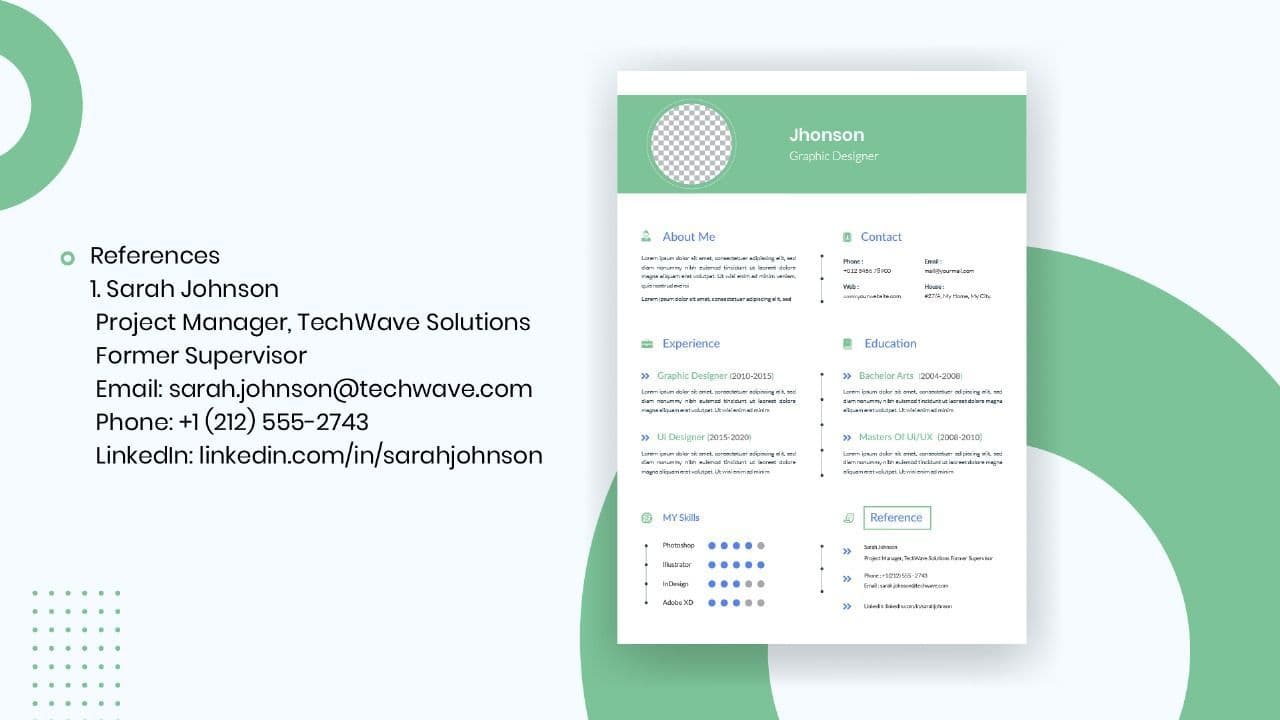
How to List References on a Resume in 2026
Learn the modern 2026 approach to listing references on your resume for maximum professionalism and recruiter impact.

Is Sound CV good for students and fresh graduates with no experience?
Sound CV is perfect for students and fresh graduates, helping them create professional resumes that highlight skills, projects, and potential even with little or no work experience.
Why Sound CV Is Different from Other AI Resume Builders
Sound CV stands out by creating job-focused, ATS-friendly resumes that highlight real achievements, not just generic content.

Resume Format for HR Job: Professional Guide and Sample Templates
A complete guide to the best resume format for HR jobs, with expert tips and sample templates to help you create a professional and job-ready resume.
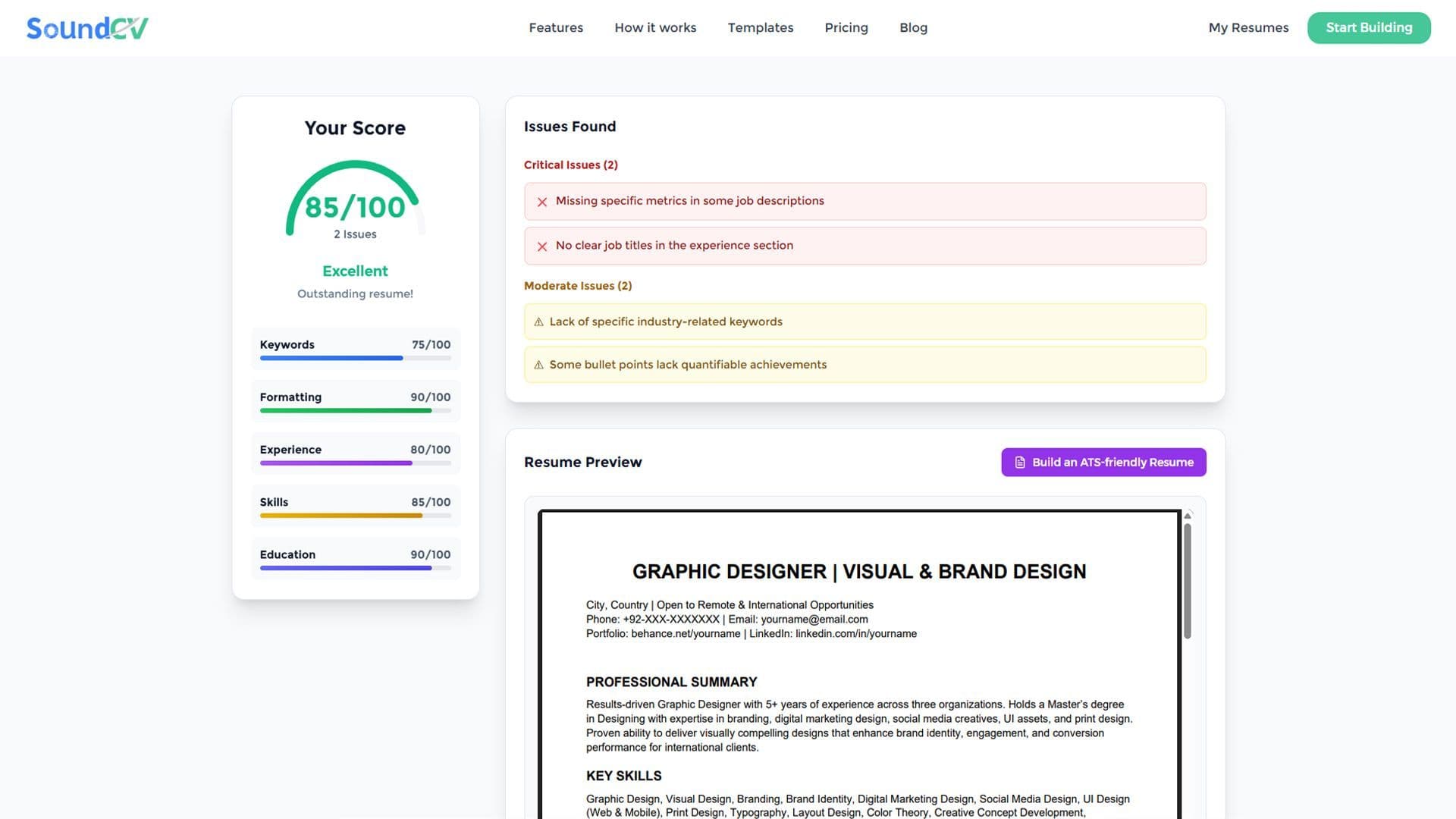
How Does the Sound CV Resume Score Checker Work?
The Sound CV Resume Score Checker analyzes your resume against ATS requirements, job-specific keywords, and structure to provide an instant, actionable score.

What Is a Sound CV? Features, Benefits, and How It Works
A Sound CV is an AI-powered resume that is tailored, ATS-optimized, and designed to showcase your skills and achievements to help you stand out to recruiters.