What Is the Purpose of a Resume? (Complete Guide 2026)
A resume showcases your skills, experience, and value, helping employers quickly decide why you’re the right candidate for an interview.
Overview
The purpose of a resume is to clearly present your skills, achievements, and professional value to employers. A strong resume helps you stand out in competitive job markets, pass ATS screenings, and secure interviews by highlighting relevant experience, measurable results, and career growth. When crafted correctly, it becomes your most powerful personal marketing tool.
In today’s competitive job market, your resume is more than a document, it's your personal marketing tool. Whether you’re a fresh graduate, a professional seeking growth, or someone switching careers, your resume plays a crucial role in defining how employers see you.
But what exactly is the purpose of a resume? Why do recruiters and hiring managers rely on it so much, and how can you create one that truly stands out?
This detailed guide explains the real purpose of a resume, why it matters, and how it helps you open doors to better career opportunities.
Key Points
Introduces you professionally to employers
Highlights relevant skills and measurable achievements
Demonstrates job relevance and role alignment
Shows career growth and progression
Builds credibility and trust with recruiters
Helps pass Applicant Tracking Systems (ATS)
Secures interview opportunities, not jobs directly
Acts as a personal marketing and branding tool
Supports employers in screening and shortlisting candidates
Communicates your value clearly and quickly
What Is a Resume?
A resume is a concise summary of your professional background, skills, education, and achievements. It’s typically one to two pages long and designed to showcase why you’re the best candidate for a specific role.
The word “resume” originates from the French term meaning “summary” and that’s exactly what it is: a snapshot of your career story.
It’s not a biography or a list of everything you’ve ever done. Instead, it’s a strategic and tailored document that highlights your most relevant qualifications to grab the recruiter’s attention quickly.
Also Read : How to List Publications on a Resume (Examples & Format Guide)
Why Is a Resume Important?
Recruiters often receive hundreds of applications for a single job. On average, they spend only 6 10 seconds scanning each resume before deciding whether to read more or move on.
Your resume’s purpose is to make an immediate and lasting impression. A well-crafted resume helps you:
- Present your qualifications clearly and concisely.
- Show your professional achievements and potential.
- Get shortlisted for interviews.
- Communicate your unique value in a competitive job market.
Without a strong resume, even the most skilled professionals can struggle to get noticed.
Also Read : ATS Full Form in Resume: Resume Guide with Examples (2026)
The Core Purpose of a Resume
The main purpose of a resume goes beyond listing your experience it’s about communicating your value effectively. Let’s break it down into key points.
1. To Introduce You to Employers
Your resume acts as your first introduction to potential employers. It tells them:
- Who you are
- What you’ve done
- What you’re capable of doing next
It’s often the first impression you make, so clarity, professionalism, and accuracy are essential.
Think of it as your personal introduction at the interview table before you ever get there.
2. To Highlight Your Skills and Achievements
A strong resume doesn’t just list job duties it demonstrates results.
Employers are interested in how your skills have contributed to past successes. For example:
Instead of writing “Handled customer inquiries,” write “Resolved 95% of customer issues within 24 hours, improving satisfaction scores.”
By using quantifiable results, you show your value through proof, not just claims.
This approach helps you stand out from candidates who list generic responsibilities instead of tangible outcomes.
3. To Demonstrate Relevance to the Job
Every job posting comes with specific requirements skills, experience, and qualifications.
Your resume should align perfectly with those expectations. The goal is to make it easy for the hiring manager to see that you’re the right fit.
That’s why customizing your resume for each role is so important. Use keywords and examples that match the job description to pass both human screening and Applicant Tracking Systems (ATS).
4. To Show Professional Growth
A resume isn’t just a record of jobs, it's a timeline of your professional journey. It shows how you’ve grown, taken on new challenges, and advanced in your career.
Employers want to see progression from entry-level tasks to leadership roles, from learning new tools to applying them strategically.
Demonstrating growth signals that you’re adaptable, ambitious, and capable of evolving within an organization.
5. To Build Credibility and Trust
Your resume serves as an official document that validates your professional background. It reassures employers that you have the right credentials and experience.
Details like your job titles, employment dates, certifications, and references help build trust and authenticity.
A clear, error-free, and honest resume gives the impression that you’re organized, reliable, and serious about your career traits every employer values.
Also Read : First Job Resume Examples with Samples & Writing Tips
The Resume as a Marketing Tool
Think of your resume as a personal advertisement one where you are the product. The goal is to convince employers that hiring you will benefit their company.
A great resume focuses on value creation, not just history. It answers the employer’s unspoken question:
“What can this person do for us?”
To do that effectively, your resume should emphasize:
- Measurable achievements (e.g., “Increased sales by 40%”)
- Transferable skills (e.g., “Leadership,” “Problem-solving,” “Communication”)
- Relevant expertise aligned with the company’s goals
Just like marketing materials attract customers, your resume should attract employers by presenting you as the solution to their needs.
Also Read : First Job Resume Examples with Samples & Writing Tips
How a Resume Supports the Hiring Process
Resumes serve multiple purposes within the recruitment process for both applicants and employers.
For Job Seekers:
- Acts as your entry ticket into the hiring funnel.
- Highlights your competitive advantages.
- Allows you to control your professional narrative.
For Employers:
- Serves as a screening tool to shortlist candidates.
- Helps assess skills, experience, and cultural fit.
- Provides a structured basis for interview questions.
In short, resumes streamline the entire hiring process by connecting the right people with the right roles.
Also Read : Free Resume Template for Freshers With Expert Writing Tips
The Role of the Resume in the Digital Age
In today’s digital-first world, resumes aren’t limited to plain text documents anymore. Modern resumes can take multiple forms:
- Traditional PDF resumes (for job applications and emails)
- Online resumes or personal websites (for portfolio showcasing)
- LinkedIn profiles (for networking and recruiter visibility)
Despite new formats, the purpose remains the same to communicate your value, credibility, and potential.
Even with AI-driven recruitment tools, resumes remain a key component of the selection process. They represent your story, your brand, and your first professional impression.
Tips for Creating an Effective Resume
Now that you understand the purpose, let’s talk about how to make your resume work for you.
1. Keep It Concise
Employers prefer short, focused resumes. Ideally, keep it one page if you have under 10 years of experience, or two pages for senior roles.
2. Use a Clear Format
Avoid cluttered layouts. Use clean fonts, bullet points, and consistent spacing. Make sure your key details stand out visually.
3. Tailor It for Every Job
One-size-fits-all resumes rarely work. Adjust your content for each application highlight the skills and experience most relevant to that position.
4. Focus on Achievements
Replace job descriptions with accomplishment-driven statements. Use strong action verbs like led, achieved, developed, or managed.
5. Optimize for ATS
Many companies use Applicant Tracking Systems to scan resumes for keywords. Include relevant job-specific terms naturally throughout your document.
6. Add a Summary Section
A professional summary at the top of your resume gives recruiters a snapshot of your career highlights and goals.
7. Proofread Carefully
Spelling and grammar errors can cost you an opportunity. Double-check everything or use a tool like Grammarly to ensure professionalism.
Example of a Resume Purpose in Action
Let’s look at an example.
Scenario:
You’re applying for a Marketing Manager role.
Bad Resume Summary:
“Experienced marketer with 7 years in digital marketing. Looking for a challenging position to grow my skills.”
Better Resume Summary:
“Results-driven Marketing Manager with 7 years of experience in digital campaigns, brand strategy, and SEO optimization. Increased organic traffic by 120% and led cross-functional teams to achieve a 30% rise in lead conversion.”
See the difference?
The second example clearly shows your value and outcomes fulfilling the resume’s true purpose: to prove your worth to the employer.
Also Read : How to Add Certifications in Resume: Complete Guide with Examples
Common Misconceptions About Resumes
Many job seekers misunderstand what a resume is meant to do. Let’s clear up some common myths:
Myth 1: A resume gets you the job.
A resume doesn’t land you the job, it gets you the interview. That’s its main purpose.
Myth 2: The longer, the better.
Quality matters more than quantity. Only include relevant information.
Myth 3: Fancy designs always impress.
Design helps readability, but content matters most. Use style to enhance clarity, not distract from it.
Myth 4: You should include everything you’ve ever done.
Your resume should highlight relevant experience, not every job you’ve held. Focus on what matters to the employer.
Final Thoughts: Why Your Resume Matters More Than Ever
The purpose of a resume is simple but powerful; it tells your story in a way that sells your strengths. It helps employers see why you are the best fit for their team.
In a world where opportunities are vast but competition is fierce, your resume is your bridge between potential and possibility.
Invest time in crafting it carefully, focusing on clarity, relevance, and impact. When done right, your resume becomes more than just a document it becomes your professional voice.
FAQs
Frequently asked questions about this topic
Related Blogs
Explore more insights and guides you might like.
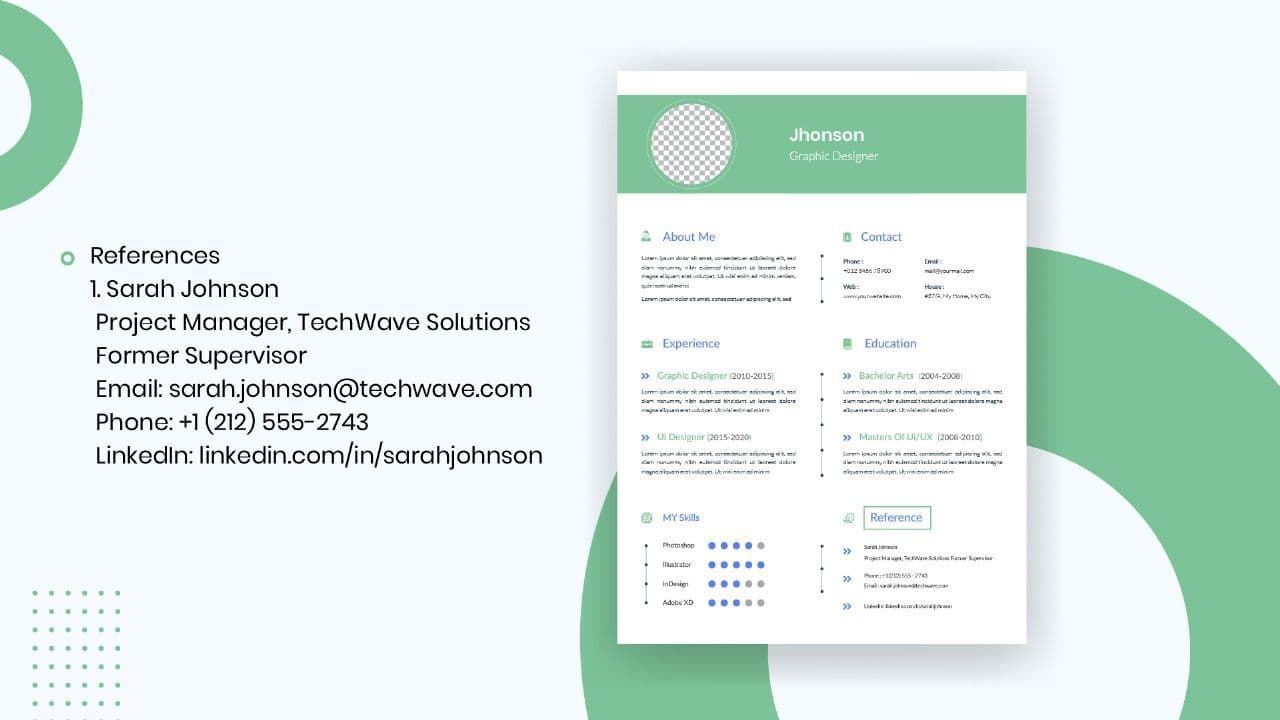
How to List References on a Resume in 2026
Learn the modern 2026 approach to listing references on your resume for maximum professionalism and recruiter impact.
Is Sound CV good for students and fresh graduates with no experience?
Sound CV is perfect for students and fresh graduates, helping them create professional resumes that highlight skills, projects, and potential even with little or no work experience.
Why Sound CV Is Different from Other AI Resume Builders
Sound CV stands out by creating job-focused, ATS-friendly resumes that highlight real achievements, not just generic content.
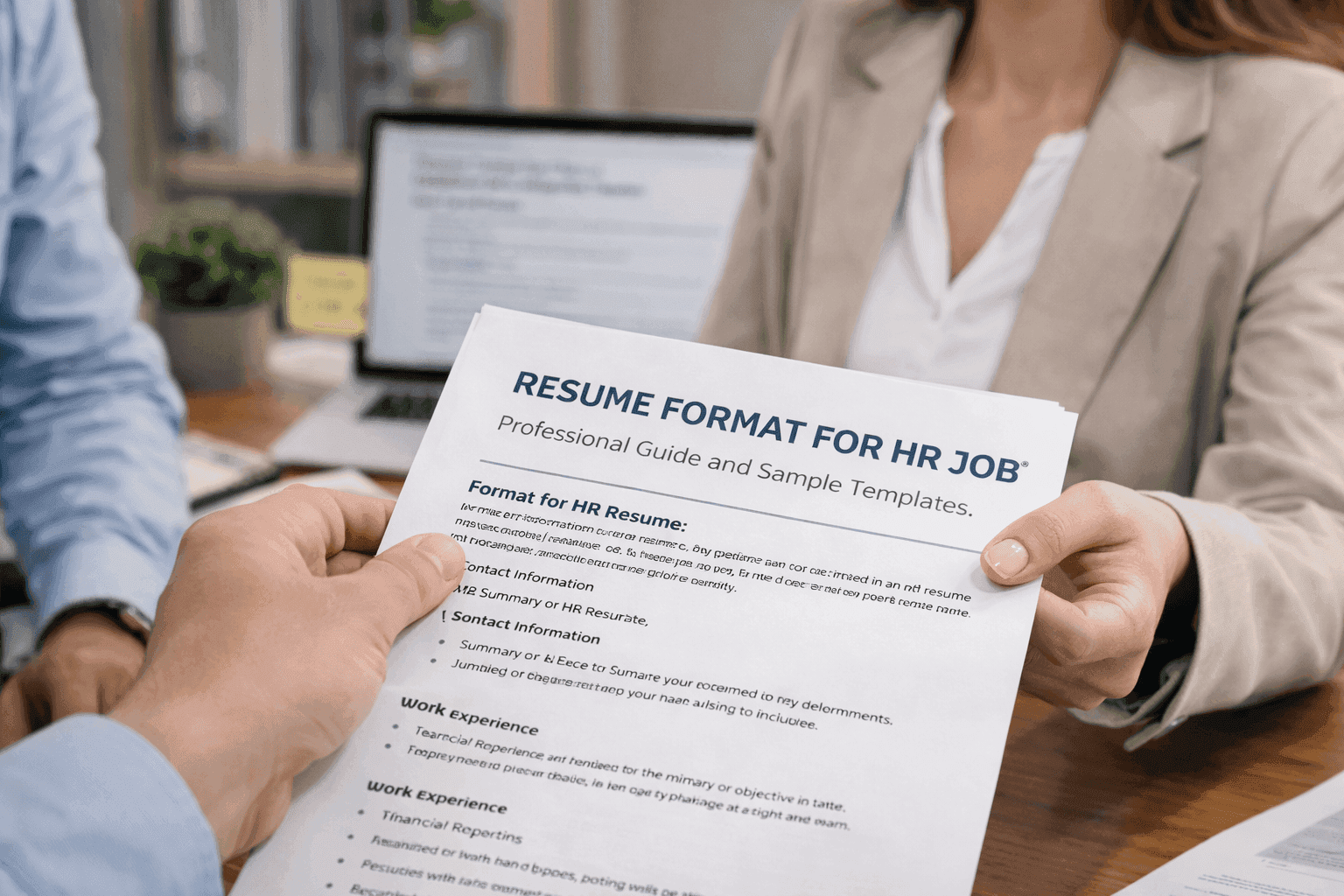
Resume Format for HR Job: Professional Guide and Sample Templates
A complete guide to the best resume format for HR jobs, with expert tips and sample templates to help you create a professional and job-ready resume.
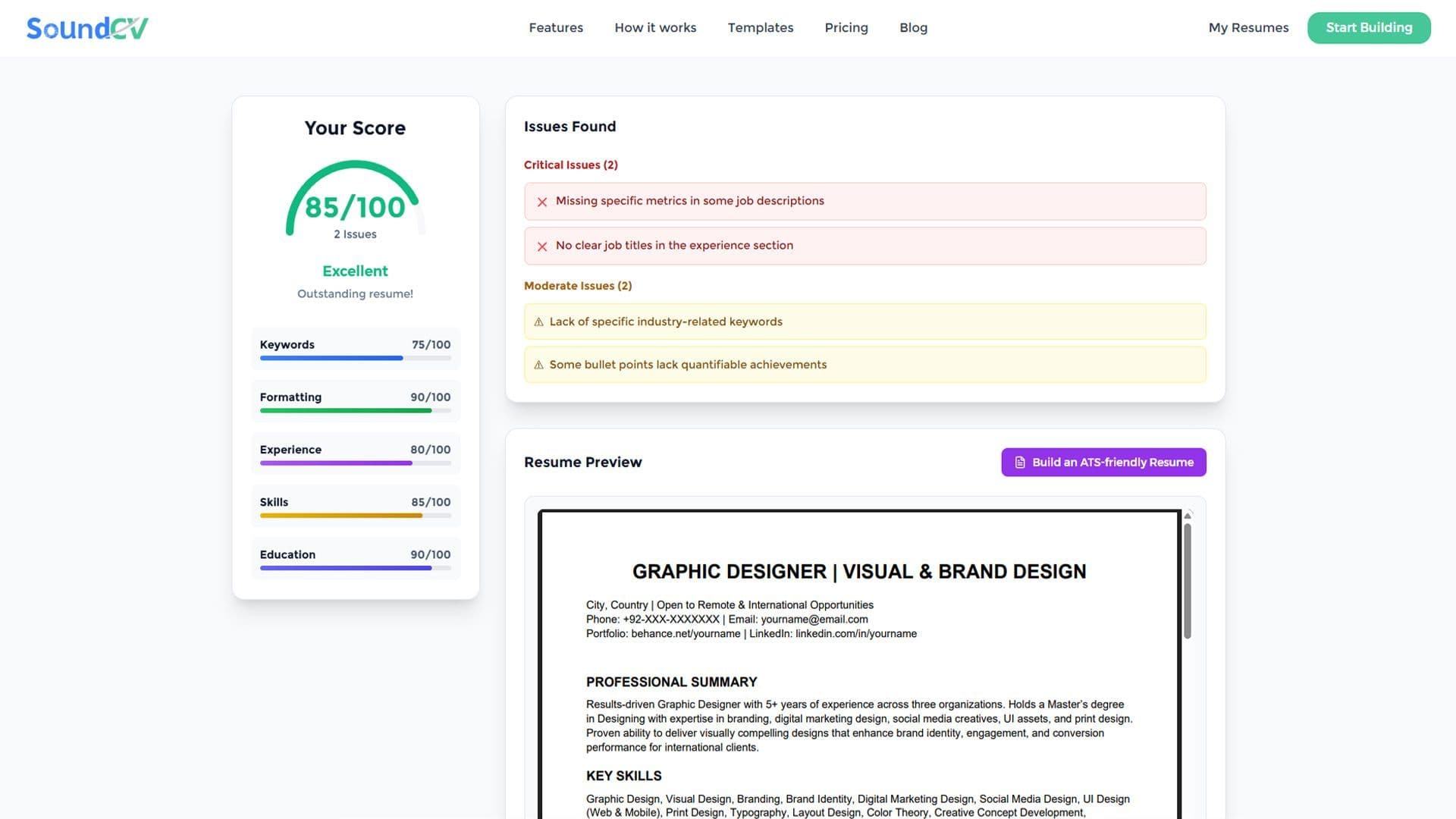
How Does the Sound CV Resume Score Checker Work?
The Sound CV Resume Score Checker analyzes your resume against ATS requirements, job-specific keywords, and structure to provide an instant, actionable score.
What Is a Sound CV? Features, Benefits, and How It Works
A Sound CV is an AI-powered resume that is tailored, ATS-optimized, and designed to showcase your skills and achievements to help you stand out to recruiters.