CV vs Resume: Key Differences, Formats & When to Use (2026 Guide)
Learn the difference between CV and resume, formats, usage, and how to choose the right document for job applications.
Overview
Discover the key differences between CV and resume, including format, length, and purpose. This guide helps modern job seekers choose the right document for job applications, improve ATS performance, and increase interview chances in 2026.
If you have ever sat down to apply for a job and wondered whether to send a CV or a resume, you are not alone. The CV vs resume debate is one of the most frequently searched career topics online and for good reason. Using the wrong document for the wrong audience can quietly cost you an interview before a hiring manager even reads your name.
In this ultimate guide to CV vs resume for modern job seekers, we will break down every key difference between CV and resume documents, explain cv vs resume meaning in plain language, walk you through the correct resume vs cv format, and help you decide which one to use for your next job application. Whether you are a fresh graduate, a senior professional, or someone switching industries, this guide has you covered.
Key Points
- CV means Curriculum Vitae; resume means summary
- CV is detailed, resume is concise
- CV can be multiple pages; resume is 1–2 pages
- Resume is tailored for each job; CV stays mostly static
- CV is used in academia and international roles
- Resume is preferred in the USA, Canada, and corporate jobs
- Resume focuses on skills and achievements
- CV includes research, publications, and full career history
- ATS systems prefer resume format
- Choosing the right document increases interview chances
What Do CV and Resume Actually Mean?
CV vs Resume Meaning: The Basics
The term CV stands for Curriculum Vitae, a Latin phrase meaning "course of life." A CV is a detailed, chronological record of your entire academic and professional career. It includes every degree, publication, research project, conference, award, and position you have ever held. A CV grows over time and can span many pages.
A resume, on the other hand, is a French word meaning "summary." True to its name, a resume is a concise snapshot of your most relevant skills and experience tailored specifically to the job you are applying for. Most resumes are kept to one or two pages, regardless of how many years of experience you have.
Understanding the cv vs resume meaning is not just a semantic exercise it directly impacts how recruiters perceive your professionalism in different markets.
Why the Confusion Exists
In some countries, particularly in the United Kingdom, Ireland, Australia, and South Africa, the word "CV" is used casually to refer to what Americans would call a resume. When a UK employer asks for your CV, they generally want a 2-page document that looks more like a resume by American standards. This overlap in terminology is the root of most confusion around the cv vs resume differences.
Also Read : Resume for Hotel Job With No Experience (Guide + Example)
Key Differences Between CV and Resume
Now let us get into the core difference between cv and resume across every major dimension that matters to job seekers.
These cv vs resume differences are not arbitrary; they reflect genuine differences in hiring culture. In the United States, including a photo or date of birth on a resume can actually raise legal concerns for employers worried about discrimination claims. In contrast, a CV submitted in Germany or Saudi Arabia is expected to include a professional photo and personal details.
Also Read : CV Format for Dubai Jobs: Examples, Writing Tips & UAE Resume Guide
The One Similarity That Matters Most
Both a CV and a resume must clearly demonstrate your value to an employer. Whether it is two pages or twelve, the goal of any job application document is to convince the reader to invite you for an interview. Formatting, clarity, and relevance are non-negotiable in both cases.
Resume vs CV Format: What Should Each Document Look Like?
Standard Resume Format
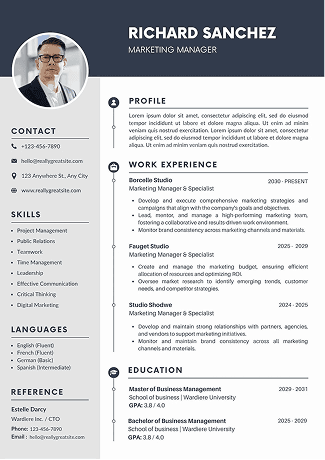
A well-structured resume follows a clean, scannable format that ATS (Applicant Tracking Systems) can parse easily. Here is what a typical resume includes, in order:
• Contact Information Name, phone, email, LinkedIn URL, city (no full address required)
• Professional Summary 2–4 lines summarizing your experience and top value proposition
• Work Experience Reverse-chronological order with bullet-point achievements
• Skills A curated list of hard and soft skills relevant to the role
• Education Degree, institution, graduation year (keep it brief for experienced candidates)
• Certifications or Licenses Only if relevant to the job
The resume vs cv format for a resume prioritizes white space, consistent fonts, and measurable accomplishments. Instead of listing job duties, high-performing resumes quantify results: "Increased sales by 32% in Q3" is far stronger than "Responsible for increasing sales."
Standard CV Format
A CV follows a more scholarly format and is organized to tell the full story of your career. Key sections include:
• Personal Profile Name, contact info, nationality, and sometimes DOB and photo
• Personal Statement or Objective A brief paragraph about your academic or research focus
• Education Listed in full detail including dissertation titles, honors, and supervisors
• Research Experience All academic projects, lab roles, fieldwork
• Publications Journal articles, conference papers, book chapters (in citation format)
• Presentations and Conferences — Where you have spoken or presented
• Grants and Funding Research grants awarded
• Teaching Experience Courses taught or tutored
• Awards and Honors Academic prizes, scholarships, fellowships
• Professional Memberships Industry bodies and associations
• References Usually listed at the end for academic CVs
There is no strict page limit for a CV. A recent PhD graduate may have a 4-page CV, while a seasoned professor may have 20+ pages. The resume vs cv format difference is not just cosmetic they represent entirely different philosophies about what an employer or institution needs to evaluate you.
Also Read : How to Make a Resume for a Teacher Job | Step-by-Step Guide
CV vs Resume for Job Application: Which One Should You Use?
The single most important factor in deciding between a CV vs resume for job application purposes is geography. Here is a practical breakdown:
Use a Resume When...
• You are applying for jobs in the United States or Canada
• You are applying in Australia or New Zealand (unless it is an academic or research role)
• The job posting uses the word "resume" explicitly
• You are applying to a corporate, startup, or non-academic employer anywhere in the world
• You want a document that can be quickly scanned by ATS software
Use a CV When...
• You are applying for academic positions, research roles, or fellowships anywhere in the world
• You are applying for jobs in Europe, the Middle East, Africa, or Asia
• The employer has explicitly requested a CV
• You are submitting grant applications or applying for graduate programs
• You are applying for medical, legal, or scientific positions in international markets
Pro Tip: When applying internationally, always research the hiring norms of the specific country. A one-size-fits-all approach to the CV vs resume for job application decision can immediately flag you as unfamiliar with local professional standards.
What About the UK and Ireland?
In the United Kingdom and Ireland, the term "CV" is standard but what employers expect is typically closer to a resume in structure. They want 1–2 pages, no photo, no personal details like DOB, and a clean professional layout. Treat UK job applications like a resume and simply call the document a "CV" when naming the file.
Also Read : 2 Year Experience Resume Format (Free Template + Pro Tips)
Real-World Examples: CV vs Resume Side by Side
Example 1: Academic Position (Use a CV)
Imagine Dr. Ayesha Malik, a postdoctoral researcher in molecular biology applying for a faculty position at a university in Germany. Her CV includes:
• A 3-paragraph research statement
• 8 peer-reviewed publications
• 4 conference presentations
• 2 research grants totaling €120,000
• Teaching experience across 5 undergraduate courses
• Memberships in 3 scientific organizations
Her CV is 7 pages long and is the correct document for this application. Sending a 1-page resume would make her look drastically underqualified not because her experience is lacking, but because the format would fail to communicate the depth of her scholarly contributions.
Example 2: Marketing Role in New York (Use a Resume)
Now consider James Carter, a 5-year marketing professional applying for a Senior Brand Manager role at a tech company in New York. His resume includes:
• A 3-line professional summary highlighting digital marketing expertise
• 3 previous roles with quantified achievements (e.g., "Grew Instagram following by 180% in 6 months")
• A skills section with tools like HubSpot, Google Ads, and Salesforce
• A single line for his Bachelor's degree
His resume is exactly 1 page. Sending a multi-page CV filled with every project he has ever worked on would overwhelm the hiring manager and likely get filtered out by the company's ATS system before a human even sees it.
Also Read : Indian Resume Format (Free Template + Pro Tips) | Resume Guide for Indian Job Seekers
Common Mistakes to Avoid in the CV vs Resume Debate
Even experienced professionals make avoidable mistakes when it comes to cv vs resume differences. Here are the most common ones:
Mistake 1: Using the Terms Interchangeably on Applications
If a job posting asks for a "resume," do not send a 5-page CV. If it asks for a "CV," do not submit a one-page resume. Read the posting carefully and send the right document.
Mistake 2: Including a Photo on a US Resume
Adding a photo to a resume submitted in the United States is a red flag. Most US employers are trained to avoid any personal details that could introduce bias, and a photo can cause some companies to discard your application entirely for compliance reasons.
Mistake 3: Failing to Tailor Your Resume
A CV does not need to change from application to application but a resume absolutely does. Every resume you send should be customized to match the keywords and requirements of the specific job description. This is especially critical for passing ATS screening, which is the first gate most corporate job applications go through.
Mistake 4: Making Your Resume Too Long
Unless you are a C-suite executive with 20+ years of experience, your resume should not exceed two pages. Recruiters spend an average of 7 seconds scanning a resume before deciding whether to continue reading. Dense, multi-page resumes lose attention fast.
Mistake 5: Forgetting to Update Your CV for New Achievements
Because a CV is meant to be a comprehensive record, many professionals neglect updating it regularly. A publication from three years ago that was never added to your CV is a missed opportunity every time you apply for an academic or research role.
Also Read : Where to Put GPA on a Resume (Best Placement + Examples)
Conclusion
The cv vs resume differences may seem like a minor technicality, but they reflect fundamentally different approaches to career storytelling. Understanding the cv vs resume meaning, knowing the correct resume vs cv format, and choosing the right document for each cv vs resume for job application scenario is a skill that separates strategic job seekers from those who apply blindly.
To summarize everything in this ultimate guide to CV vs resume for modern job seekers: use a resume for corporate and private sector roles in North America and Australia; use a CV for academic, research, and international job markets. Keep your resume concise, tailored, and achievement-driven. Keep your CV comprehensive, accurate, and perpetually updated.
The good news is that you do not have to navigate this alone. Whether you need to build a standout resume from scratch, analyze your existing CV for ATS compatibility, or get expert feedback on your application documents, SoundCV is built for exactly that.
Ready to build a job-winning resume or CV? Try SoundCV free today and let our AI-powered resume analyzer help you land more interviews in less time.
FAQs
Frequently asked questions about this topic
Related Blogs
Explore more insights and guides you might like.
CV vs Resume vs Biodata – The Complete Difference Guide
Learn the key differences between a CV, resume, and biodata and discover which one to use for your next job application.

Resume for Internship: How to Make a CV That Gets You Hired
Learn how to make a CV for an internship with this easy step-by-step guide. Perfect for freshers looking to create a strong first impression.
CV Font Style: CV Guide with Templates (2026) | Best Font Style for Resume
Choose the best CV font style for 2026. Improve readability, ATS compatibility, and create a professional resume that stands out instantly.
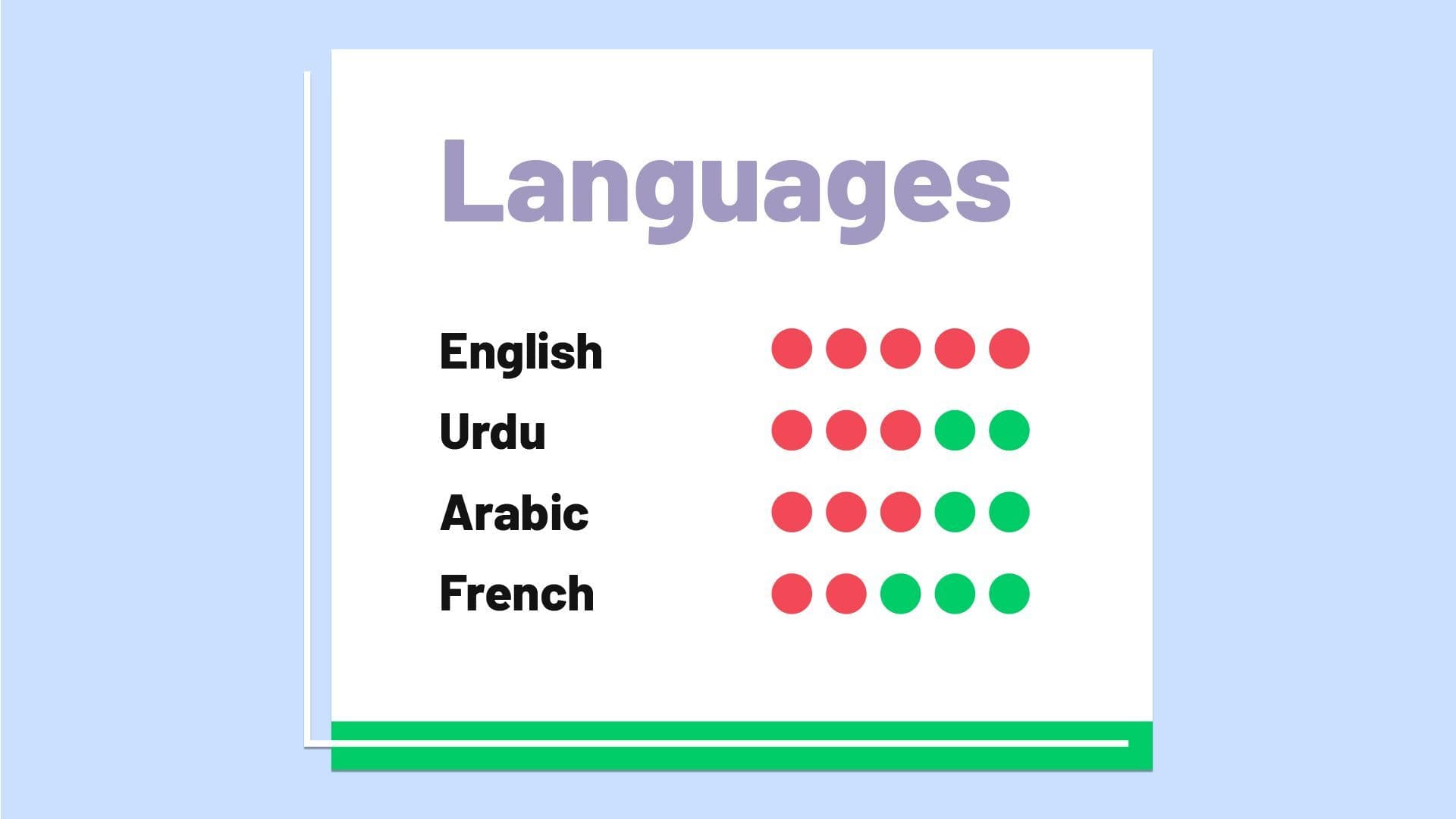
Languages Known in CV: CV Guide with Templates & Examples (2026)
Learn how to list Languages Known in your CV the right way in 2026. This guide covers proficiency levels, examples, and ready-to-use templates to help you present your language skills professionally and make your CV stand out.
Free CV Creator Online – Build a Professional CV in Minutes
Create a professional CV online in minutes using free tools with ATS-friendly templates, easy editing, and instant download options.
How to Write an ATS Friendly Resume That Gets Interviews
Write an ATS friendly resume using the right format, keywords, and structure to pass applicant tracking systems and land more interviews.